There are parts of the Earth that do not announce themselves. They do not erupt, shimmer, or fracture into view. Instead, they persist quietly, bearing the planet’s weight and memory in silence. The core, unreachable and unseen, has long been imagined as a place of iron certainty. Yet recent science suggests it may also be a place of hidden abundance.
New experimental research indicates that Earth’s core could contain the equivalent of up to 45 oceans’ worth of hydrogen. This is not water as we know it, nor liquid held in darkness, but hydrogen atoms absorbed into iron under pressures so intense they alter the behavior of matter itself. In laboratory settings designed to mimic conditions thousands of kilometers below the surface, scientists observed iron taking in hydrogen more readily than once thought possible.
This finding offers clarity to questions that have lingered for decades. The core has always appeared slightly less dense than models of pure iron would predict. Hydrogen, light yet pervasive, provides a compelling explanation. It also suggests that during Earth’s formation, volatile elements were not merely lost to space or confined to the surface but were drawn inward, becoming part of the planet’s deepest structure.
Hydrogen’s presence may also influence how heat travels from the core outward, subtly shaping convection, magnetic field stability, and geological activity over immense spans of time. These effects are not dramatic in human terms, but they are foundational, guiding the long continuity that allows continents to drift and compasses to point north.
As scientists emphasize, these estimates are based on indirect measurements and carefully controlled experiments rather than direct observation. Still, the evidence points toward a revised understanding of Earth’s interior. The planet’s heart, once thought spare and elemental, may be quietly storing one of the most essential ingredients for life, bound into its very core.
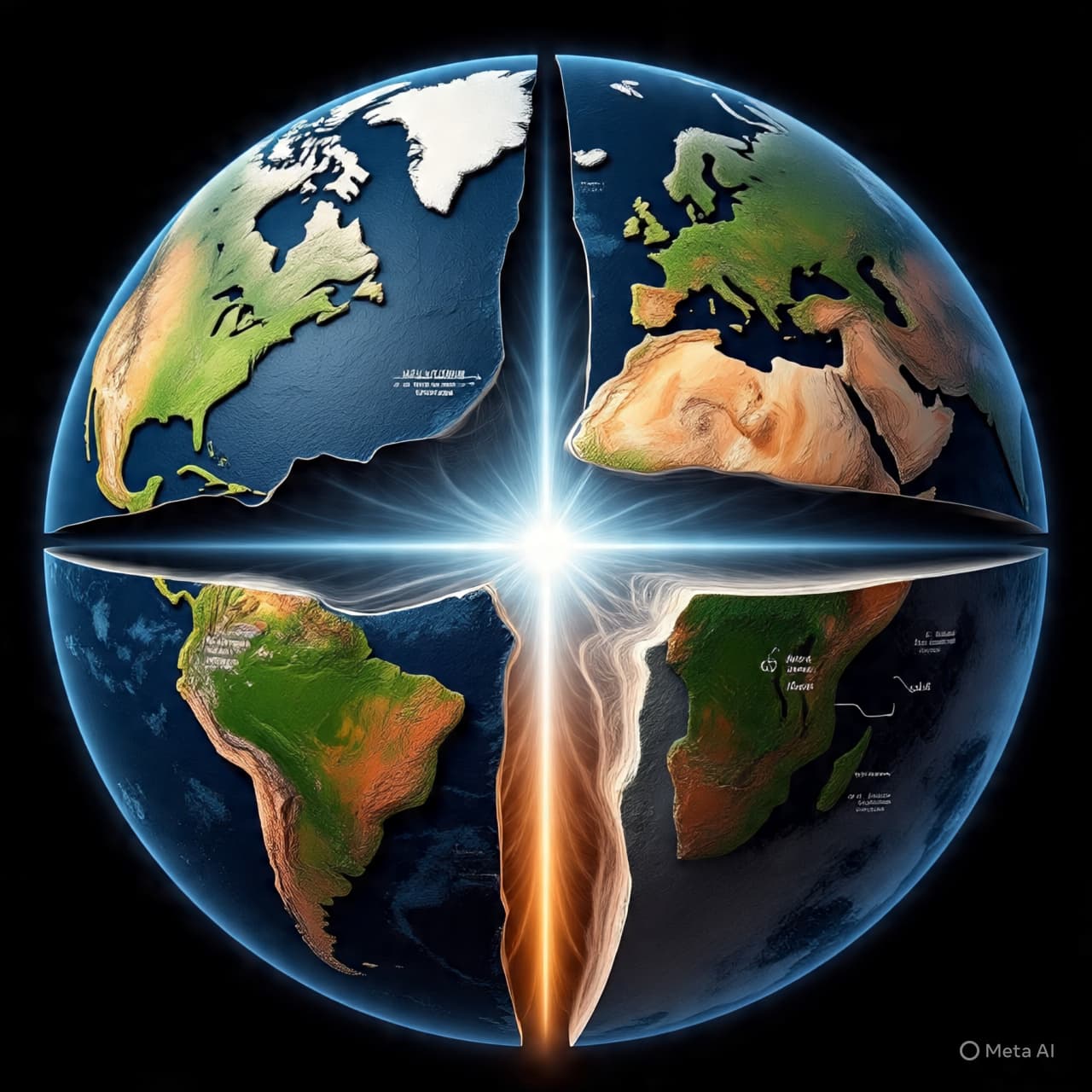
AI IMAGE DISCLAIMER Graphics are AI-generated and intended for representation, not reality.
SOURCES (MEDIA NAMES ONLY) Nature Science Scientific American BBC News National Geographic
Published by Banx Network. This article is part of the Banx decentralized media programme, powered by the BXE token on the XRP Ledger.