There are negotiations that stretch across years like the slow turning of a river toward the sea, and then there are those that seem to circle endlessly, as if caught in a current that refuses to break. The European Union’s free trade agreement with the Mercosur bloc — a pact long envisioned to bridge continents and markets — now finds itself in one of those looping currents. Once again, the much‑anticipated signing has been pushed back, not by a distant technicality, but by the tangled realities of politics, protest and competing visions for the future of European agriculture and global trade.
For a quarter of a century, representatives from the 27 nations of the EU and the South American Mercosur countries — Argentina, Brazil, Uruguay and Paraguay — have worked toward a landmark agreement that would create one of the world’s largest free‑trade zones. This week, officials had hoped to finally put pen to paper at a summit in Brazil, bringing to a close decades of discussion and diplomacy. Instead, they returned to Brussels with an announcement that the signing will now be postponed until at least January — another chapter in a story that has become as familiar as it is frustrating.
The decision came after last‑minute opposition from key EU member states, notably France and Italy, who sought stronger guarantees to protect their domestic farmers. President Emmanuel Macron described the moment as “too early” to proceed without further commitment to environmental and agricultural safeguards, while Italian Prime Minister Giorgia Meloni pressed for more time to secure internal political support. Their stance reflected a concern shared by many across Europe: that a flood of cheaper agricultural imports from South America could undercut local producers and imperil rural livelihoods.
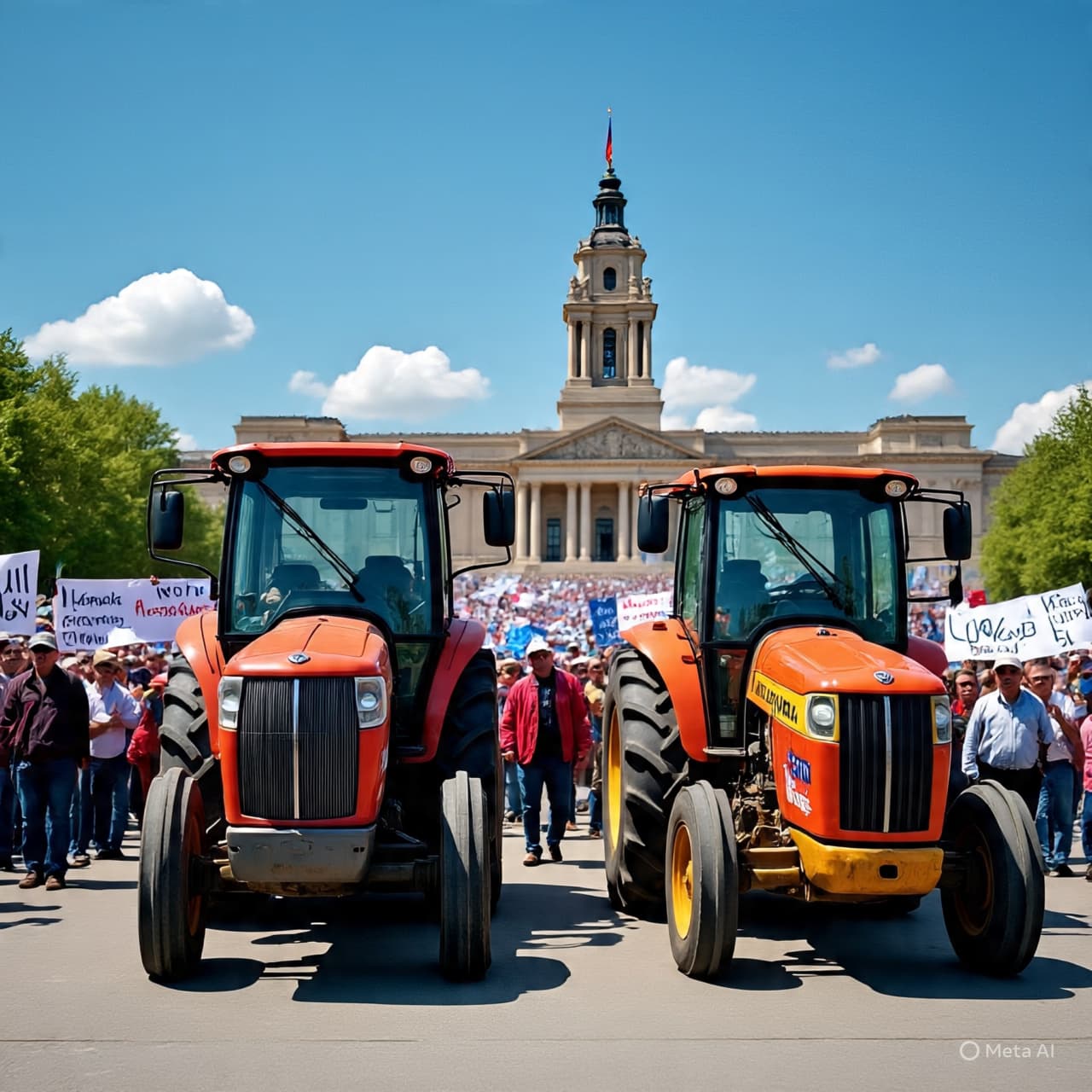
That concern found its most vivid expression in the streets of Brussels, where thousands of farmers descended on the EU quarter in fiery protest. Tractors blocked intersections, tyres burned, and fiery slogans greeted lawmakers and diplomats as they debated behind closed doors. The scenes of uproar outside the European Parliament served as a stark reminder that free‑trade deals, while economic in intent, are deeply human in impact — touching the lives of families and workers far beyond the negotiating table.
Supporters of the pact — including leaders in Germany, Spain and Nordic countries — argue that the Mercosur deal would be a boon for EU exports, opening markets for vehicles, machinery, wine and spirits while reducing dependence on other global powers. They say that the pact is also a geopolitical signal, showing that Europe remains committed to open markets and strategic partnerships in an era of shifting alliances and trade tensions.
Yet the delay has drawn frustration from business groups who see it as a blow to the EU’s credibility on the world stage. Germany’s industry associations expressed disappointment over the postponement, warning that endless internal squabbles could erode confidence in Europe’s ability to secure major trade agreements at a time when others move swiftly.
Mercosur partners, for their part, have displayed what one diplomat called “constructive patience,” acknowledging that internal EU dynamics will shape the final path to signature. Brazil’s President Luiz Inácio Lula da Silva reportedly agreed to allow more time to address European concerns, emphasizing the importance of the deal as a pillar of multilateral cooperation.
As the EU bloc looks toward January for a hoped‑for breakthrough, the delay underscores the delicate balance between global ambitions and domestic pressures. What was meant to be a triumph of transatlantic partnership has become a testament to the complexity of consensus in a union of diverse nations, each holding its own fears and hopes for the future.
AI Image Disclaimer “Visuals are created with AI tools and are not real photographs.”
Sources Reuters Al Jazeera Reuters (German industry reaction) PBS NewsHour France24 ANSA / European Newsroom (AFP et al.)
Published by Banx Network. This article is part of the Banx decentralized media programme, powered by the BXE token on the XRP Ledger.