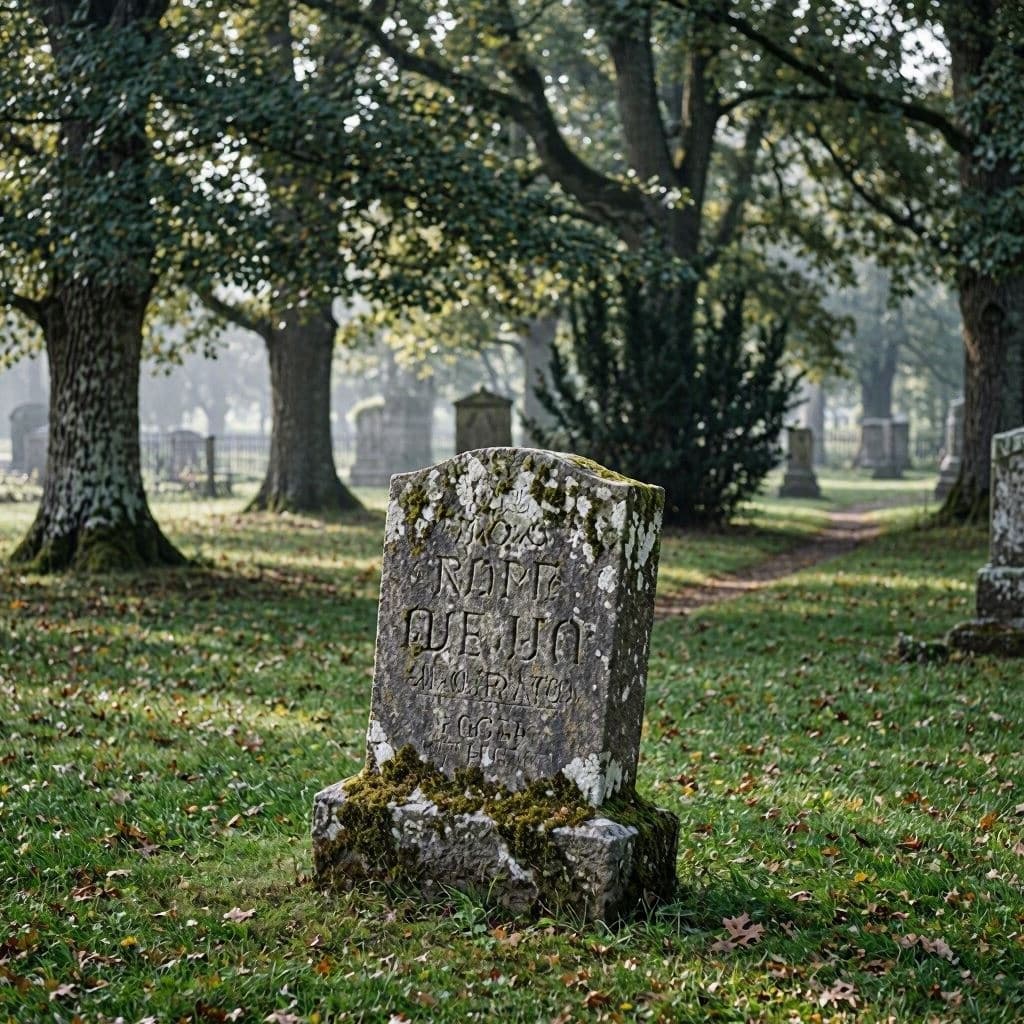
History is often written in facts, but it is remembered in stories. Among the most enduring of these tales are those of vampires, creatures of folklore that have captivated and terrified imaginations for centuries. In New England, a recent archaeological discovery has brought one such story to light, revealing the tragic reality behind a legend. A teenage girl, buried in the 19th century, was found in a grave arranged in a manner intended to prevent her return from the dead. This finding offers a window into the fears and beliefs of a past era, where disease and death were misunderstood, and superstition provided a semblance of control.
The grave, discovered in Connecticut, contained the remains of a young woman whose bones had been rearranged. Her skull was placed atop her ribcage, and her femurs were crossed over her chest, forming a shape reminiscent of a skull and crossbones. This specific arrangement was a known folk remedy against vampirism, believed to stop the deceased from rising to harm the living. For the community that buried her, this was not an act of malice but of protection, driven by genuine fear and ignorance.
Experts identify the girl as a victim of tuberculosis, a disease that was poorly understood at the time. Known as "consumption," it caused victims to waste away, coughing blood and appearing pale and gaunt. To observers, these symptoms mirrored the descriptions of vampires in folklore. When multiple family members died from the same illness, suspicion often fell on the first to die, who was blamed for draining the life from the rest. This belief led to exhumations and ritualistic alterations of graves.
The term "vampire" in this context does not refer to the mythical creature of fiction but to a cultural explanation for tragedy. In the absence of medical knowledge, communities sought reasons for their suffering. Blaming the dead provided a way to make sense of the inexplicable and to take action, however misguided. The booby-trapped grave was a physical manifestation of this desperation, an attempt to restore order and safety to a world ravaged by disease.
This discovery aligns with other similar finds in New England, such as the famous case of Mercy Brown in Rhode Island. These instances highlight a regional pattern of vampire panic during the 19th century. They serve as historical markers of a time when science had not yet illuminated the causes of infectious diseases. Understanding this context helps us empathize with our ancestors, recognizing their actions as products of their time rather than mere superstition.
For modern audiences, the story reads like a horror movie, yet it is grounded in real human suffering. The teenage girl was not a monster but a victim, both of disease and of the fear it inspired. Her grave tells a story of love and loss, twisted by misunderstanding. It reminds us of the importance of scientific progress and the danger of letting fear dictate our responses to the unknown.
Archaeologists and historians continue to study these sites to learn more about the social and medical history of the period. Each grave offers clues about burial practices, community beliefs, and the impact of disease on rural populations. By analyzing these remains, researchers can reconstruct the lives of those who lived and died in obscurity, giving voice to the silent voices of the past. This work preserves history and educates the present.
The legacy of these vampire panics is a testament to human resilience and the quest for meaning. Even in the face of devastating loss, people sought explanations and solutions. While their methods were flawed, their intent was to protect their loved ones. Today, we look back with compassion, recognizing the shared human experience of grief and the universal desire to understand death.
The discovery of the "vampire" grave is a poignant reminder of how fear and ignorance shaped history. It invites us to view the past with empathy, understanding the context of superstition and disease. Let this story honor the memory of the young girl and the lessons learned from her time.
AI Image Disclaimer: Please note that any accompanying visuals for this piece are generated by artificial intelligence to illustrate concepts and are not actual photographs of the excavation.
Sources: National Geographic Smithsonian Magazine The Hartford Courant
Published by Banx Network. This article is part of the Banx decentralized media programme, powered by the BXE token on the XRP Ledger.