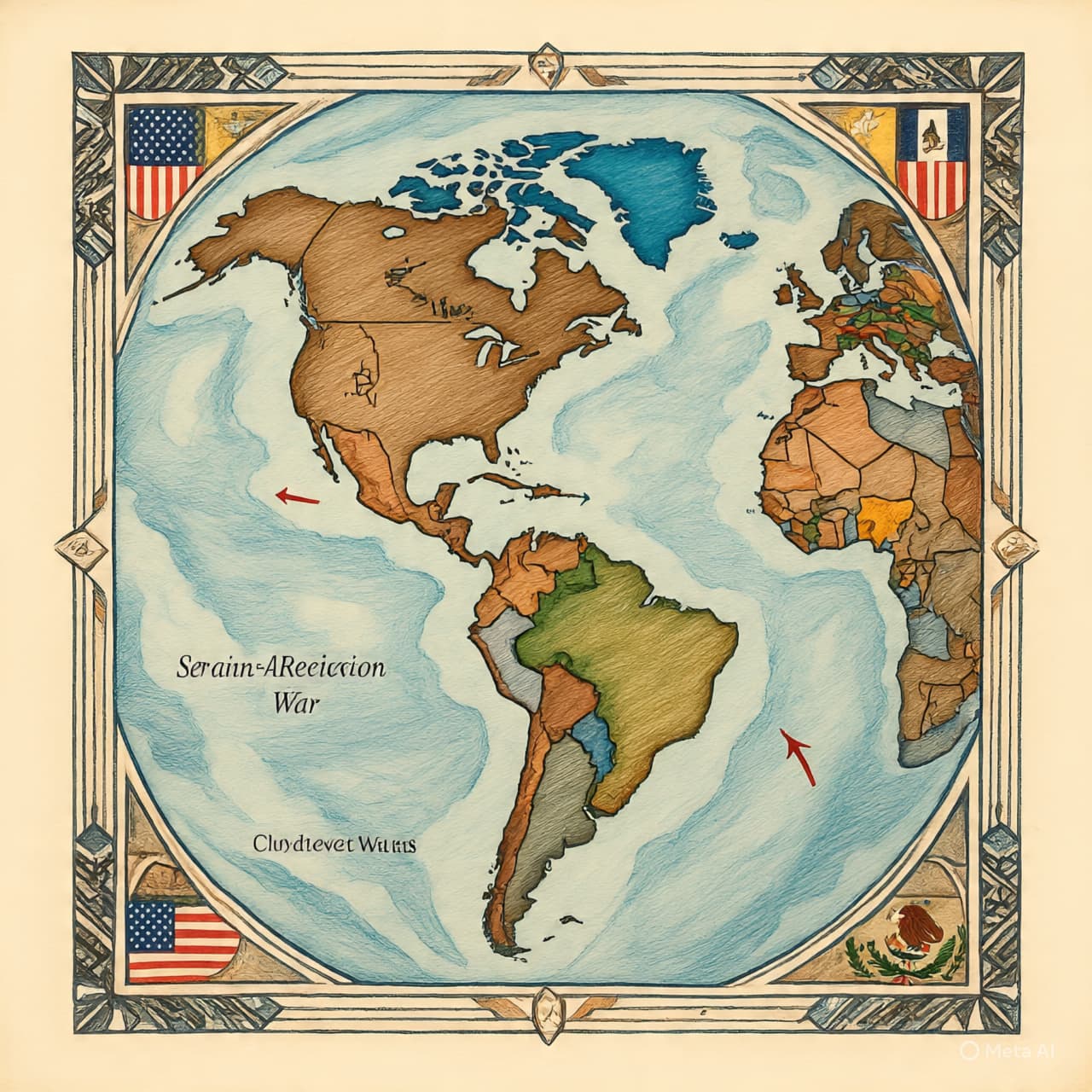
The Americas are a landscape of rivers, mountains, and coasts, yet history shows that power often flows less predictably than water. From the misty highlands of Guatemala to the sunlit shores of the Caribbean, U.S. interventions have left marks both visible and hidden, shaping politics, economies, and societies in ways both intended and unforeseen. Policies meant to protect, influence, or stabilize have sometimes swelled into consequences that even the most careful planners could not have foreseen. Like a current bending around obstacles, the results of intervention can ripple far beyond initial intentions.
The roots of U.S. involvement stretch back to the 19th century and the Monroe Doctrine, which sought to keep European powers at bay. Over time, Washington’s gaze extended beyond defense to active engagement — sometimes overt, often covert. In Guatemala, a 1950s covert operation aimed at countering land reforms inadvertently ushered in decades of authoritarian rule, illustrating the unpredictable weight of intervention.
The Bay of Pigs invasion in 1961 offers perhaps the clearest example of unintended consequences. Designed as a swift overthrow of Fidel Castro, the operation failed spectacularly, strengthening the Cuban government and solidifying its alignment with the Soviet Union. Such miscalculations highlighted the risks of underestimating local conditions and political resolve.
Later, interventions in Central America, including support for the Contras in Nicaragua, extended conflict and sparked domestic controversy in the U.S., most notably through the Iran-Contra affair. Economic initiatives, like the Alliance for Progress, aimed to encourage development, achieving mixed results but also underscoring the limits of external influence.
In recent years, U.S. actions — including counter-narcotics strikes and increased military presence near Venezuela — reflect a long lineage of intervention, still debated for both strategic impact and regional perception. Policymakers grapple with balancing objectives, sovereignty, and local agency, a reminder that history does not yield simple lessons.
Each intervention has carried hope and hazard alike. Even when intentions are clear, the complexities of culture, politics, and unforeseen variables shape outcomes in ways that can surprise, frustrate, or alarm. The history of U.S. engagement in Latin America and the Caribbean is, therefore, a study in both ambition and humility.
As governments assess past actions and contemplate future strategies, the region’s experience offers a sober reminder: intervention is rarely straightforward, and outcomes are rarely predictable. While security and diplomacy remain vital, history suggests that careful consideration of context and consequence is essential to avoid repeating the mistakes of the past.
AI Image Disclaimer “Illustrations are AI-generated and intended for conceptual representation, not actual photographs.”
Sources KALW / NPR public media reports Wikipedia – Bay of Pigs Invasion Wikipedia – Operation PBFortune AP / Reuters reporting on recent U.S. actions The Guardian analysis of U.S. regional involvement
Published by Banx Network. This article is part of the Banx decentralized media programme, powered by the BXE token on the XRP Ledger.