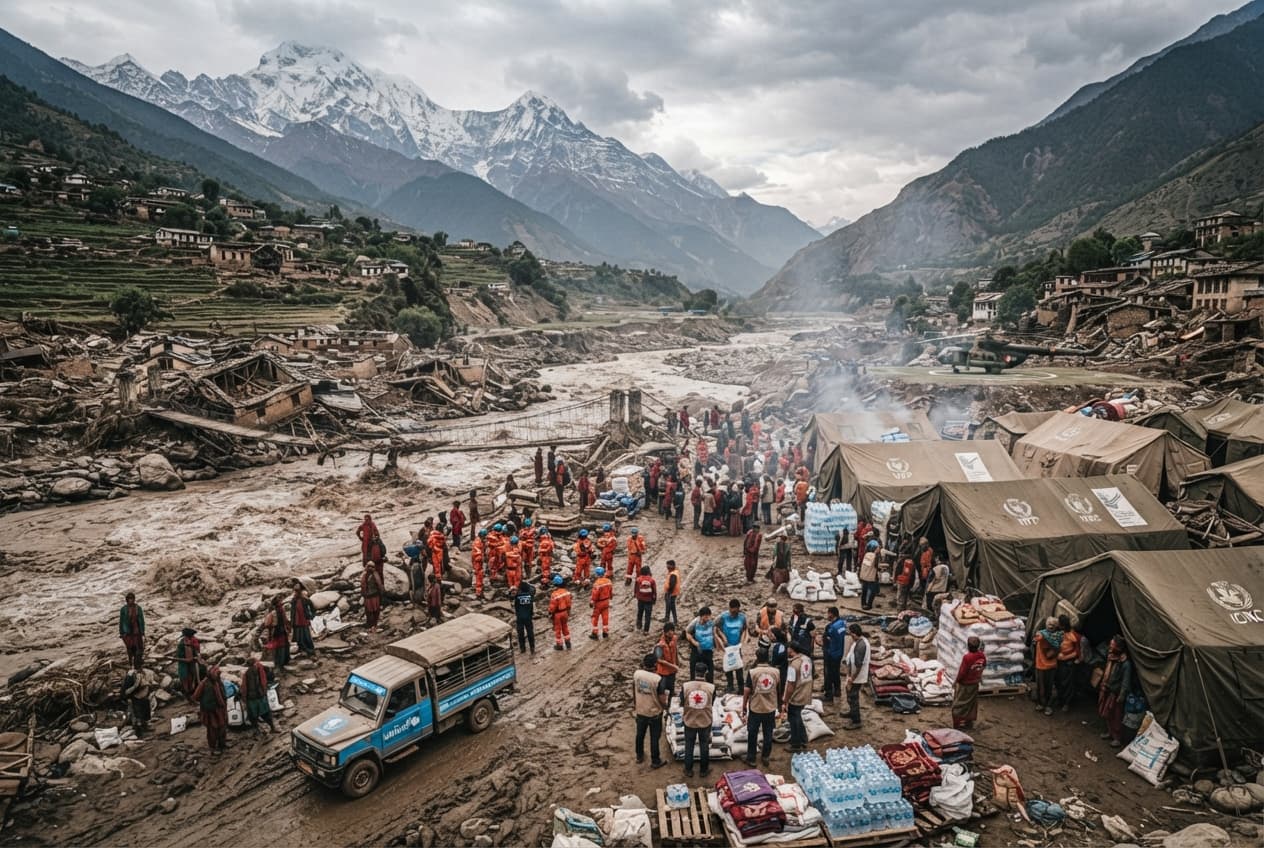
Kathmandu, Nepal—Muddy torrents tore through narrow mountain gorges, carrying massive boulders and shattered timber downriver with terrifying momentum. International humanitarian coordinators scrambled logistics pipelines as rapid hydrological assessments confirmed that a catastrophic glacial lake outburst had supercharged seasonal monsoonal downpours. Downstream settlements found themselves directly in the path of multi-meter wall waves that wiped out suspension bridges and primary mountain highways. Emergency staging hubs activated contingency plans, mobilizing reserve stocks of potable water, high-energy biscuits, and medical kits for airlift deployment.
Field reports from remote valley districts painted a grim picture of isolation as river levels rose past historical maximum thresholds. Local transmission towers collapsed into churning brown waters, cutting off telecommunications across several high-altitude administrative zones. UN humanitarian field officers worked through the night with national disaster management authorities to map accessible landing zones for rescue helicopters. Military transport aircraft sat idling on tarmac strips, loaded down with modular water purification units and emergency shelter materials.
Logistical bottlenecks compounded the crisis as continuous rains triggered secondary mudslides that blocked critical supply arteries threading through the foothills. Heavy earth-moving equipment struggled against unstable terrain to clear debris from arterial bridges threatened by floating timber jams. Relief convoys stalled at swollen river crossings, awaiting clearance from engineering reconnaissance units monitoring structural erosion. Field clinics reported surging admissions for waterborne illnesses and traumatic injuries sustained during sudden midnight evacuations.
Local community leaders criticized the speed of early warning dissemination, noting that flood sirens failed before the main torrent hit riverside settlements. Displaced villagers huddled underneath makeshift plastic sheeting along upper highway embankments, staring down at submerged agricultural lands. Humanitarian assessment teams deployed inflatable zodiac boats to search for stranded survivors clinging to rooftops amidst the churning expanse. Medical supplies dwindled rapidly at rural health posts as injured residents arrived from cut-off hamlets further up the valley.
International donor syndicates pledged immediate financial backing to sustain the expanding emergency relief operation across multiple affected river basins. Logistics coordinators established makeshift warehousing facilities near regional airfields to streamline the distribution of heavy-duty tents and blankets. Specialized rescue divers monitored treacherous river bends where debris snags threatened to divert floodwaters into populated valley sectors. Satellite tracking systems provided intermittent updates on weather fronts stalling over the high mountain passes.
Relief workers distributed water purification tablets house-to-house in high-density displacement camps to forestall potential cholera outbreaks. Sanitation engineers rushed to construct temporary latrine blocks before population congestion triggered secondary health emergencies within the temporary settlements. Humanitarian flights rotated continuously between staging bases and isolated mountain pockets, dropping vital medical cargo where landing was impossible. Ground crews unloaded heavy crates under blinding stadium lights as evening rain squalls swept across the tarmac.
The relentless pressure of incoming meteorological data forced disaster coordinators to expand evacuation advisories across three additional downstream districts. River gauges registered alarming volumetric spikes as upper basin ice melt combined unchecked with ongoing monsoon precipitation. Command staff reviewed aerial reconnaissance photographs that revealed entire valley floors submerged under thick layers of gray silt. Logistics officers adjusted fuel allocations for rescue rotorcraft operating at maximum altitude capacity under extreme turbulence.
Relief logistics chains faced severe constraints as regional fuel reserves ran dangerously low due to severed transport links and pipeline disruptions. Humanitarian agencies issued urgent appeals for unrestricted access corridors to reach vulnerable populations trapped above broken bridge spans. Emergency rations dwindled in frontline outposts as supply convoys remained bogged down in deep valley mud. Operations commanders maintained continuous radio contact with field teams battling exhaustion along the swollen river banks.
Published by Banx Network. This article is part of the Banx decentralized media programme, powered by the BXE token on the XRP Ledger.