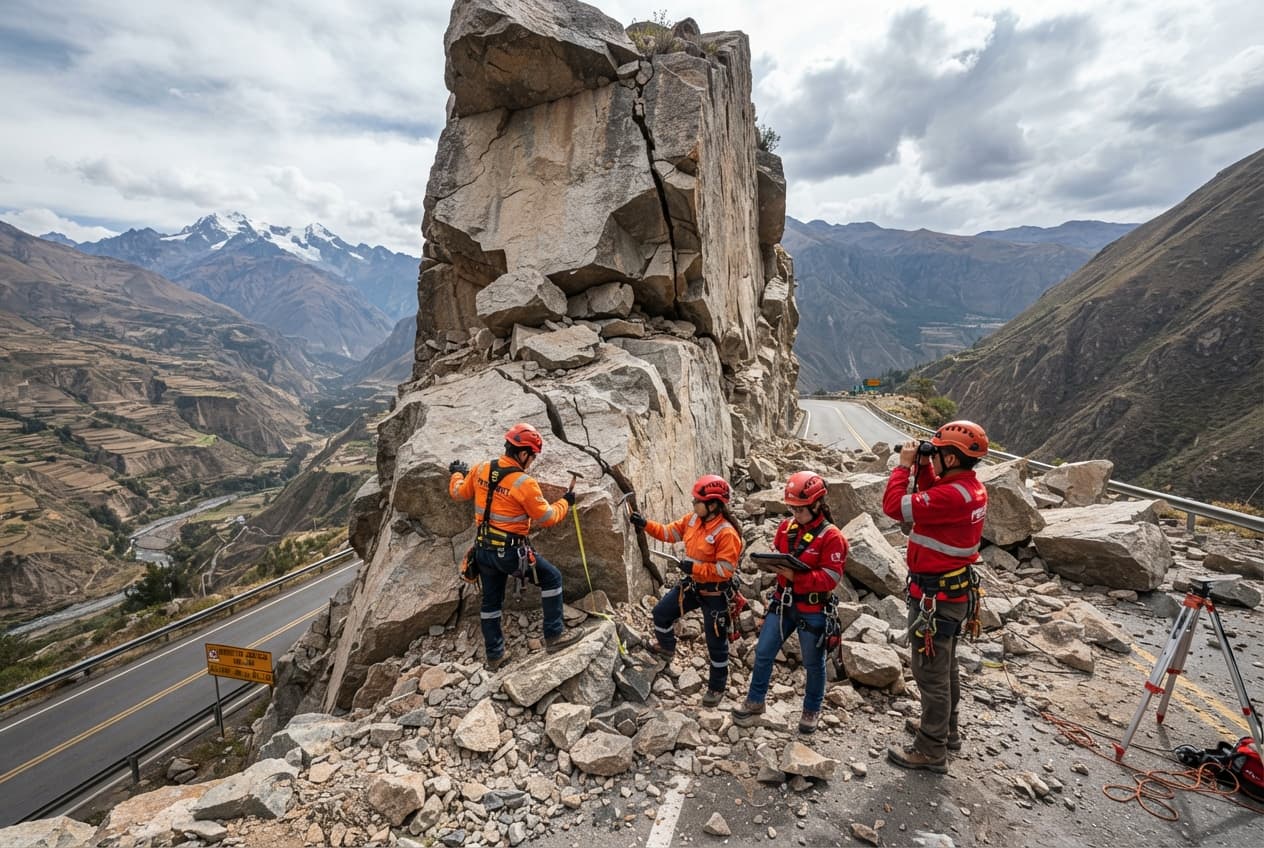
Huaraz, Peru—The mountain face fractured without warning three thousand meters above sea level. Tons of jagged granite broke loose from the cliffside, hurtling straight down toward the asphalt ribbon. A passenger transit van rounding the blind curve took the direct impact. The roof crumpled instantly beneath the weight of a boulder the size of a truck cabin. Dust and loose gravel choked the mountain air, obscuring the wreckage from trailing motorists. Surviving drivers scrambled out of their vehicles to call emergency services from high ridge points.
Highway patrol units and volunteer firefighters reached the remote canyon pass within an hour. Rescuers used heavy hydraulic spreaders to pry open the crushed metal chassis of the van. Two passengers inside sustained catastrophic injuries and were pronounced dead at the scene. Three other survivors were pulled from the mangled wreckage with severe fractures and internal trauma. Ambulances navigated the winding mountain switchbacks under flashing lights to evacuate the wounded. Traffic ground to a complete halt in both directions, stranding hundreds of commercial trucks.
Ministry of Transport engineers inspected the unstable cliff face above the blocked transportation corridor. Heavy earthmoving equipment arrived late in the afternoon to push massive stone blocks off the asphalt. Geologists noted that continuous seasonal freeze-thaw cycles had weakened the sheer rock wall significantly. Transport unions renewed their demands for automated rockfall barrier netting across high-risk Andean passes. Local authorities established alternative detours along rough dirt tracks further down the valley.
Travelers stranded in the high-altitude queue braved freezing temperatures while waiting for road clearance. Makeshift food stalls set up by local villagers profited from the unexpected highway bottleneck. Maintenance crews continued blasting minor hanging boulders with controlled charges to ensure worker safety. Regional officials promised a comprehensive safety audit of all vulnerable mountain transit routes. Normal vehicular traffic will not resume until geotechnical clearance is officially granted.
The human cost of treacherous Andean geography continues to impact daily commercial movement. Families of the deceased arrived at regional morgues to complete identification procedures. Transport companies face mounting scrutiny over operating schedules during active weather alerts. The mountain pass remains an unforgiving gauntlet for cross-country travelers and cargo haulers. Heavy machinery works under floodlights to reopen the economic lifeline before dawn.
Published by Banx Network. This article is part of the Banx decentralized media programme, powered by the BXE token on the XRP Ledger.