Berlin, Germany—Three people died Wednesday morning when a speeding passenger sedan collided directly with the rear of a slowing tanker truck on a major German Autobahn. The violent impact caused the heavy commercial vehicle to smash through the median barrier and spill its non-toxic industrial cargo across opposing lanes. Flames erupted instantly from the crushed engine compartment of the car, sending plumes of black smoke into the morning air.
Volunteer firefighters from three neighboring municipalities arrived swiftly with specialized foam equipment to suppress the blazing wreckage. Crews confirmed that all three occupants inside the passenger vehicle perished instantly from extreme impact forces and subsequent fire damage. The truck driver sustained moderate shock and smoke inhalation injuries before escaping the cab.
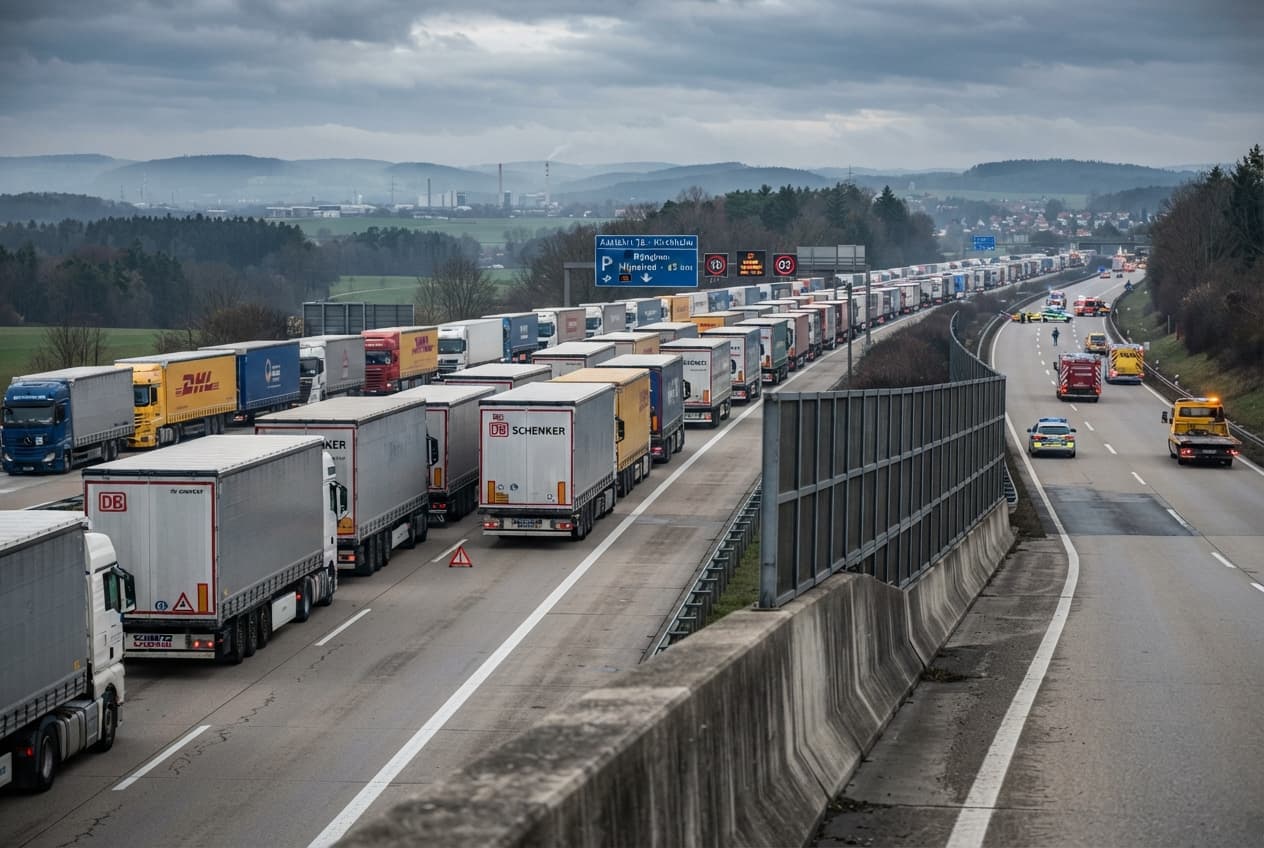
Federal police sealed off a ten-kilometer stretch of the highway in both directions, triggering massive traffic jams that quickly paralyzed regional logistics. Specialized hazardous materials teams tested the spilled fluid to ensure no dangerous chemical contamination threatened local groundwater systems. Heavy recovery cranes were called in from a nearby industrial depot to lift the overturned tanker onto an upright flatbed.
Traffic experts noted that the stretch of Autobahn lacked speed limits, though investigators have not yet confirmed if excessive velocity contributed to the crash. Digital monitoring units recorded heavy traffic congestion forming just beyond a blind curve moments before the collision occurred. Forensic accident reconstruction specialists scoured the asphalt for brake marks and vehicle telemetry data.
Automobile clubs renewed urgent calls for dynamic speed regulations and automated warning systems along high-risk commercial transit routes. Environmental inspectors supervised the removal of contaminated topsoil surrounding the median ditch where the fluid pooled. Highway maintenance crews prepared for an overnight resurfacing operation to repair deep gouges torn into the concrete lanes.
Local hospitals treated several secondary victims involved in minor fender-benders triggered by sudden braking maneuvers behind the primary site. Emergency dispatchers managed an unprecedented volume of calls from stranded motorists trapped inside the gridlocked containment zone. Red Cross volunteers distributed drinking water and emergency rations to drivers stranded under the midday sun.
Authorities advised long-distance freight operators to utilize wide-arc bypass detours through neighboring regional districts. Police drone units mapped the extensive debris field from above to expedite the official clearance process authorized by state prosecutors. Commercial traffic remained heavily restricted as investigators finalized their primary evidence collection tasks.
The wreckage of the burned passenger vehicle was eventually loaded onto a secure transport trailer for detailed laboratory analysis. Clean-up supervisors reopened the outbound lanes late in the evening after engineers certified the structural integrity of the median barrier. The tragic incident underscored ongoing safety debates regarding heavy transport integration on high-speed European transit routes.
Published by Banx Network. This article is part of the Banx decentralized media programme, powered by the BXE token on the XRP Ledger.