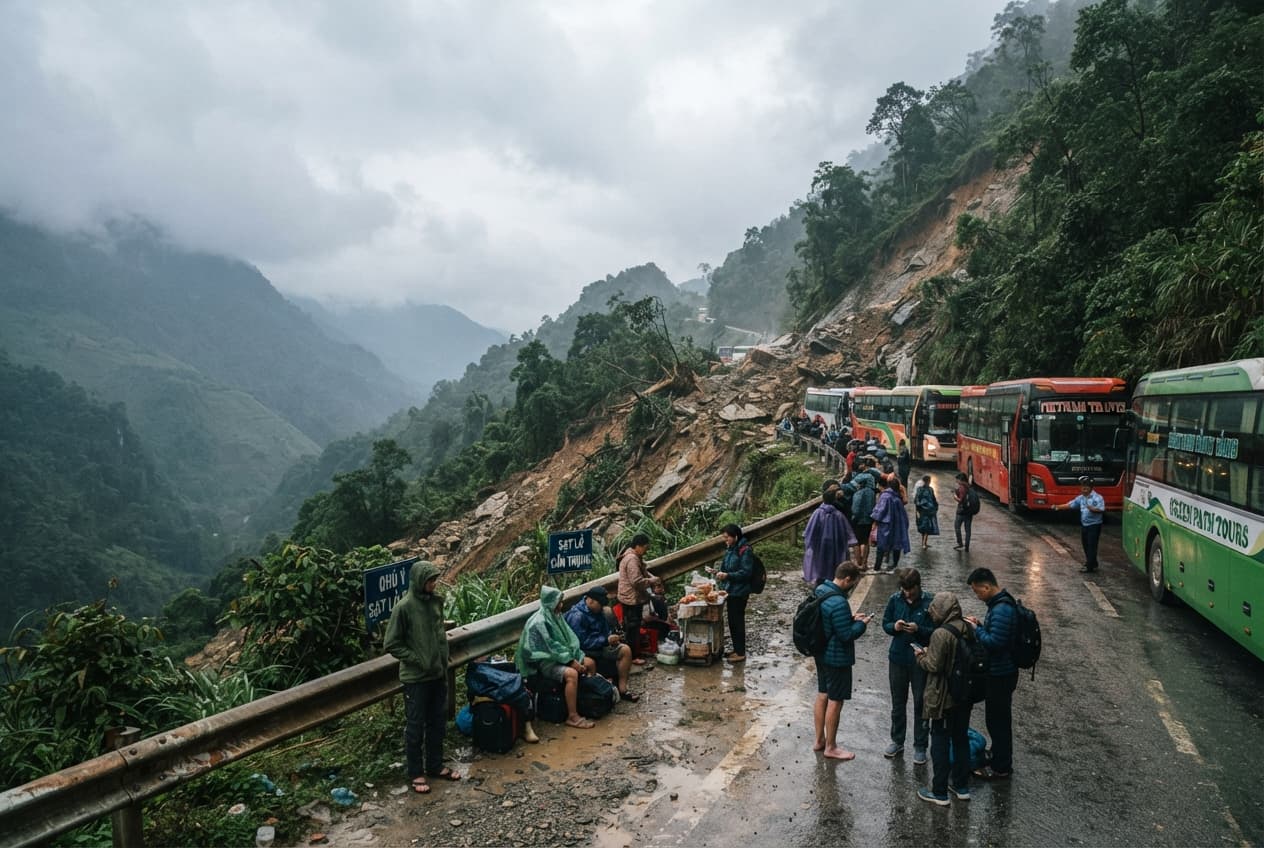
Vientiane, Laos—Massive walls of saturated earth and rock crashed down across primary highland passes on Friday morning, burying vehicles and trapping helpless travelers. Continuous seasonal downpours destabilized steep mountain slopes along vital trade and transport corridors linking northern provinces to the capital. Provincial police confirmed that five travelers died when their automobiles were swept off the asphalt into deep ravines by the sliding debris.
Rescue units equipped with heavy excavators and manual shovels struggled to reach the remote disaster sites through miles of blocked roadway. Landslides continued to shift intermittently, creating extreme hazards for rescue personnel attempting to extract trapped survivors from crushed vehicles. Medical teams set up roadside triage stations to treat injured passengers pulled from mud-filled ditches.
Transport ministries ordered an immediate suspension of all heavy commercial transport along the treacherous mountain corridor until geotechnical inspections verified slope stability. Stranded motorists and local villagers banded together to clear smaller rockfalls with hand tools while waiting for heavy machinery to arrive. Long lines of commercial cargo trucks remained parked for miles along the winding mountain highway.
Local authorities expressed deep concern over rampant deforestation and unmitigated hillside agriculture that accelerated soil erosion ahead of the monsoon storms. Government ministers announced plans to review regional highway safety standards and invest in slope stabilization netting across high-risk mountain passes. Emergency shelters opened in nearby district schools to accommodate stranded tourists and displaced local residents.
Relief agencies distributed bottled water, dry food packets, and medical supplies to freezing motorists stuck in traffic bottlenecks overnight. Communication networks suffered intermittent failures as downed telephone lines severed connections with outlying mountain hamlets. Provincial officials urged all citizens to postpone non-essential travel through mountainous regions until weather alerts expired.
Heavy equipment operators worked under high-intensity portable floodlights to carve makeshift bypass paths through unstable mud banks. Relatives of the victims gathered at regional hospitals to identify loved ones recovered from the crushed vehicles. Search sweeps continued along the ravine floors to ensure no other automobiles remained buried beneath the thick sediment.
The tragic event highlights the persistent dangers rural travelers face during peak rainy seasons across mountainous Southeast Asian terrain. Engineering teams pledged to install automated slope-movement sensors along known geological hazard zones to provide earlier warnings. Meanwhile, steady rain continued to fall over the jagged peaks, threatening fresh soil movements across the battered transportation network.
Published by Banx Network. This article is part of the Banx decentralized media programme, powered by the BXE token on the XRP Ledger.