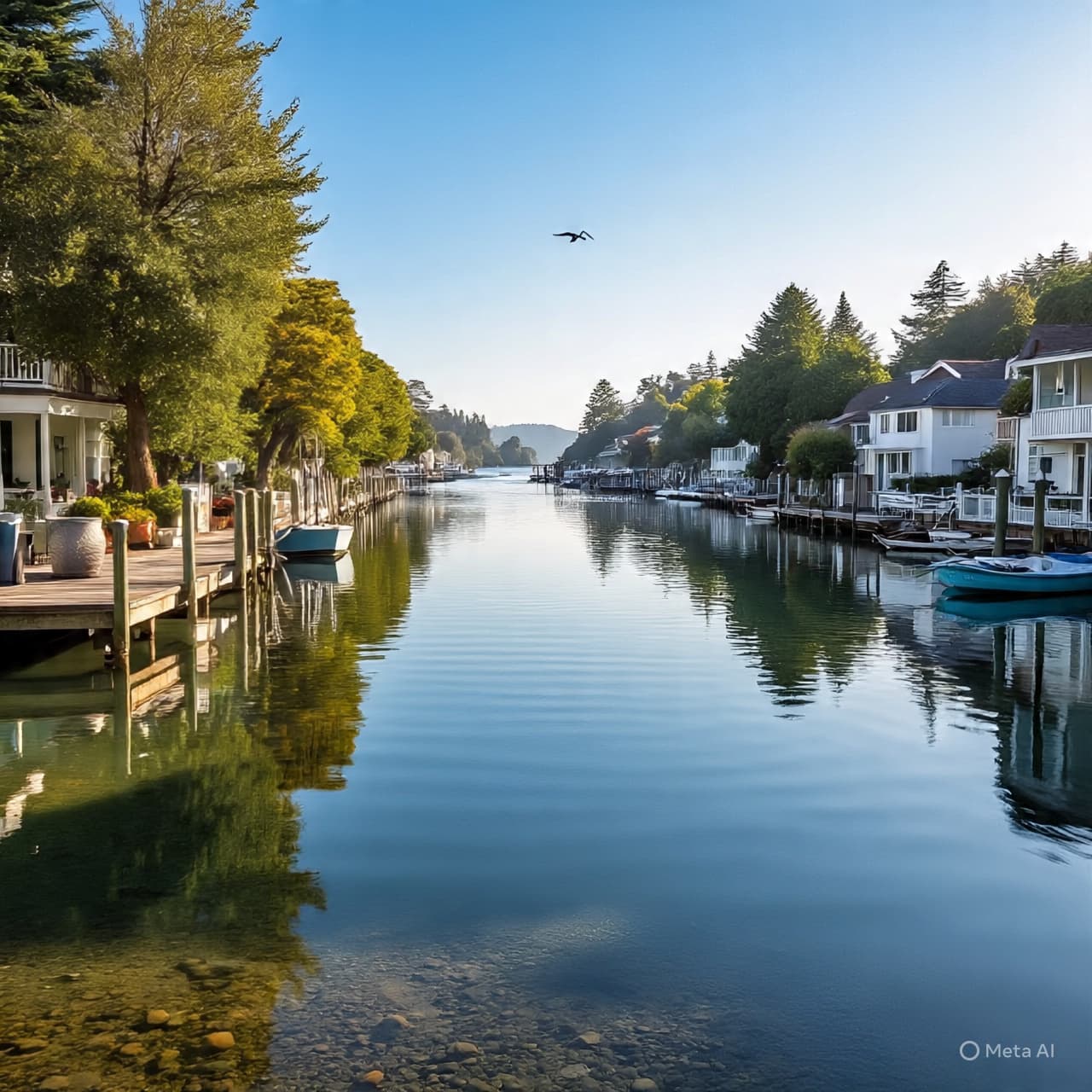
In Marin County, where neighborhoods often sit gently between hills and water, the boundary between land and sea can feel reassuringly fixed. Yet, on certain days, that line softens. This week, as king tides rose with lunar certainty and a winter storm pressed in from the Pacific, the bay quietly reclaimed spaces usually reserved for cars, storefronts, and morning routines. Streets shimmered where asphalt once ruled, and the slow advance of water served as a calm but unmistakable reminder of nature’s timing — precise, patient, and powerful.
The flooding unfolded as king tides, the highest tides of the year, coincided with a storm system that brought wind, rain, and added pressure along the San Francisco Bay shoreline. In parts of Marin County, including low-lying communities such as Larkspur, Corte Madera, and Sausalito, water spilled onto roads and pooled around businesses, briefly reshaping daily life.
King tides occur when the gravitational pull of the moon and sun align in a way that naturally raises sea levels. On their own, they are predictable and often uneventful. But when paired with storm surge and rainfall, their effects become far more visible. This week’s tides pushed water higher than usual, overwhelming drainage systems designed for calmer conditions.
Local officials issued coastal flood warnings, urging residents to avoid flooded roadways and remain alert during peak tide hours. Some streets became impassable, vehicles were left stranded, and waterfront parking areas disappeared beneath shallow but persistent floodwaters. While the flooding was generally short-lived, its timing — aligning with commuting hours and business operations — amplified its impact.
Meteorologists noted that while king tides are a regular seasonal occurrence, their interaction with storms highlights vulnerabilities along the Bay Area’s shoreline. Marin County, with its extensive bayside development and marshlands, is especially sensitive to these events. Each episode offers a glimpse into how rising sea levels and stronger storms could shape future winters.
Residents familiar with these cycles described the flooding not with surprise, but with recognition. Many have seen similar scenes before — water inching across sidewalks, reflecting streetlights and storefront signs — moments that pass but leave lasting impressions. The rhythm of the bay, once again, made itself known.
As waters gradually receded and streets reopened, Marin County returned to its familiar shape. Yet the marks left behind — damp pavement, shifted routines, renewed caution — lingered quietly. The latest flooding did not arrive with chaos, but with a steady insistence, reminding coastal communities that king tides are not just calendar events, but conversations between the moon, the sea, and the places we call home. Listening to those signals may prove as important as responding to them.
AI Image Disclaimer: Graphics are AI-generated and intended for representation, not reality.
Sources: KION Central Coast; ABC7 News; KTVU FOX 2; San Francisco Chronicle; SFGate.
Published by Banx Network. This article is part of the Banx decentralized media programme, powered by the BXE token on the XRP Ledger.