In the sun-baked silence of the Valley of the Kings, where shadows stretch long over ancient stone, a mystery that has captivated the world for a century is nearing a potential resolution. For decades, scholars have whispered about the possibility that the tomb of Tutankhamun, the boy king, might be merely an antechamber to a far grander secret: the final resting place of his stepmother, the legendary Queen Nefertiti. Now, new geophysical surveys suggest that hidden corridors and chambers may indeed lie behind the walls of Tutankhamun’s burial site, bringing archaeologists closer than ever to confirming this tantalizing theory. It is a moment where history holds its breath, waiting for the stone to speak.
The hypothesis, first popularized by Egyptologist Nicholas Reeves, suggests that Tutankhamun’s tomb was originally constructed for Nefertiti and later adapted for the young pharaoh after his untimely death. Recent scans using ground-penetrating radar and other non-invasive technologies have revealed anomalies in the structure—voids and linear features that do not align with the known layout of the tomb. These findings are described as "tantalizing" by experts, offering a glimpse into what might be concealed beneath layers of plaster and paint. It is a puzzle piece that fits with surprising precision.
For the archaeological community, the stakes are immense. Discovering Nefertiti’s tomb would be one of the most significant finds in modern history, rivaling the original discovery of Tutankhamun’s treasures in 1922. Nefertiti remains one of Egypt’s most enigmatic figures, a queen who wielded unprecedented power and whose beauty has become synonymous with ancient elegance. To find her final home would not only fill a gap in the historical record but also restore her legacy to its proper prominence. It is a quest for identity as much as for artifacts.
However, caution remains the watchword for scientists. While the geophysical data is promising, it is not definitive proof. Interpretations of radar signals can be complex, and natural geological features can sometimes mimic man-made structures. Researchers emphasize the need for further verification, possibly through more advanced imaging techniques or careful, minimal invasive probing. The goal is to uncover the truth without damaging the fragile integrity of the existing tomb. Patience is a virtue in archaeology, and haste is the enemy of preservation.
Public interest in the search has been reignited by these recent developments. Social media buzzes with speculation, and documentaries revisit the old theories with new enthusiasm. The idea that a secret room lies just beyond the famous golden mask captures the imagination, blending adventure with scholarship. It reminds us that even in an age of digital saturation, the allure of the unknown remains powerful. We are drawn to the past not just for what we know, but for what we have yet to discover.
If the chambers are confirmed, the next steps will involve delicate planning. Any exploration must be conducted with the utmost care to preserve the air quality, humidity, and structural stability of both tombs. International teams of conservators, engineers, and Egyptologists will likely collaborate to ensure that the process meets the highest standards of scientific rigor. It is a collaborative effort that transcends borders, united by a shared reverence for human heritage.
For Egypt, the potential discovery is a source of national pride and economic hope. Tourism, a vital sector for the country, thrives on such monumental announcements. A confirmed link to Nefertiti would draw visitors from around the globe, eager to witness history firsthand. Yet, local authorities balance this excitement with the responsibility of protection, ensuring that the site remains a place of study and respect rather than just a spectacle. It is a balancing act of preservation and progress.
In the end, the search for Nefertiti’s tomb is a testament to the enduring power of curiosity. It shows that even after centuries of excavation, the earth still keeps its secrets. As archaeologists prepare for the next phase of investigation, the world watches with anticipation. Whether the walls of Tutankhamun’s tomb yield their hidden treasure or not, the journey itself enriches our understanding of the past. The desert waits, and the story continues.
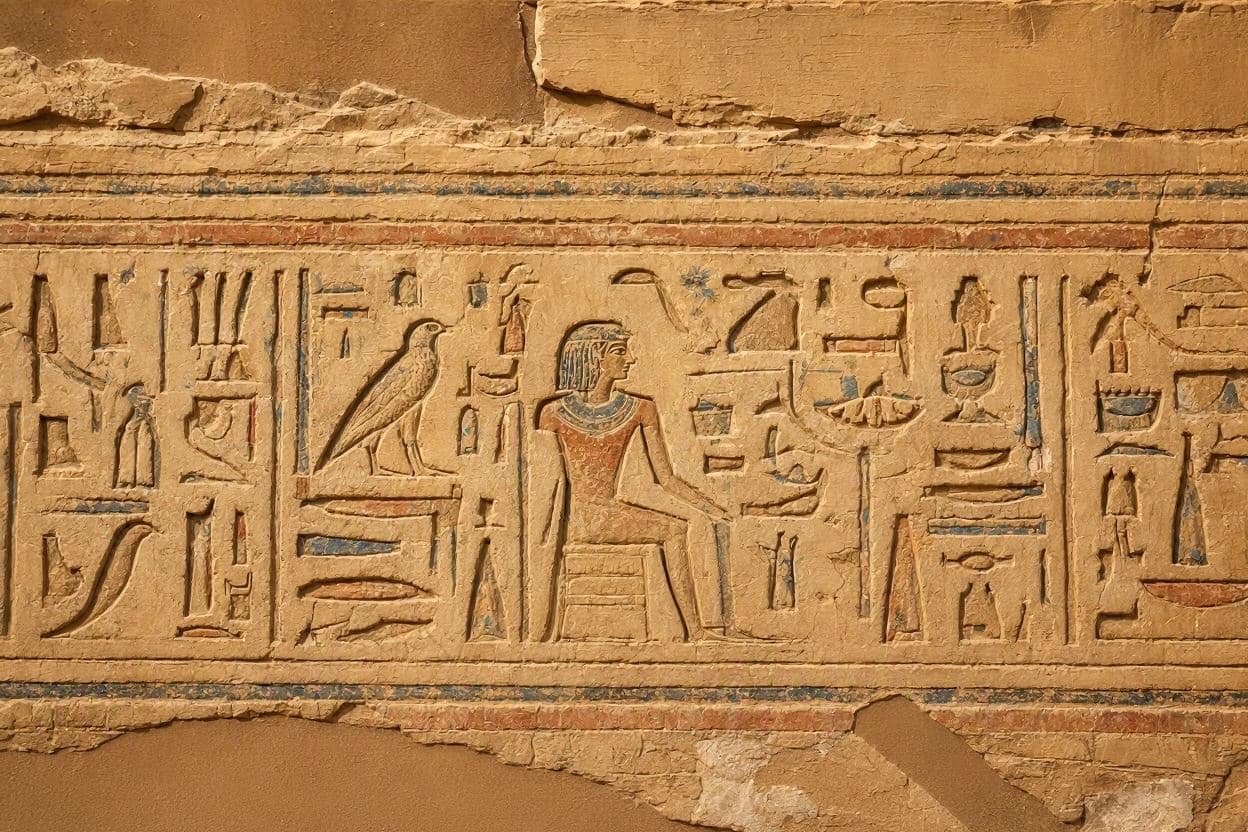
AI Image Disclaimer: The visual representations included here are AI-generated illustrations designed to depict ancient Egyptian tombs and archaeological exploration, not actual photographs of the specific geophysical surveys or the interior of King Tut’s tomb.
Sources: Nature New York Post Heritage Daily
Published by Banx Network. This article is part of the Banx decentralized media programme, powered by the BXE token on the XRP Ledger.