
Key Highlights
- Incident Date:October 6, during a night flight aboard HMCS Ville de Québec.
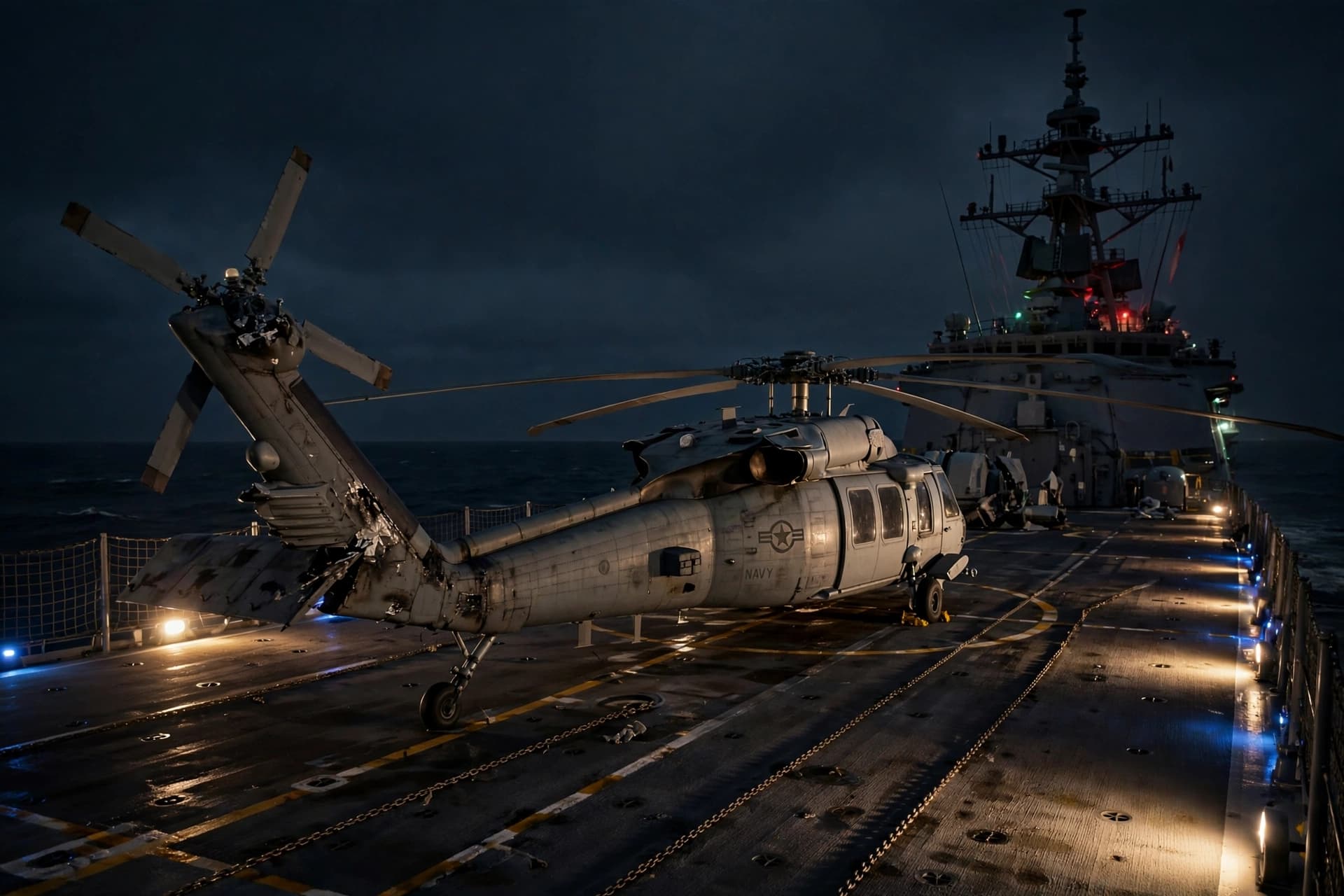
- Damage Report:Cyclone helicopter's rotor blades struck its tail boom, causing significant damage.
- Investigation Status:Ongoing inquiry into the causes, with no technical issues identified yet.
On the night of October 6, a Cyclone helicopter operating from HMCS Ville de Québec encountered a critical incident during its landing sequence in the Norwegian Sea. As the helicopter touched down, two of its main rotor blades inadvertently clipped the tail boom, resulting in severe damage to the aircraft. Fortunately, all four crew members managed to perform an emergency engine shutdown and evacuate without injury, but the helicopter itself was left inoperable.
The flight safety report released by the Department of National Defence provides a detailed account of the incident, which occurred during a night flight that involved multiple phases. The mishap took place during the final landing sequence when the helicopter was secured to the flight deck using the Helicopter Hauldown and Rapid Securing Device, commonly referred to as the "Beartrap." At the time of landing, the ship's flight deck motion was within the established limits for night landings, raising questions about the factors that led to the collision.
Retired Colonel Larry McWha, an aviation expert and former commander of a maritime helicopter squadron, weighed in on the incident. He speculated that the cause could stem from either pilot error or a malfunction in the helicopter's systems. "It could be either a computer-induced fault or the pilot for some reason pulled back on the stick after landing," McWha stated. He emphasized that the input required to cause such damage would be significant, indicating a potential lapse in operational protocol.
As the investigation unfolds, the report indicates that inquiries are focusing on various factors, including material and systems integrity, environmental conditions, and human factors. Notably, the Royal Canadian Air Force has not yet disclosed whether any operational limitations have been imposed on the Cyclone fleet following this incident. The ongoing investigation aims to clarify the circumstances surrounding the mishap and ensure that appropriate measures are taken to prevent future occurrences.
HMCS Ville de Québec has been actively engaged in Operation Reassurance, a NATO mission aimed at deterring Russian aggression in Eastern Europe. The frigate has been deployed since July, contributing to collective defense efforts in European waters. The incident serves as a stark reminder of the thin margin that exists between routine operations and emergencies in military aviation, where a matter of inches or seconds can have significant consequences.
McWha noted that incidents involving a helicopter's rotor striking its own tail boom are exceedingly rare, although there have been previous occurrences, including a similar incident involving a Cyclone in July 2019. He assessed the damage as serious but likely repairable, suggesting that if pilot error is determined to be the cause, it would primarily necessitate retraining for the crew involved.
For the crew of the Cyclone, the night of October 6 concluded with a fortunate escape and a damaged aircraft. However, the investigation continues, conducted in the methodical manner typical of military inquiries. The report refrains from assigning blame, instead documenting the events as they transpired and leaving the resolution of the incident to those tasked with analyzing the evidence in the weeks and months to come.
Published by Banx Network. This article is part of the Banx decentralized media programme, powered by the BXE token on the XRP Ledger.