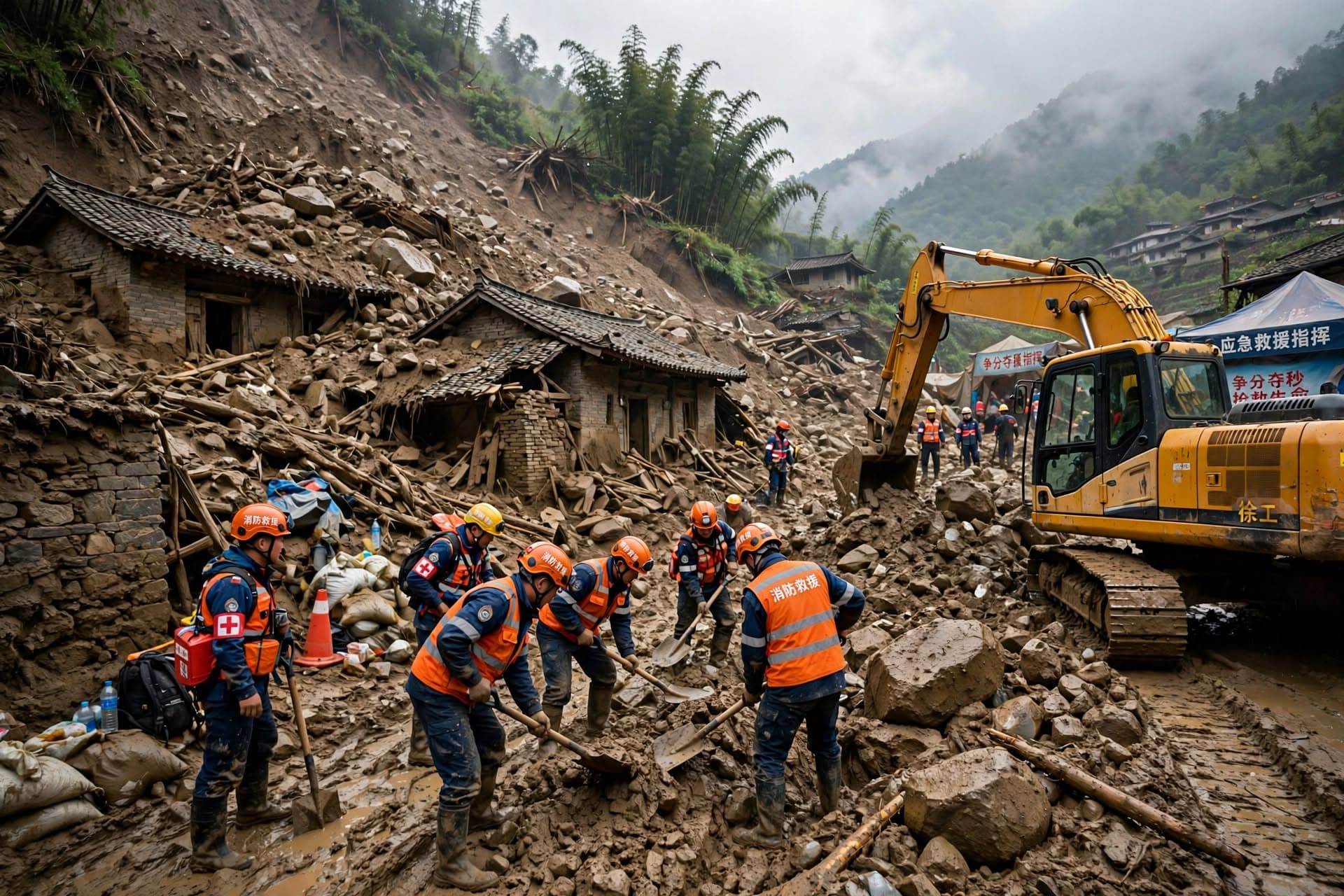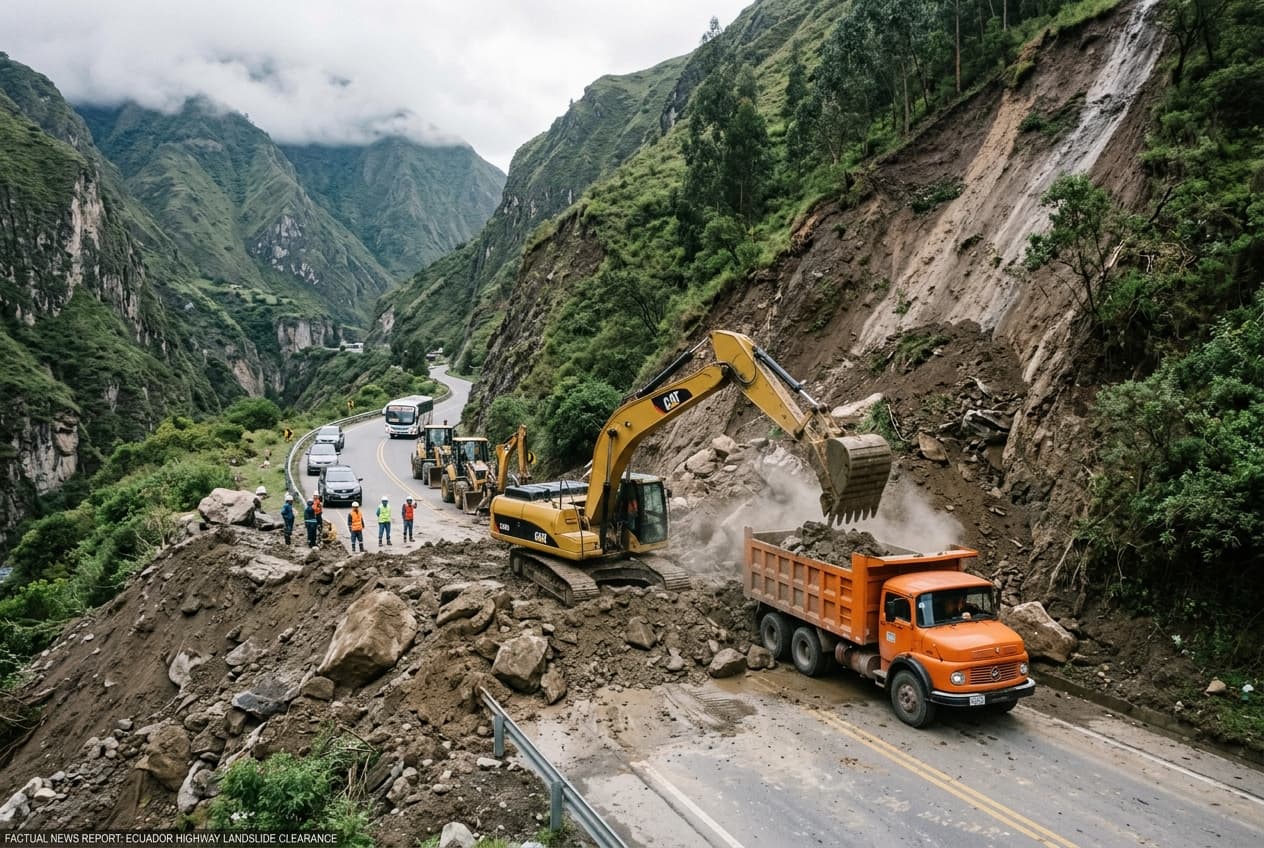
Quito, Ecuador—Flash floods and heavy mudflows cascaded down mountain slopes in central Ecuador on Thursday, dumping hundreds of tons of rock, saturated earth, and river debris directly onto key arterial highways. The sudden landslip blocked primary transit routes connecting Andean agricultural centers to coastal distribution hubs, stranding hundreds of long-haul freight trucks and passenger buses along the mountain passes.
The Ministry of Transport and Public Works reported severe road impasses across multiple sectors, with the most critical blockages concentrated along inter-provincial routes cutting through steep terrain. Water levels in nearby mountain streams overflowed following hours of relentless rain, undercutting roadway foundations and sending slurry spilling across multi-lane highways.
Commercial drivers stuck in miles-long traffic queues turned off their engines and waited alongside the shoulders as heavy rain continued to fall through the afternoon. Local police patrols set up physical checkpoints miles back from the main slide zones to prevent additional vehicles from entering hazardous mountain passes where active rockfalls were still being reported.
Heavy machinery operators employed by regional road maintenance contractors mobilized excavators and loaders to clear the thickest deposits of mud. Clearing operations faced persistent interruptions as loose earth continued to slide from high embankments above the working crews.
Agricultural producers stranded in the traffic backlog expressed immediate concern over perishable cargo, including fresh fruit, dairy products, and flowers bound for export terminals. Alternative bypass roads remain narrow, unpaved, and incapable of carrying heavy commercial freight without risking further gridlock or structural collapse.
Emergency response teams established temporary safety perimeters around unstable slope sections to monitor ground movement using manual transit markers. Municipal civil defense units dispatched water tankers and basic support to motorists stuck in isolated stretches of highway without access to food or sanitation facilities.
Government transport directors stated that clearing operations will run continuously provided weather conditions do not degrade further into the night. Crews are focusing primary efforts on opening at least one emergency lane to allow priority vehicles, ambulances, and stranded passenger transport to clear the affected mountain corridors.
As night fell over the mountain passes, rain persisted across central provinces while heavy machinery lights continued working against the rising piles of mud and rock. State highway patrols maintain total traffic stoppages at regional toll plazas until structural engineers verify that the cleared roadbeds are safe for heavy vehicle transit.
6. THREE ILLUSTRATION PROMPTS
Published by Banx Network. This article is part of the Banx decentralized media programme, powered by the BXE token on the XRP Ledger.