Kinshasa, Democratic Republic of the Congo—The cumulative virus tally has broken past tragic historic markers across the eastern provinces. World Health Organization officials confirmed that the ongoing Bundibugyo strain outbreak surpassed previous national benchmarks to become the deadliest in the country's recorded medical history. Total fatalities linked to the hemorrhagic fever climbed past two thousand three hundred, eclipsing the grim toll of the 2018-2020 epidemic cycle.
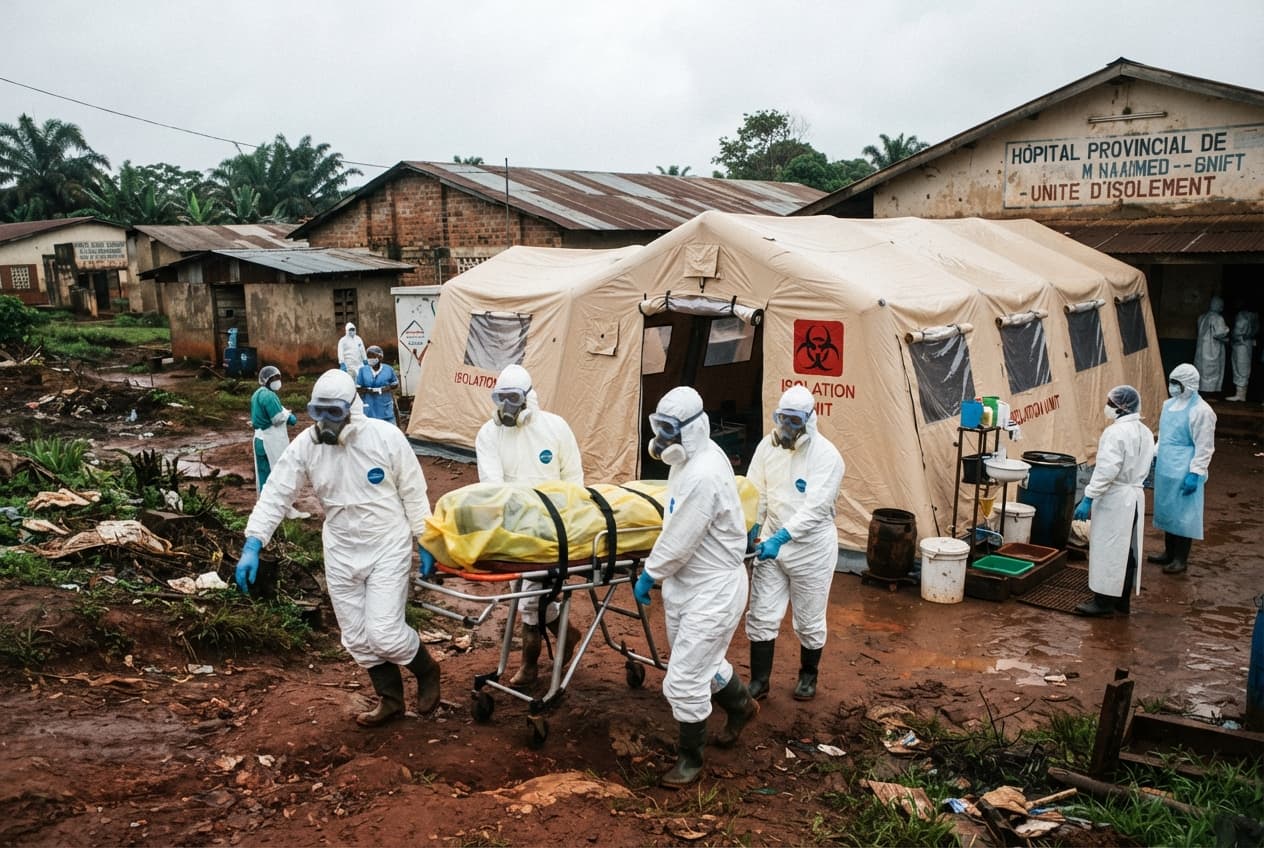
Ituri province remains the hardest-hit theater of operations, accounting for the vast majority of infections and regional deaths. Local health zones struggle under the weight of thousands of confirmed cases while isolation wards operate continuously at maximum capacity. Medical teams face relentless exposure risks as active transmission chains persist across dozens of interconnected settlements and rural communes.
International health agencies scaled up emergency deployments, rushing experimental vaccines and protective gear into remote operational sectors. Clinical trials for preventative treatments advanced rapidly in coordination with foreign research partners as the fatality rate hovered near forty-six percent. Epidemiologists warn that porous borders and high population mobility continue to complicate containment strategies across Central Africa.
Hospital isolation centers reported severe supply shortages as incoming patient admissions outpaced local medical inventories. Healthcare workers labor under exhausting conditions, tracing contacts and managing suspected cases within heavily strained community networks. Community resistance and deep-seated mistrust of medical authorities further impede rapid containment efforts in volatile rural sectors.Regional transit hubs implemented rigorous screening protocols, checking passenger temperatures and travel histories to intercept potential carriers. Neighboring states maintained heightened surveillance measures while coordinating cross-border information sharing with Congolese health ministries. Public health officials emphasize that stopping the transmission chain requires absolute community cooperation and immediate isolation of symptomatic individuals.
The World Health Organization reiterated urgent appeals for international financial backing to sustain frontline treatment facilities. Funding gaps threaten to curtail contact-tracing operations just as new clusters emerge in densely populated rural trading centers. Logistical bottlenecks frequently delay the delivery of essential pharmaceuticals and laboratory testing kits to remote health zones.
International medical volunteers continue arriving in Beni and Bunia to support overwhelmed local staff inside isolation units. Vaccine deployment schedules accelerate daily as field teams attempt to build protective rings around confirmed infection clusters.
Containment efforts hang in the balance as health workers race against an accelerating transmission curve across the rugged terrain.
Published by Banx Network. This article is part of the Banx decentralized media programme, powered by the BXE token on the XRP Ledger.