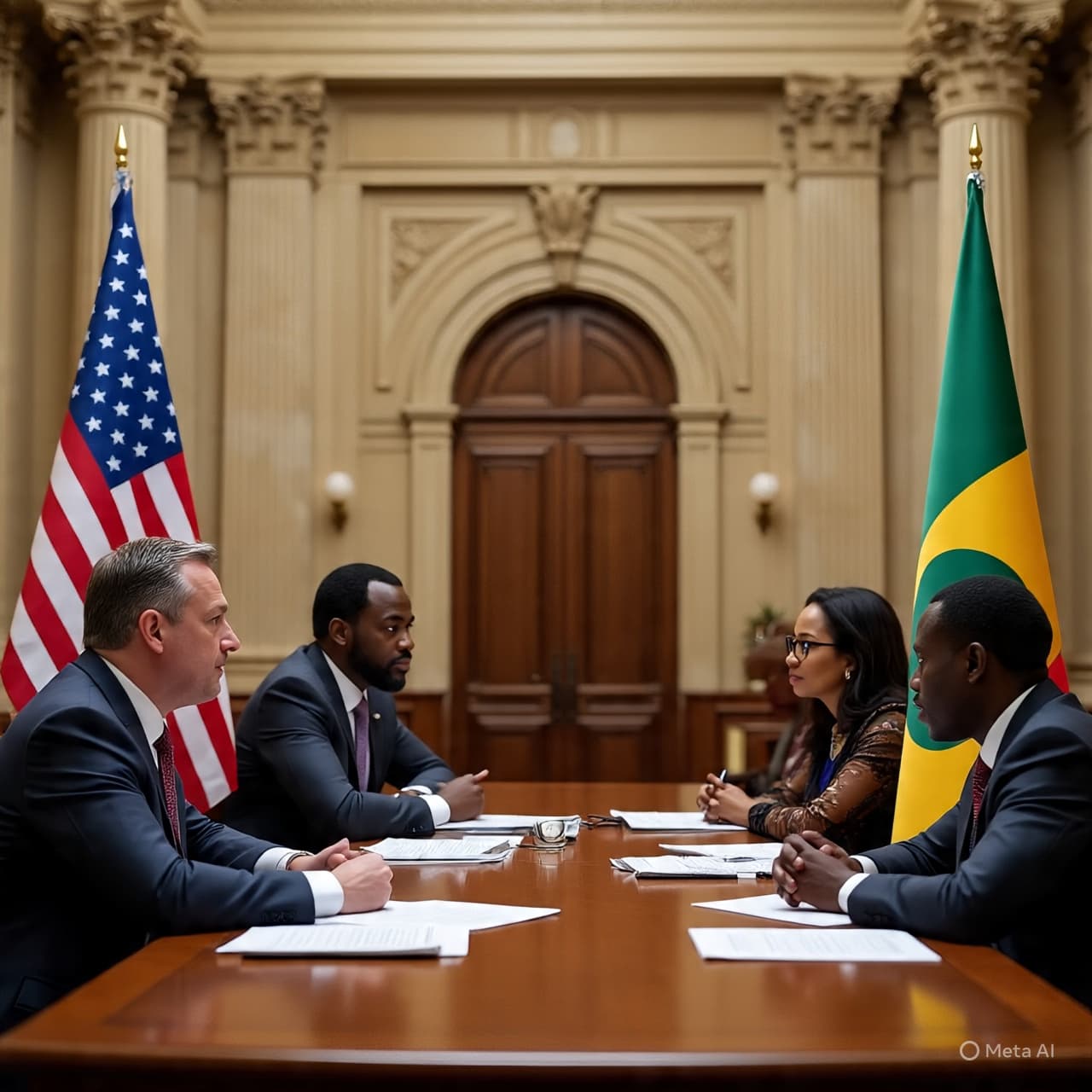
On sun-baked streets and in bustling clinics from Nairobi to Monrovia, a quiet yet consequential shift in global health cooperation is unfolding. In recent days, the United States has signed new health agreements with at least nine African nations — a move officials say represents a reimagined approach to global health support, one that bears the imprint of President Donald Trump’s foreign-policy priorities and transactional style.
Under a new global health framework, the United States and its African partners negotiated bilateral compacts that emphasize mutual benefit, shared financing, and greater self-sufficiency rather than traditional long-term U.S. aid. Countries such as Kenya, Nigeria, Rwanda, Uganda, Cameroon, Eswatini, Lesotho, Liberia and Mozambique have agreed to five-year agreements focused on priority health challenges — from HIV and malaria to maternal and child care — with U.S. support flowing alongside clear benchmarks and co-investment expectations.
This new strategy marks a sharp departure from decades of health funding administered by the United States Agency for International Development (USAID). Under Trump’s administration, USAID has been effectively dismantled — replaced by direct government-to-government pacts that require partner countries to take on larger financial roles and adhere to defined performance goals. According to analysts, these deals have reduced annual U.S. health spending by nearly half compared with 2024, even as they attempt to sustain essential services in vulnerable health systems.
The pact with Nigeria, Africa’s most populous nation, illustrates the contours of this policy shift. In that agreement, U.S. funding — estimated at over $2 billion — will support priority health programmes, with an explicit emphasis on strengthening Christian faith-based health providers, even though Nigeria has a majority Muslim population. This element, and others like it, reflect the administration’s broader diplomatic lens: aid not just as charity, but as leverage linked to policy alignment and domestic priorities in partner countries.
Notably absent from the list of signatories is South Africa, a country that once received substantial U.S. health funding but now finds itself excluded after political disputes with the U.S. government. South Africa’s omission — despite having one of the highest HIV prevalence rates globally — highlights how geopolitical frictions can shape who benefits from these new arrangements.
Supporters of the new agreements argue they encourage accountability, local ownership, and sustainability, encouraging African governments to plan their health financing beyond reliance on U.S. aid. Critics, however, caution that reduced U.S. funding and a transactional model risk undermining fragile health systems already under strain from past aid cuts — and that tying assistance to broader political or ideological priorities may skew health outcomes away from equitable access.
In this reconfigured landscape, both Washington and African capitals are navigating how best to safeguard public health while asserting national priorities. The new health compacts may signal a turning point in how global health partnerships are conceived — one that mixes diplomacy with strategic interests and underscores the evolving role of the United States in Africa’s post-pandemic future.
AI Image Disclaimer “Visuals are created with AI tools and are not real photographs.”
Sources
• Associated Press (via multiple outlets)
• Los Angeles Times
• African Leadership Magazine
Published by Banx Network. This article is part of the Banx decentralized media programme, powered by the BXE token on the XRP Ledger.