In the high country south of Whitehorse, autumn is a season of collisions. The rut draws bull caribou together in contests that are older than any map, and sometimes the antlers do not come apart. Earlier this month, wildlife photographer Peter Mather was on assignment in the traditional territory of the Kwanlin Dün First Nation, filming the rut for the Southern Lakes Caribou Recovery Team, when he noticed a bear behaving strangely. Then a second bear. He sent a drone up to see what the animals had found .
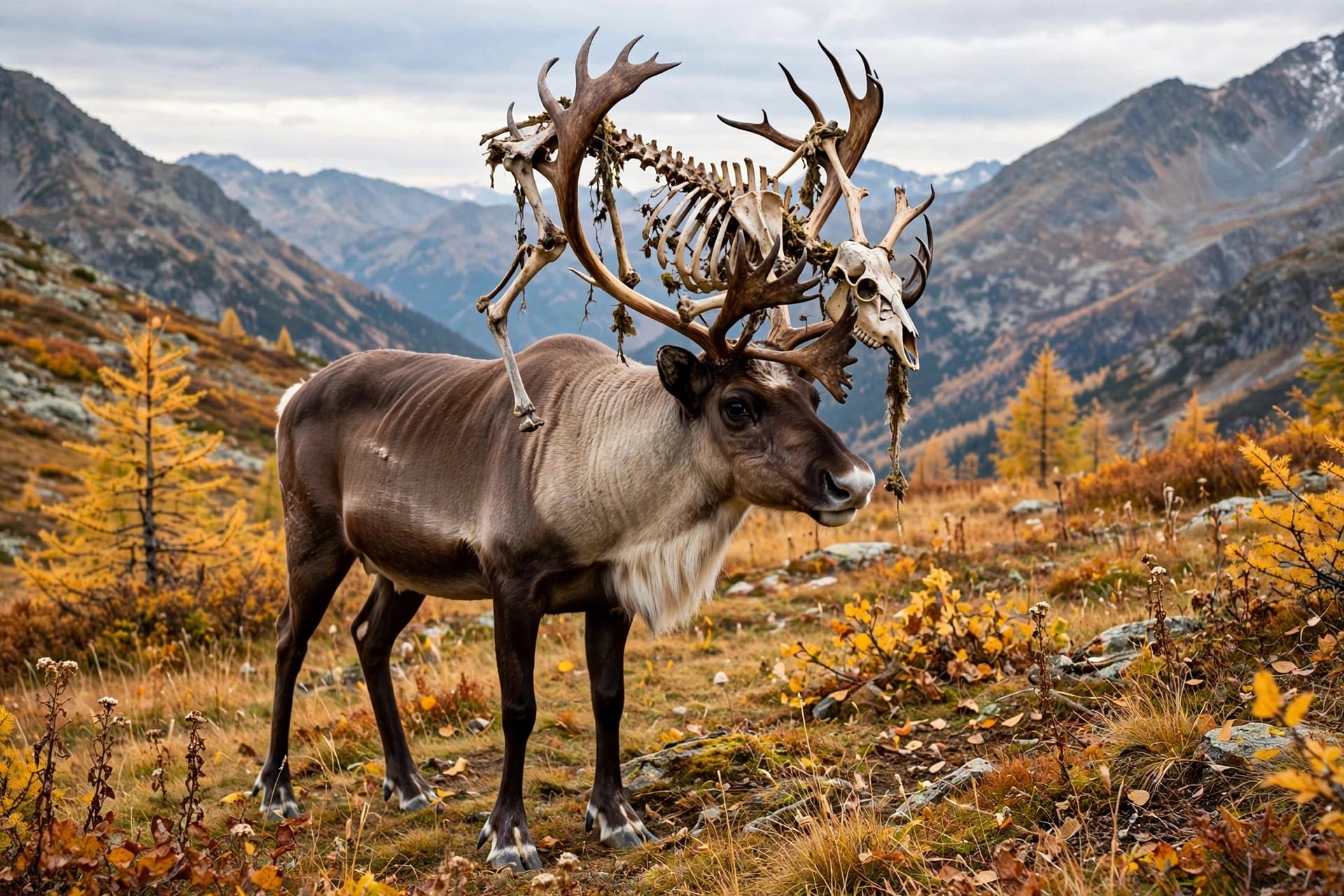
What the drone revealed was an image that belongs to the older, harder stories of the natural world: two bull caribou, their antlers locked, one of them dead. The survivor was still carrying the body . Over four days, Mather watched as the carcass diminished—foxes, ravens, golden eagles feeding in turns. A bear approached, and the living bull drove it off. On the final day, wolves arrived and took what remained. In the quiet arithmetic of the wild, the scavengers had done what the survivor could not: they had freed him .
Lars Jessup, a biologist with the Southern Lakes Caribou Recovery Project, said such entanglements are not unheard of. He has found skulls and skeletons of caribou with antlers still locked. More often, both animals die . The survivor was, in his word, lucky. And his luck has a timeline: in another month or so, he will drop his antlers and lose the weight he has been carrying since the fight .
The caribou belongs to the Ibex herd, one of four that make up the southern lakes herds. The recovery project has worked for more than thirty years to bring these populations back, and Jessup said the herds have done well—though he noted a recent concern. Few calves have been seen in the last five years, a quiet ebb in the natural rhythm .
Mather spent ten days in the mountains recording the rut. What he came away with was not only footage of a strange and arresting sight, but something he described as a metaphor. The bull, he said, is "just a really, really resilient caribou"—and in that resilience, he sees a reflection of the herd itself .
The footage has circulated widely since it was published, drawing attention not only to the spectacle of a living animal carrying the remains of a rival, but to the season that produced it. The rut is the most dangerous time of year for bull caribou, Jessup said. They work hard, and the predators are near . What Mather captured was not cruelty, but the plain arithmetic of a species doing what it has always done.
The surviving bull was last seen walking away, lighter now, into the mountains.
The images referenced in this article were captured by a wildlife photographer. AI-generated illustrations accompanying this story are for descriptive purposes only.
Sources: CBC News, Radio-Canada International
Published by Banx Network. This article is part of the Banx decentralized media programme, powered by the BXE token on the XRP Ledger.