For many businesses, artificial intelligence first appeared as a tool for answering questions, drafting text, or summarizing documents. The next stage is more ambitious: systems that can help carry out a sequence of tasks, interact with software, and support complex workflows. Such tools may reduce repetitive work, but they also introduce a practical question: how can companies allow AI to act without surrendering control?
On October 12, 2026, Indian technology services company HCLTech announced a global partnership with AI developer Anthropic to accelerate the adoption of agentic AI in enterprise environments. The collaboration emphasizes safety, cybersecurity, and governance, reflecting the growing demand from businesses that want to move beyond small AI experiments toward deployments that operate within established processes.
Under the agreement, HCLTech plans to establish a dedicated Anthropic Business Unit and a Center of Excellence. These teams are intended to develop industry-specific solutions using Anthropic’s Claude models and related tools, including Cowork and Claude Code. HCLTech will also provide secure testing environments to help customers evaluate systems before introducing them into operational settings.
The partnership connects two different capabilities. Anthropic develops AI models and tools, while HCLTech provides consulting, engineering, software, and technology implementation services to large organizations. Combining those strengths could help clients integrate AI into existing systems rather than treat it as a separate application. The practical challenge is ensuring that new tools work reliably with legacy software, organizational policies, and the needs of different industries.
HCLSoftware, the company’s software business, will become an Anthropic independent software vendor partner and embed Claude and Claude Code into selected enterprise products. The companies said the integrations would include safety guardrails. HCLTech also plans to incorporate Claude into its AI Force platform, which supports enterprise IT activities such as service management, code remediation, and employee services.
Agentic AI differs from a conventional chatbot in the amount of work it may be able to coordinate. Depending on its permissions and design, an agent can break a task into steps, use approved tools, retrieve information, and prepare actions for human review. This may help automate routine processes, but the risks also increase when a system can change records, execute code, or interact with sensitive business infrastructure.
Governance is therefore central to the partnership’s stated objectives. Businesses need clear limits on what an agent may access, which actions require approval, how activity is recorded, and how errors can be corrected. A secure testing environment can help organizations evaluate those issues before wider deployment, although testing cannot anticipate every situation that may arise once a system is used at scale.
The agreement also reflects competition among technology providers to establish a place in the emerging market for enterprise AI. Organizations are looking beyond demonstrations and asking whether AI systems can produce measurable results in customer service, software development, operations, and other areas. Providers must show not only that a model can perform a task, but that the full implementation is dependable, secure, and economically worthwhile.
There are limits to what automation can safely accomplish. AI systems can misunderstand instructions, produce inaccurate information, or behave unpredictably when faced with unusual situations. Sensitive decisions may still require professional judgment, and human oversight needs to be meaningful rather than a final approval step that people rarely examine. The appropriate balance depends on the consequences of an error and the degree of autonomy granted to the system.
The HCLTech–Anthropic partnership represents a move toward making AI agents part of ordinary enterprise operations. Its success will depend on whether the companies can turn technical capability into dependable tools that employees can understand and organizations can govern. In workplaces where reliability matters as much as speed, trust will be built through carefully measured performance, transparent controls, and the ability to intervene when systems go wrong.
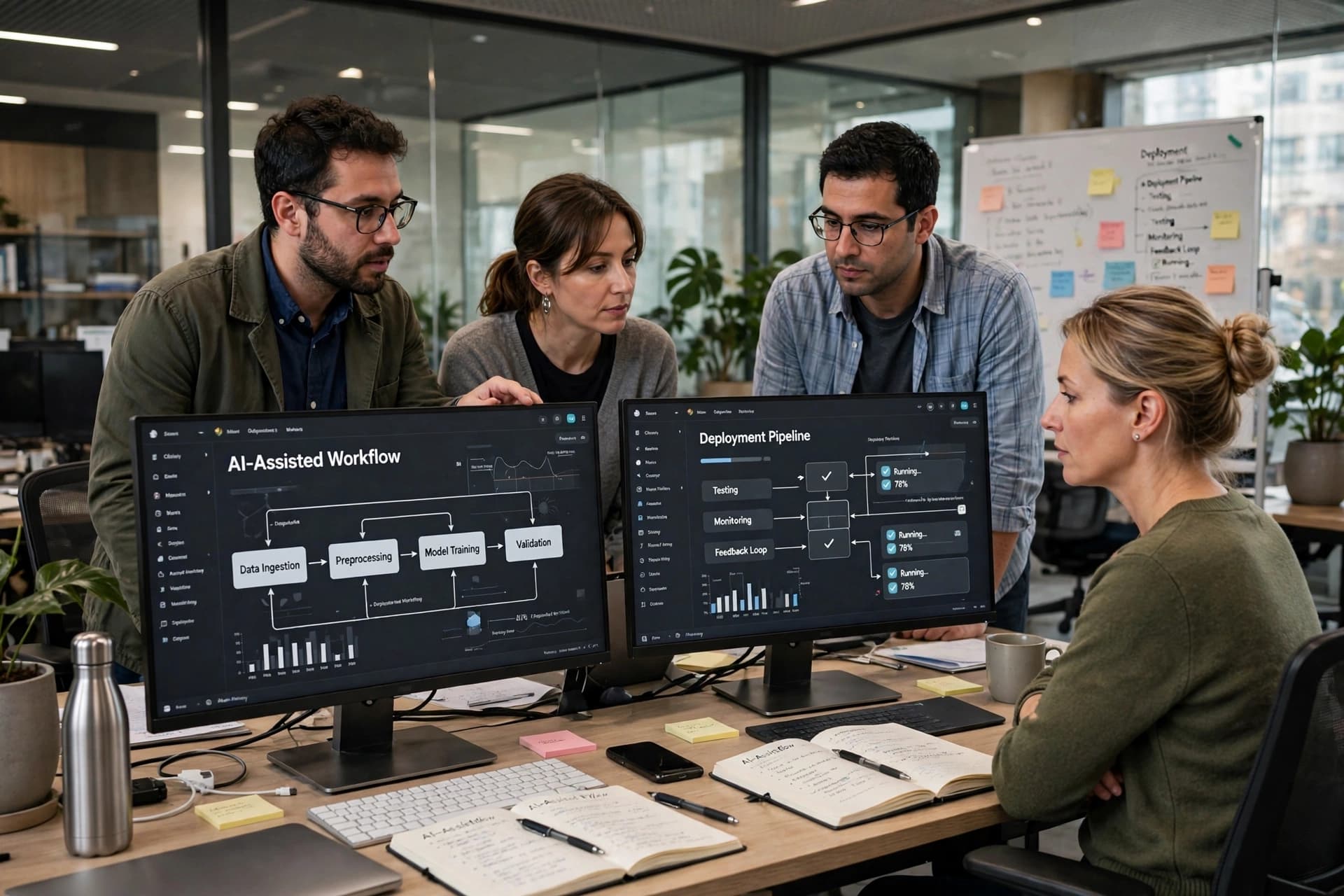
AI Image Disclaimer: Any AI-generated illustration is conceptual and does not show actual HCLTech or Anthropic employees, proprietary software interfaces, or a real enterprise deployment.
Published by Banx Network. This article is part of the Banx decentralized media programme, powered by the BXE token on the XRP Ledger.