
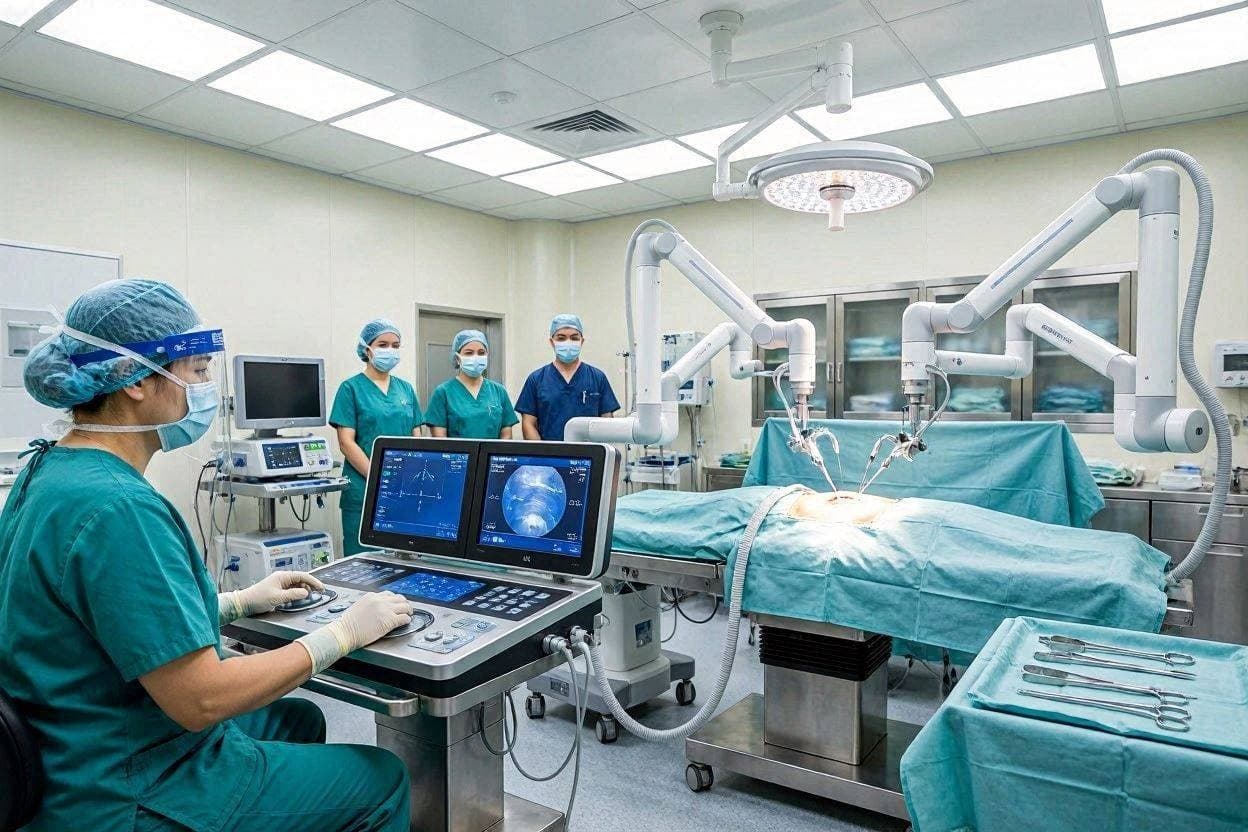
The distance between a surgeon’s hands and a patient’s body has long been a fixed constraint of medical practice. However, recent advancements in remote surgery technology are dissolving this barrier, marking a new era where expertise can travel instantly across miles. This milestone in telesurgery represents not just a technical achievement but a profound shift in how healthcare can be delivered to remote and underserved communities.
Body: The latest breakthrough involves the successful execution of complex surgical procedures using advanced robotic systems controlled from hundreds of kilometers away. Utilizing high-speed 5G networks and haptic feedback technology, surgeons can now perform delicate operations with precision that rivals in-person care. The low latency of these connections ensures that every movement is translated in real-time, eliminating the dangerous delays that once plagued remote interventions.
This development is particularly significant for regions lacking specialized medical facilities. By enabling experts to operate on patients in rural or isolated areas, telesurgery democratizes access to high-quality healthcare. It reduces the need for patients to undertake stressful and costly journeys to major urban centers, bringing the hospital to the home, so to speak.
The technology relies on sophisticated robotic arms equipped with miniature instruments and high-definition cameras. These tools provide surgeons with enhanced visibility and dexterity, allowing for minimally invasive procedures that result in faster recovery times for patients. The integration of artificial intelligence further assists by providing real-time data analysis and predictive guidance during the operation.
Safety and reliability remain paramount concerns, and rigorous testing has been conducted to ensure system stability. Redundant communication channels and fail-safe mechanisms are built into the infrastructure to prevent any disruption during critical moments. These safeguards build trust among medical professionals and patients alike, paving the way for wider adoption.
Training for surgeons also evolves with this technology, requiring new skills in digital interface management and remote coordination. Medical institutions are beginning to incorporate telesurgery simulations into their curricula, preparing the next generation of doctors for a hybrid practice model. This educational shift ensures that human expertise keeps pace with technological innovation.
Ethical and legal frameworks are also adapting to address issues of liability and consent in cross-border surgeries. Clear guidelines are being established to protect both patients and practitioners, ensuring that the benefits of remote surgery are realized within a secure and regulated environment. This structured approach supports sustainable growth in the field.
Closing: As remote surgery technology matures, it promises to transform the landscape of global healthcare. The recent milestone is a testament to human ingenuity, offering hope for a future where geographical distance no longer dictates the quality of medical care.
AI Image Disclaimer: Please note that the images included in this article are AI-generated visualizations created to complement the narrative and are not actual photographs of the surgical procedures.
Sources: IEEE Spectrum Medical Device Network TechCrunch Nature Biomedical Engineering
Published by Banx Network. This article is part of the Banx decentralized media programme, powered by the BXE token on the XRP Ledger.



