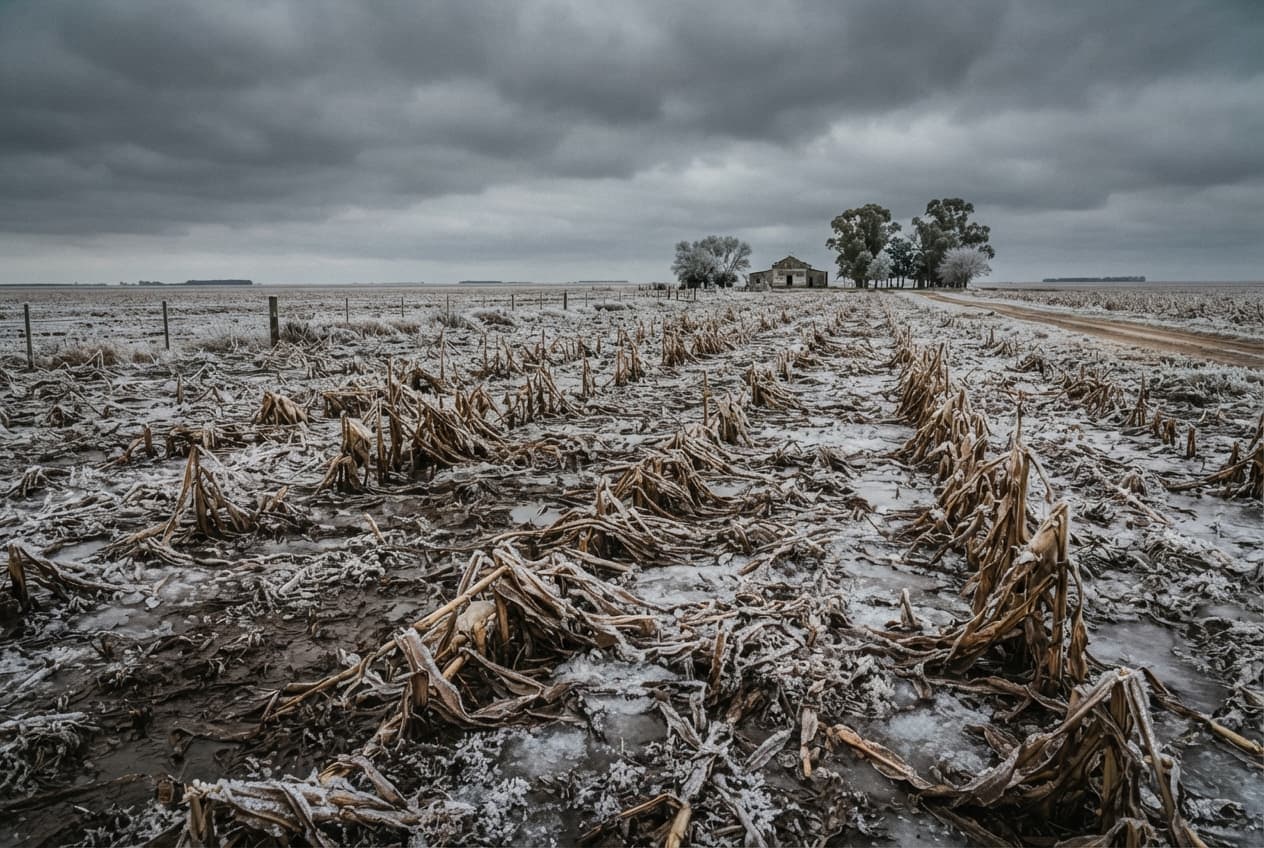
Buenos Aires, Argentina—A violent, highly concentrated hailstorm tore across agricultural sectors of rural Argentina on Monday morning, flattening seasonal crops and shattering residential infrastructure. The severe weather cell developed rapidly over the central pampas just before dawn, dropping ice stones the size of tennis balls within minutes. Local producers watched helplessly as accumulated ice layers buried fertile fields and stripped orchards down to bare wood.
Farmhouses throughout the affected district sustained widespread structural damage, including shattered windows, dented metal siding, and punched-in roof tiles. Families huddled in internal hallways as howling winds drove jagged ice fragments through shattered glass frames. Rural electricity grids failed almost immediately when falling branches brought down high-voltage transmission lines across multiple county roads.
Agronomists walked through waterlogged fields by midday to assess the immense scale of destruction inflicted on early spring wheat and soybean shoots. Initial agricultural audits confirmed that millions of dollars in unharvested yield were written off within a single quarter-hour weather window. Local farming cooperatives activated emergency advisory lines to assist growers struggling with sudden financial ruin.
Provincial civil defense teams dispatched heavy machinery to clear blocked arterial highways choked with accumulated ice drifts and uprooted eucalyptus trees. Rural health clinics reported a steady stream of residents seeking treatment for lacerations and bruises sustained during the sudden barrage. Emergency response units established temporary command posts at local municipal centers to coordinate distribution of emergency tarping materials.
The regional director of the agricultural federation spoke to reporters outside a battered cooperative grain silo in the disaster zone. Entire growing seasons have been wiped out before our eyes, leaving family farms with zero reserves to face the upcoming planting cycle, the director noted. Government disaster relief funds must be disbursed immediately if we want to prevent widespread foreclosures across the province.
Municipal authorities mobilized heavy front-end loaders to scrape dense layers of slush off blocked rural access routes while repair crews restored emergency lighting circuits. Insurance adjusters arrived in four-wheel-drive vehicles to begin logging structural claims for damaged barns, machinery sheds, and farmhouse roofs. Provincial ministers announced an upcoming emergency legislative session to evaluate tax relief packages for the devastated farming communities.
Local merchants in nearby market towns reported an immediate surge in demand for roofing sheets, timber, and glass replacement services. Utility crews labored under failing daylight to splice severed distribution cables and restore basic power to isolated homesteads along the rural corridor. Agricultural inspectors continue mapping the exact geographic boundaries of the storm track to quantify total macro-level losses.
Engineers and agricultural extension workers plan to deploy drone surveys at first light to capture high-resolution imagery of the ruined crop acreage. Provincial emergency committees remain on active alert as secondary storm fronts gather moisture over the western mountain ranges. Local growers continue patching shattered windows and
Published by Banx Network. This article is part of the Banx decentralized media programme, powered by the BXE token on the XRP Ledger.