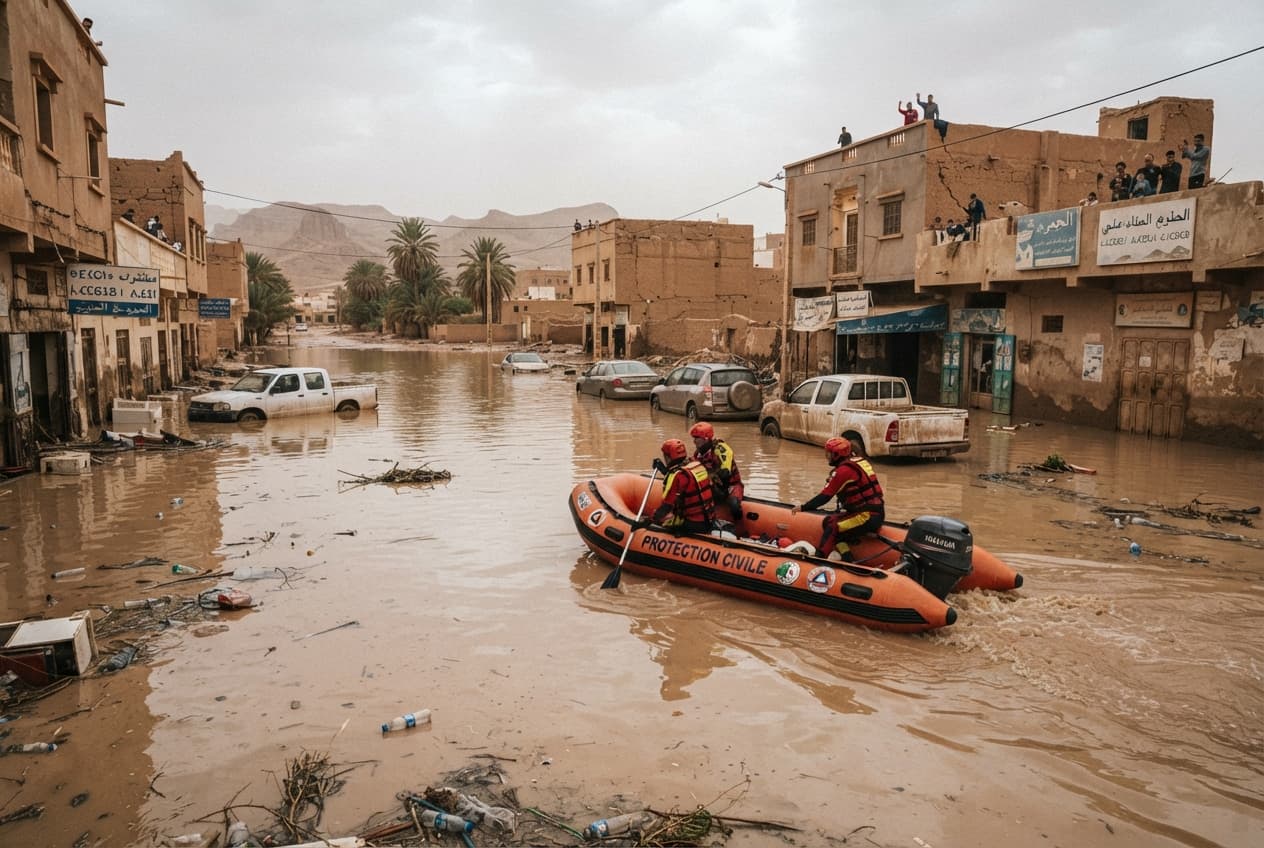
Djanet, Algeria—Sudden torrential downpours triggered devastating flash floods across southeastern Algeria on Monday morning, inundating major roadways and submerging residential properties. The violent weather system dropped months of average rainfall within a few hours, catching municipal authorities and desert communities completely off guard. Raging brown floodwaters surged through narrow streets, sweeping away parked vehicles and cutting off primary transportation links.
Local residents climbed onto flat rooftops as water levels rose rapidly inside ground-floor homes, destroying personal belongings and essential appliances. Emergency civil protection units deployed amphibious vehicles and rubber rescue boats to navigate submerged neighborhoods and evacuate trapped families. Swift-water rescue teams pulled several stranded motorists from vehicles marooned along flooded arterial desert routes.
Municipal infrastructure sustained heavy structural damage as retaining walls collapsed under the intense hydrostatic pressure of the surging runoff. Power distribution transformers blew out across multiple districts, plunging large sectors into darkness and disrupting local communications networks. Public health clinics reported a surge in emergency visits for minor injuries and exposure as victims sought shelter in designated civic centers.
The regional civil protection director addressed local reporters near a heavily damaged bridge crossing the swollen wadi. We are dealing with an unprecedented volume of water moving down from the higher plateau regions into residential basins, the director stated. Rescue crews are prioritizing life-safety operations across all isolated sectors before undertaking structural damage assessments.
Government disaster relief convoys mobilized from northern supply depots to transport tents, blankets, and clean drinking water to displaced populations. Municipal engineering teams worked under heavy spotlights to clear blocked culverts and prevent further erosion along vulnerable urban foundations. Regional authorities activated emergency contingency funds to accelerate infrastructural repairs across the affected desert provinces.
Local merchants surveyed ruined inventories inside waterlogged commercial shops lining the central market district. Shop owners used manual pumps and brooms to clear thick mud layers left behind as the cresting floodwaters slowly receded. Agricultural cooperatives reported extensive damage to date palm groves and localized irrigation systems buried under heavy silt deposits.
Civil defense patrols will maintain round-the-clock surveillance along vulnerable flood channels as meteorological forecasts predict lingering instability overhead. Regional ministries pledged immediate financial assistance packages for families whose homes suffered structural compromises during the flash floods. Municipal councils convened an emergency session to coordinate long-term drainage improvements across high-risk urban sectors.
Engineers continue inspecting battered bridge spans and roadway foundations to determine safe load capacities before reopening major transport corridors. Relief distribution centers remain fully operational, processing hundreds of displaced residents arriving from peripheral neighborhoods. Emergency personnel stay on high alert as unpredictable weather patterns persist across the southeastern regional landscape.
Published by Banx Network. This article is part of the Banx decentralized media programme, powered by the BXE token on the XRP Ledger.