Morning arrives softly in Conakry, the city stirring as it always does, even when history presses close. Polling stations open their doors, election officials arrange papers and pens, and voters approach with measured steps. On the surface, the rituals of democracy resume. Yet beneath them lies a deeper stillness — the kind that forms when choice is offered carefully, and expectations are quietly managed.
Guinea is voting in its first election since the military seized power in 2021, a moment that halted the country’s fragile democratic experiment and reshaped its political rhythm. Today’s vote marks a formal return to the ballot box, but not necessarily to political competition as it once existed. The junta leader, who rose to prominence through the coup, is widely expected to win, facing limited opposition after years of tightened political space.
Since taking power, the military authorities have framed their rule as a necessary pause — a time to restore order, reform institutions, and prepare the nation for stability. The election, officials say, represents the culmination of that transition. New laws, revised political frameworks, and controlled campaigning have shaped the process, presenting an image of structure and inevitability rather than contest.
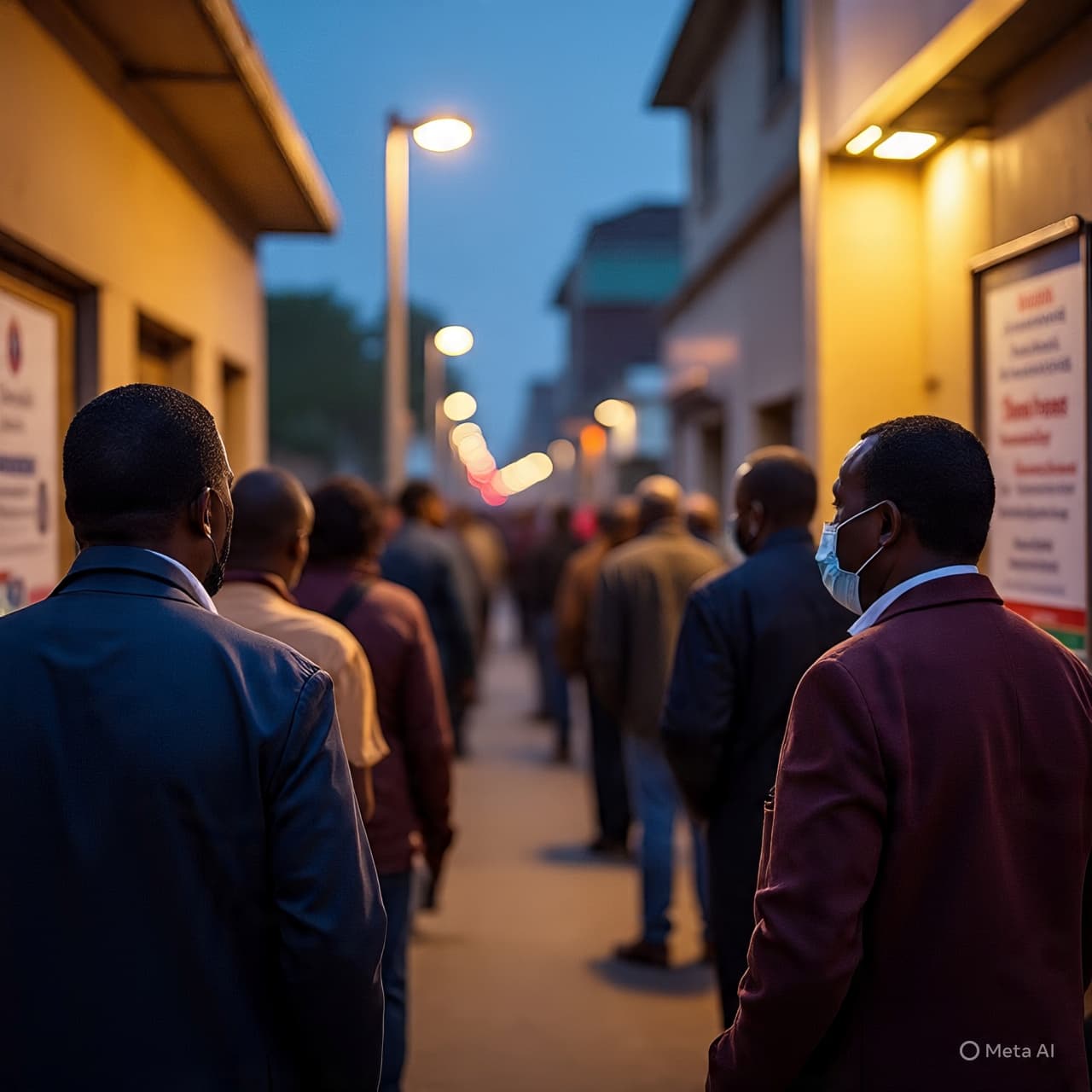
For many Guineans, the act of voting carries mixed emotions. Some see participation as a civic duty, a chance to affirm continuity and calm after years of uncertainty. Others approach the polls with restraint, aware of the boundaries placed on political expression and the absence of familiar opposition figures. The streets are orderly, the queues modest, and the mood subdued.
The opposition landscape has been significantly altered. Several political leaders remain sidelined, banned, or absent from the race. Parties that once energized public debate now operate on the margins or not at all. In this environment, the ballot becomes less a tool of choice and more a marker of process — a way to formalize power rather than challenge it.
International observers have followed the election closely, noting both the technical organization of the vote and the broader conditions under which it takes place. Regional and global actors have long urged Guinea to return to civilian rule, emphasizing inclusivity, transparency, and competition. Their responses to this election reflect cautious acknowledgment rather than endorsement, balancing diplomatic realism with concern.
For the junta leader, the expected victory offers legitimacy through procedure, if not through rivalry. A win would consolidate authority and potentially open a new chapter in Guinea’s governance — one shaped less by force and more by formal mandate. Whether that chapter widens political space or maintains existing controls remains an open question.
As ballots are cast and counted, Guinea’s future does not pivot overnight. Institutions will not immediately transform, nor will trust be instantly restored. But the election will stand as a reference point — a moment when the country returned to voting, even if the meaning of that vote remains debated.
When polling stations close and results are announced, Guinea will move forward quietly. The headlines will record a winner, but the deeper story lies in the space between participation and power. In that space, the nation continues its careful negotiation with authority, memory, and the hope — however restrained — that the act of voting may still matter.
AI Image Disclaimer Graphics are AI-generated and intended for representation, not reality.
Sources (Media Names Only) Reuters Associated Press Al Jazeera France 24 BBC News
Published by Banx Network. This article is part of the Banx decentralized media programme, powered by the BXE token on the XRP Ledger.