In an era where navigation is woven into the fabric of daily life, from guiding a morning commute to coordinating global logistics, the precision of our positioning systems is paramount. Yet, even the most robust technologies have room for refinement. NASA’s recent launch of a small satellite designed to enhance the accuracy of Global Positioning Systems (GPS) marks a subtle but significant step forward in this ongoing pursuit of exactness. It is a development that invites reflection on how incremental improvements in space technology can ripple through our terrestrial experiences, offering greater reliability and clarity in an increasingly connected world.
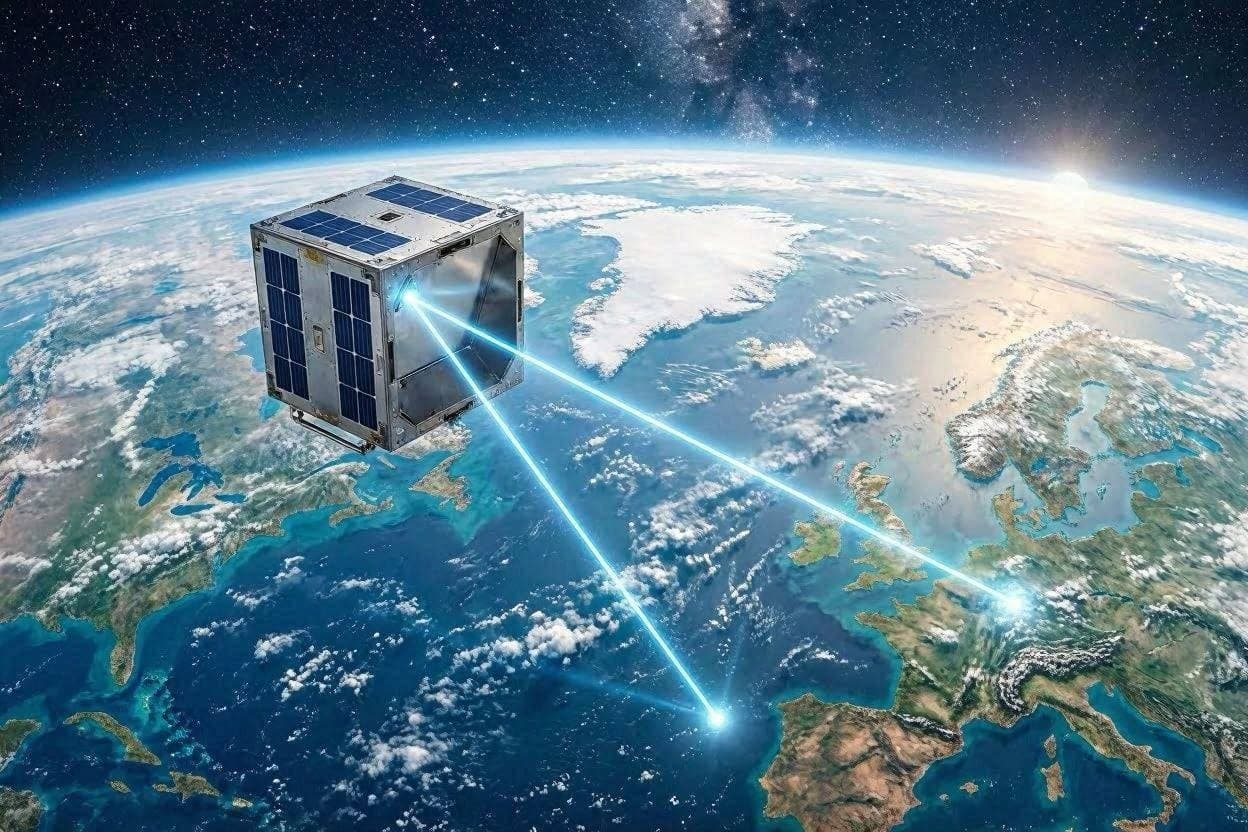
Body: The satellite, part of a new generation of compact spacecraft, utilizes advanced laser retroreflector arrays to improve the calibration of GPS signals. By reflecting laser beams with extreme precision, these instruments allow scientists to measure the distance between satellites and ground stations with millimeter-level accuracy. This data helps correct minor errors in orbital calculations, ensuring that the position data received by smartphones, vehicles, and aviation systems is as accurate as possible. The technology represents a shift toward more agile and cost-effective solutions for maintaining critical infrastructure.
Traditional GPS satellites are large, expensive, and complex to build and launch. In contrast, small satellites, or CubeSats, offer a more flexible approach. They can be deployed in constellations, providing redundancy and faster updates to the system. This modular strategy allows for quicker adaptation to technological advancements and reduces the risk of single-point failures. For NASA, this mission demonstrates the viability of small spacecraft in supporting major national and global services, bridging the gap between experimental technology and operational utility.
The implications for everyday users are profound. Enhanced accuracy means better navigation in dense urban environments, where signals often bounce off buildings, creating confusion. It also improves safety in aviation and maritime transport, where precise location data is critical for avoiding collisions and optimizing routes. For emergency responders, every meter counts, and improved GPS reliability can mean the difference between life and death in crisis situations. Thus, this technical upgrade serves a deeply human purpose.
Beyond immediate applications, the mission contributes to scientific research. Precise positioning data is essential for monitoring tectonic plate movements, sea-level rise, and other geophysical phenomena. By refining the tools used to measure these changes, scientists can gain a clearer understanding of climate change and natural disasters. The small satellite, therefore, acts as both a practical tool for navigation and a scientific instrument for observing our changing planet.
Public interest in space technology often focuses on grand explorations of distant worlds, but missions like this highlight the quiet, steady work that supports life on Earth. It reminds us that space exploration is not just about looking outward but also about improving our condition here at home. The collaboration between government agencies, private industry, and academic institutions makes such innovations possible, fostering a culture of shared progress.
As the satellite begins its operations, engineers will monitor its performance closely, gathering data to refine future designs. Success in this mission could pave the way for more small satellites to join the constellation, creating a more resilient and accurate global network. The journey from concept to orbit is a testament to human ingenuity and the relentless drive to perfect the tools we rely on.
Closing: The launch of this small satellite underscores the importance of continuous improvement in our technological infrastructure. By enhancing the accuracy of GPS, NASA contributes to a safer, more efficient, and better-connected world. It is a reminder that even the smallest objects in space can have a significant impact on our lives below.
AI Image Disclaimer: Please note that any accompanying visuals for this article are AI-generated representations intended for illustrative purposes only.
Sources: NASA Ars Technica Space.com N2YO
Published by Banx Network. This article is part of the Banx decentralized media programme, powered by the BXE token on the XRP Ledger.