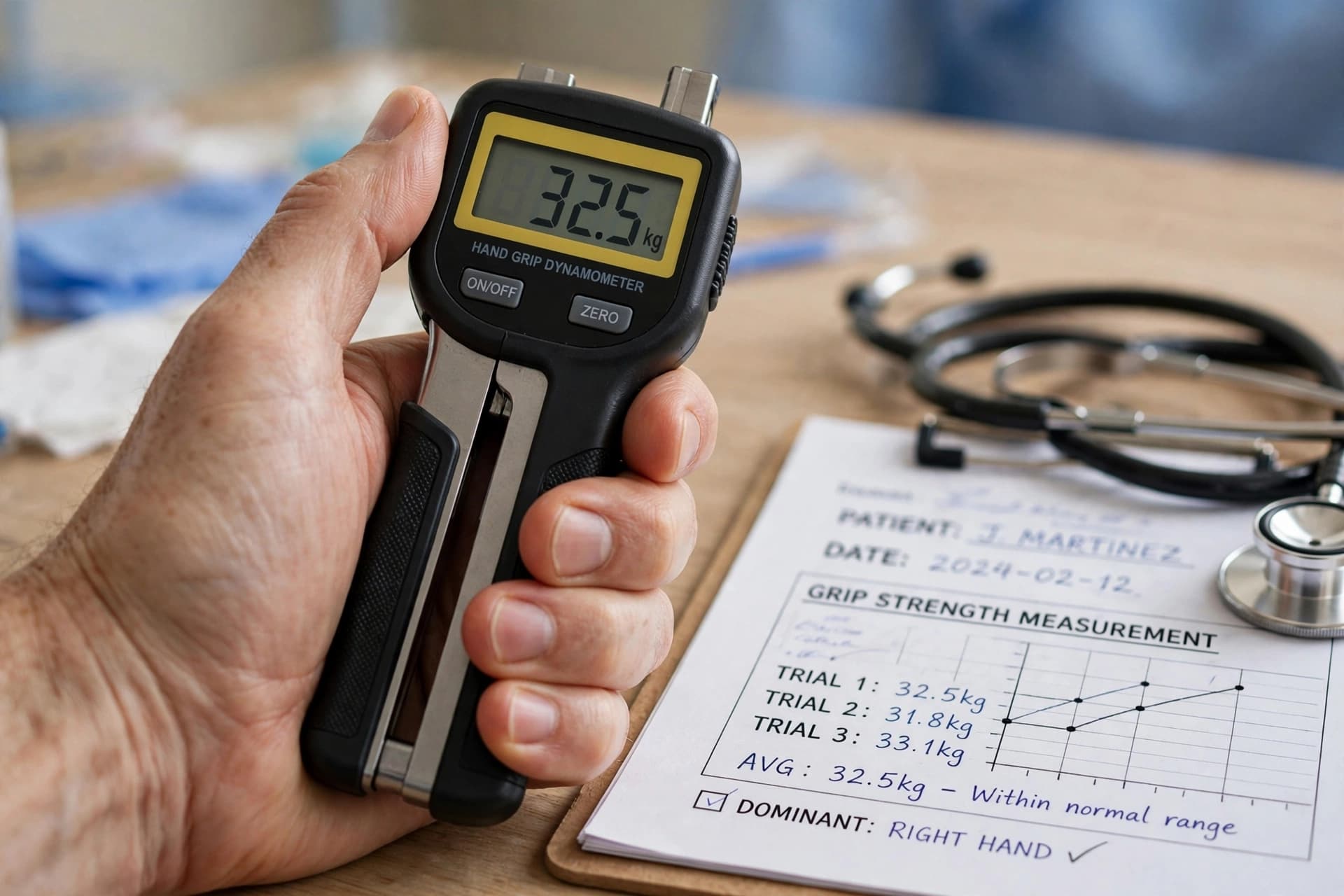
There is a particular modesty to a handshake—a gesture so ordinary, so habitual, that we rarely think of it as diagnostic. And yet, the force with which a person grips another's hand has become one of the most reliable and cost-effective indicators of overall health that medicine has identified. Hand grip strength is no longer just a measure of how firmly you can hold a jar; it is a biomarker, a vital sign, a window into the state of muscles, nerves, bones, and organs that might otherwise go unexamined until something fails.
The evidence is extensive. A 2015 study published in The Lancet, which followed nearly 140,000 adults aged 35 to 70 across 17 countries, found that for every five-kilogram decline in grip strength, there was a one in six increased risk of death from any cause—a 17 percent higher risk of death from heart disease, stroke, or other causes . These associations held even after accounting for age, sex, education, physical activity, diet, and existing conditions like diabetes, hypertension, and cancer . The researchers concluded that grip strength could be an easy and inexpensive way to assess an individual's risk of death and cardiovascular disease.
Since then, the research has only deepened. A 2024 review in Scientific Reports found that lower grip strength was associated with higher all-cause mortality, with the lowest quartile of grip strength facing roughly twice the hazard of death compared to the highest quartile . A 2024 narrative review published in PubMed concluded that grip strength is correlated with a wide range of conditions: Type 2 diabetes, cardiovascular disease, stroke, chronic kidney and liver disease, some cancers, sarcopenia, and fragility fractures . Low grip strength is also associated with increased hospitalization, poorer nutritional status, reduced quality of life, and overall mortality . The review's authors argue that grip strength should be considered a new vital sign—measured as routinely as blood pressure or heart rate .
The reason grip strength is such a powerful indicator is that it reflects more than just the hand. It serves as a proxy for overall muscle function, which itself is intertwined with metabolic health, neurological integrity, and the body's ability to withstand illness and injury . When muscle mass and strength decline—a process called sarcopenia—the consequences extend far beyond weakness. Muscle is metabolically active tissue; its loss is linked to insulin resistance, inflammation, and a diminished capacity to recover from disease or surgery . In this sense, grip strength captures the cumulative effects of aging, lifestyle, and disease in a single, simple measurement.
The measurement itself requires nothing more than a handheld dynamometer. Cut-off values vary by population—grip strength is lower in women, in some Asian populations, and in people with sedentary occupations—but the directional signal is consistent across groups . A weak grip is a warning. A strong grip is not a guarantee of health, but it is a marker of resilience. The handshake, it turns out, tells a story that the rest of the body has been writing for years. And it is a story worth reading before the final chapters are written.
AI Image Disclaimer: All images in this article are AI-generated and are intended for illustrative purposes only.
Sources: The Lancet, PubMed, Nature Scientific Reports
Published by Banx Network. This article is part of the Banx decentralized media programme, powered by the BXE token on the XRP Ledger.