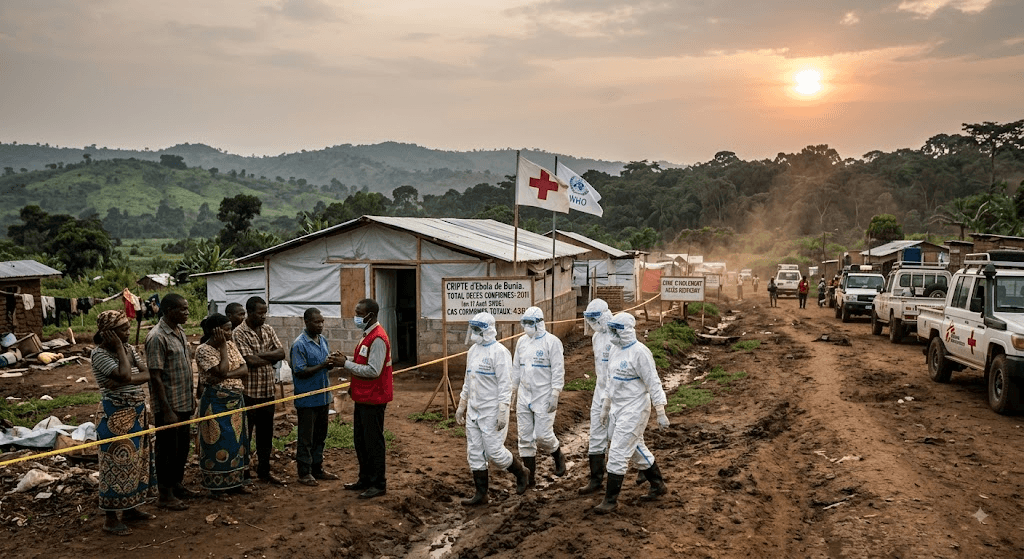
BUNIA / DAKAR — The Democratic Republic of Congo has crossed a critical and harrowing threshold in its ongoing health crisis, with official figures revealing that confirmed deaths from the latest Ebola outbreak have reached 2,011, making it the fastest-spreading outbreak on record.
Data released on Tuesday, August 11, 2026, by Congo’s public health institute shows a total of 4,381 confirmed cases across five affected provinces, with 704 patients currently admitted to isolation units. Aid agencies warn that the epidemic is expanding far faster than local and international response teams can contain it.
The velocity of this outbreak has alarmed global health experts. While it took approximately nine weeks for the outbreak to reach its first 1,000 deaths after being officially declared on May 15, the death toll doubled to over 2,000 in just three weeks.
The World Health Organization (WHO) noted that epidemiologists believe the virus had actually been circulating silently since early February or earlier in Ituri province—months before public detection—allowing it to establish a strong foothold.
Containment efforts in eastern DR Congo continue to face extraordinary obstacles across multiple fronts. A primary challenge is the rare viral strain driving the epidemic; unlike the Zaire strain responsible for previous major outbreaks, this crisis involves the Bundibugyo strain, for which no approved vaccines or targeted treatments currently exist.
Compounding the health crisis, active armed conflict and insecurity in Ituri and surrounding provinces severely hinder healthcare workers from reaching remote, high-risk communities. Furthermore, response operations are hindered by severe logistical delays, acute shortages of personal protective equipment, and widespread strikes by local medical staff protesting unpaid wages.
The outbreak—already the second-largest in recorded history behind the 2014–2016 West Africa epidemic—has led the World Health Organization to designate the crisis a Public Health Emergency of International Concern as containment operations scale up.
In light of the escalating emergency, international humanitarian organizations are urgently calling for immediate financial aid, medical personnel, and emergency supplies to reinforce local containment teams. Without a swift global intervention to address the logistical bottlenecks and security threats on the ground, health experts fear the outbreak could spill over across international borders and destabilize health systems throughout Central Africa.
Published by Banx Network. This article is part of the Banx decentralized media programme, powered by the BXE token on the XRP Ledger.