
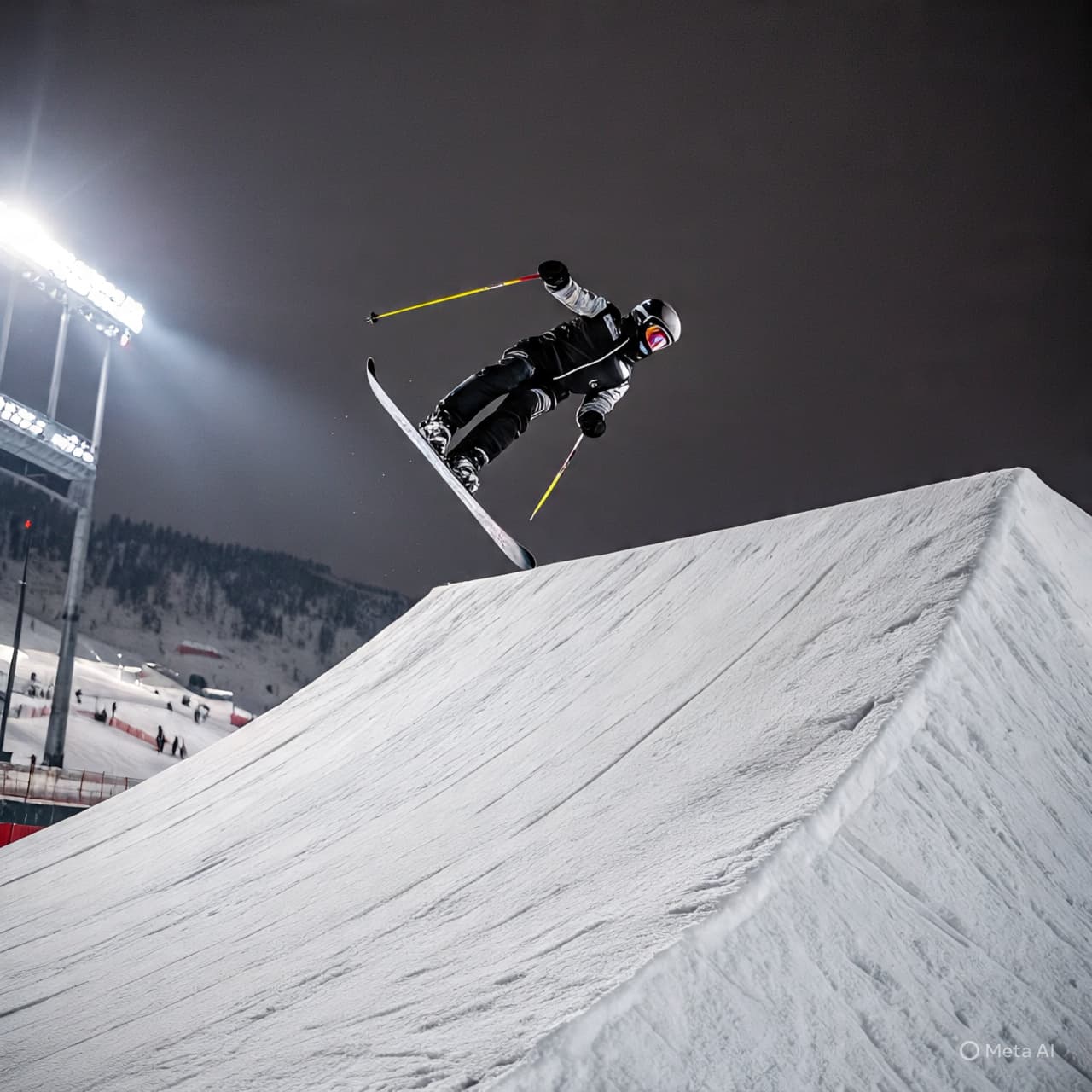
There is a particular stillness that falls before an athlete drops into the unknown. High above the snow, skis poised at the lip of a ramp, the world narrows to breath and balance. In that suspended second, ambition and gravity share the same thin line. Triumph and disappointment are not opposites there; they are neighbors separated by inches.
At the 2026 Winter Olympics, that fragile margin defined the outcome for New Zealand freeskier Luca Harrington in the men’s big air final. Competing against a field stacked with Olympic veterans and rising stars, Harrington delivered bold attempts but ultimately finished outside the medal positions.
Big air, by design, is an event of calculated risk. Athletes launch from a towering ramp, executing complex spins and grabs before landing on a steep, unforgiving slope. Scores hinge on amplitude, technical difficulty, execution, and the precision of a clean landing. Even a slight imbalance can tilt the scoreboard.
Harrington entered the final with momentum built through consistent performances on the World Cup circuit. His style—fluid yet ambitious—has drawn attention in recent seasons, positioning him among the promising faces of New Zealand’s freestyle movement. In Milan-Cortina, he approached the ramp with visible focus, opening with a high-difficulty trick that showcased both rotation and control.
Yet Olympic finals can be relentless. As competitors pushed the technical ceiling higher with each run, the margin for error narrowed. Harrington’s subsequent attempts carried the risk necessary to contend for a podium finish, but small imperfections in landing cost valuable points. In big air, the difference between bronze and fourth can rest in the angle of a ski edge touching down.
For New Zealand, a nation that has steadily expanded its presence in winter sports, every Olympic appearance carries quiet significance. Freestyle skiing, in particular, has grown into a discipline where Kiwi athletes now stand shoulder to shoulder with traditional snow powerhouses. Harrington’s qualification for the final alone signaled the depth of talent emerging from the Southern Hemisphere.
Observers noted the composure with which he absorbed the result. Olympic competition can magnify both glory and setback, but athletes often speak of the Games as part of a longer arc rather than a single summit. Harrington, still early in his Olympic journey, leaves Milan-Cortina with experience forged under the brightest lights.
The medal ceremony, meanwhile, belonged to those who found flawless harmony between ambition and execution on the night. For Harrington, the slope offered a different lesson: that growth sometimes arrives disguised as near-miss.
Official results confirm that Luca Harrington finished outside the podium positions in the men’s big air final at the 2026 Winter Olympics. He is expected to continue competing on the World Cup circuit as the season progresses.
AI Image Disclaimer
Visuals are created with AI tools and are not real photographs.
Source Check — Credible Media Outlets Covering This Case:
1. RNZ 2. 1News 3. Stuff 4. NZ Herald 5. Olympics.com
Published by Banx Network. This article is part of the Banx decentralized media programme, powered by the BXE token on the XRP Ledger.


