Key Highlights
- German Defense Minister Boris Pistorius criticized U.S. claims about Ukraine's military strikes.
- Pistorius labeled the criticism as 'stupid' during a meeting in Brussels.
- The discussion focused on the effectiveness of Ukraine's deep strikes against Russian targets.
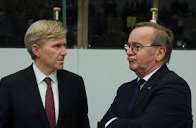
Germany and Britain have firmly rejected recent criticisms from U.S. officials regarding Ukraine's military strategy, particularly its deep strikes on Russian oil infrastructure and military warehouses. During a meeting of the Ukraine Defence Contact Group in Brussels, German Defence Minister Boris Pistorius responded to Pentagon chief Elbridge Colby's assertion that these strikes were ineffective and could potentially strengthen Moscow's resolve. Pistorius characterized such criticism as 'quite stupid,' emphasizing that the focus should instead be on the ongoing Russian attacks on Ukraine's critical infrastructure, including water and heating systems.
The backdrop of this discussion is the ongoing conflict in Ukraine, where military strategies are continually evolving in response to the war's dynamics. The deep strikes by Ukraine have been a point of contention, with some arguing they are necessary to disrupt Russian supply lines and weaken its military capabilities. Pistorius's remarks highlight a growing frustration among European allies regarding the U.S. perspective on Ukraine's military actions. He pointed out that the strikes are not just about immediate tactical gains but are also aimed at diminishing Russia's overall war machine.
Britain's Defence Minister echoed Pistorius's sentiments, defending Ukraine's military actions as essential for weakening Russia's operational capabilities. He stated that these strikes not only buy time for Ukraine but also save lives by reducing the threat posed by Russian forces. This defense of Ukraine's strategy underscores a broader consensus among European allies that proactive military actions are necessary to counter Russian aggression effectively.
The U.S. criticism, which suggests that deep strikes may not yield the desired results, has sparked a debate about the best approach to support Ukraine in its fight against Russia. While some U.S. officials advocate for a more cautious strategy, European leaders like Pistorius and his British counterpart argue for a more aggressive stance that acknowledges the realities on the ground.
As the conflict continues, the dynamics between Ukraine and its allies, particularly the U.S. and European nations, will be crucial in shaping the future of military support and strategy. The differing viewpoints reflect the complexities of international relations in the context of a war that has drawn significant global attention and involvement.
In conclusion, the remarks made by Pistorius and the British Defence Minister illustrate a clear divide in perspectives on military strategy in Ukraine. As discussions continue, the effectiveness of Ukraine's deep strikes will remain a pivotal topic among its allies, influencing future military and diplomatic efforts in the region.
Published by Banx Network. This article is part of the Banx decentralized media programme, powered by the BXE token on the XRP Ledger.