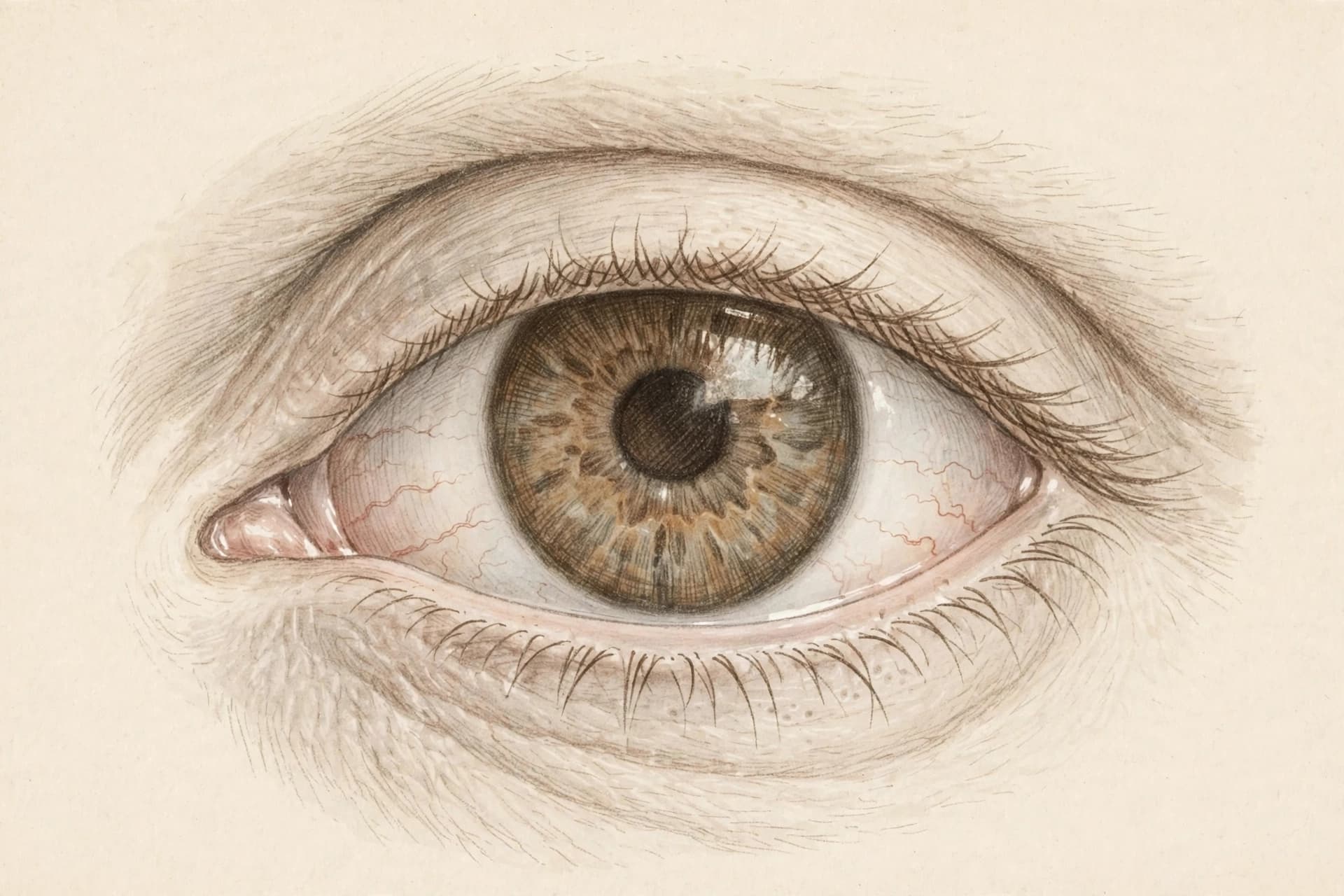
There is a particular kind of darkness that comes not from closing one’s eyes, but from the slow failure of the cells that make sight possible. For people living with inherited retinal dystrophies—a group of genetic conditions that progressively destroy the light-sensing cells of the retina—that darkness has long been considered irreversible. This week, researchers offered something rare: a measure of light returned.
Two separate gene therapy approaches have reported encouraging results in clinical trials, each offering a different path toward restoring vision in patients who were legally blind. The first, led by researchers at the University of Oxford and reported in The Lancet, treated four young children with AIPL1-associated retinal dystrophy, a severe condition that causes blindness from birth .
The therapy used a modified virus to deliver a working copy of the AIPL1 gene into the retina. Before treatment, the children could only perceive light. Three to four years after a single injection, their treated eyes showed substantial improvement—visual acuity improved from the equivalent of 2.7 logMAR to a mean of 0.9 logMAR, while their untreated eyes deteriorated to the point where vision became unmeasurable . The trial also found evidence that the treatment protected against progressive retinal degeneration, with retinal structure better preserved in treated eyes .
A second trial, reported by Oxford’s NIHR Biomedical Research Centre, focused on X-linked retinitis pigmentosa (XLRP), the most common cause of blindness in young people . The VISTA trial tested a gene therapy called laru-zova in 85 male participants aged 12 to 48. After 12 months, 31% of those who received the higher dose could read at least 15 more letters in low-light conditions than at the start of the trial, compared to no improvement in the untreated control group .
Professor Robert MacLaren, who treated the world’s first XLRP patient in 2017, said the results confirm a decade of research. “Gene therapy offers real hope to those who have XLRP and we hope to have an approved treatment for patients worldwide by the end of 2027” .
A third approach, using a synthetic opsin protein delivered via gene therapy, has also shown promise in patients with severe retinal degeneration. In a phase 3 trial, four blind patients who received a single injection showed improvements in shape discrimination and mobility, with some remaining retinal cells becoming light-sensitive after treatment .
None of these therapies restore normal vision. They offer partial sight—the ability to read letters in dim light, to distinguish shapes, to navigate a room. For people who have lived without sight, that partial restoration may be the difference between dependence and a measure of autonomy. And for the field of gene therapy, it is a signal that the long-promised era of genetic medicine for blindness may finally be arriving.
AI Image Disclaimer: Visuals in this article are AI-generated and do not depict actual medical procedures or patients.
Sources: The Lancet, NIHR Oxford Biomedical Research Centre, Stanford Medicine, UCL Discovery, Molecular Therapy
Published by Banx Network. This article is part of the Banx decentralized media programme, powered by the BXE token on the XRP Ledger.