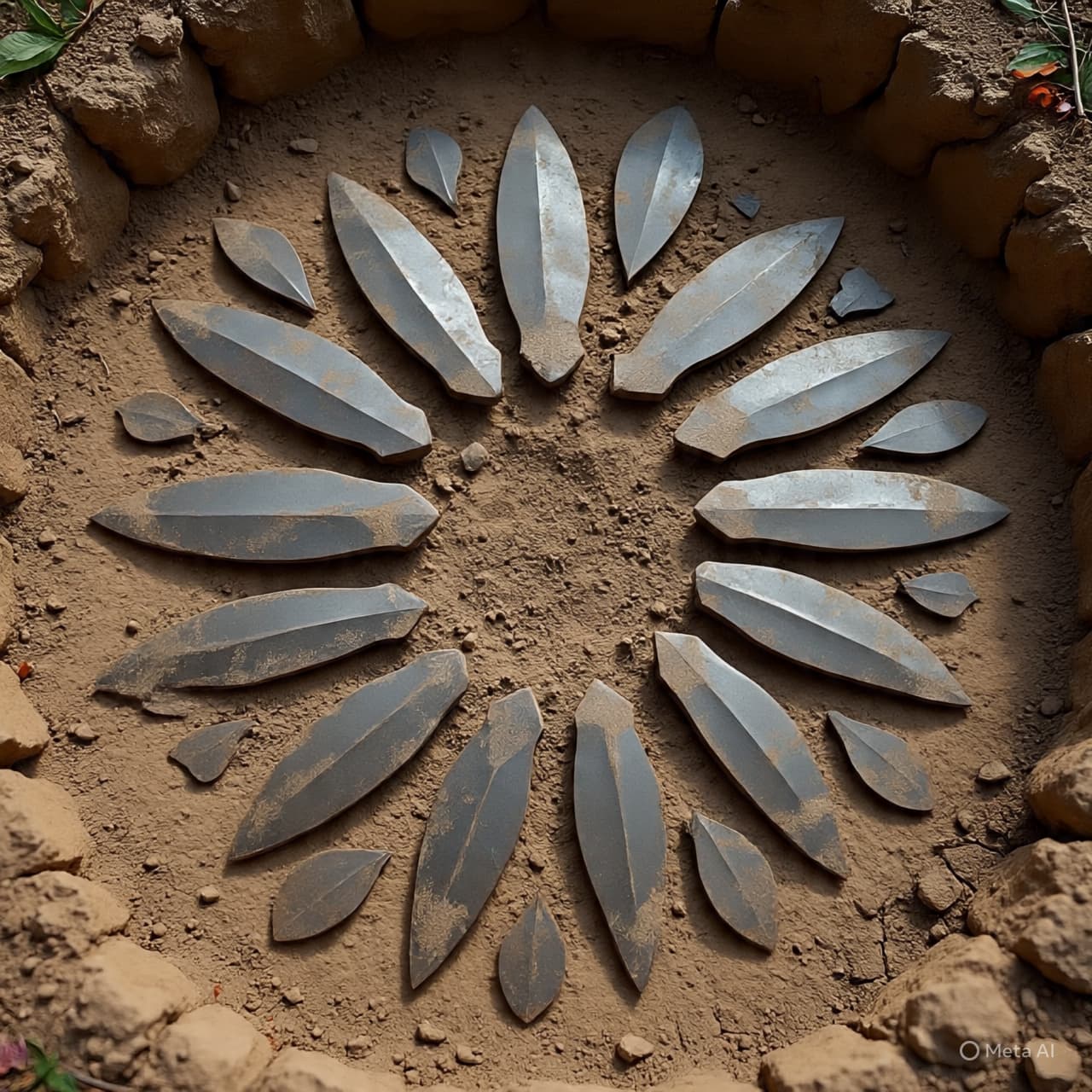
In the hushed fields of South Moravia, a bundle of stone implements — some 30,000 years old and still found in the tight cluster they were originally carried in — is giving archaeologists an exceptionally intimate glimpse into the life of a single Ice Age traveler. Rather than the scattered refuse typical of ancient sites, this toolkit appears to be the personal gear of one hunter‑gatherer, painstakingly preserved by the way it was buried and the sediments that protected it through millennia.
The artifacts were unearthed at the Milovice IV site, part of a string of Upper Paleolithic camps in the Czech Republic long associated with the Gravettian culture — a widespread Ice Age hunter‑gatherer society known for its stone tools, complex shelters, and symbolic objects. But unlike the fragments often found in these regions, the 29‑piece blade cluster was tightly packed together in a configuration that suggests it originally sat in a perishable container — likely leather or bark — before it decayed. This context makes it far more significant than isolated blade fragments.
Detailed analysis has shown that the toolkit included a range of blades, bladelets and other stone implements bearing wear patterns consistent with activities such as cutting, scraping, and drilling. Some of the raw material for these tools came from sources more than 100 kilometers away, indicating either long‑distance movement or extensive contact networks among Ice Age groups. The way these tools were intensively used, resharpened, and repurposed also hints at resourcefulness and adaptability — traits crucial for survival in the unpredictable climates of the Late Pleistocene.
What makes this find especially meaningful isn’t just the age of the tools — comparable Ice Age artifacts are found in many parts of Europe — but the cohesion of the assemblage. Most Paleolithic sites yield tens of thousands of tools accumulated over generations, making it difficult to link objects to specific individuals. In contrast, the Milovice toolkit may represent a snapshot of a single moment in one person’s life — their choices about what tools to carry, how far they traveled for stone materials, and how they coped when supplies ran short on hunting or migration trips.
For archaeologists, this offers a rare window into human behavior at the individual level, not just broad cultural patterns. It complements other discoveries from Gravettian sites — including mammoth bone dwellings, figurines, and complex hearths — with a tangible record of how early modern humans navigated daily challenges in harsh Ice Age environments. As research continues, this toolkit promises to refine our understanding of mobility, technology, and survival strategies among Europe’s earliest long‑distance hunter‑gatherers.
AI Image Disclaimer “Visuals are created with AI tools and are not real photographs.”
📌 Sources
• Find of a 30,000‑year‑old clustered toolkit shedding light on a single Ice Age individual’s gear and movement.
• Earlier reporting on the rare personal toolkit of a Stone Age hunter‑gatherer.
Published by Banx Network. This article is part of the Banx decentralized media programme, powered by the BXE token on the XRP Ledger.