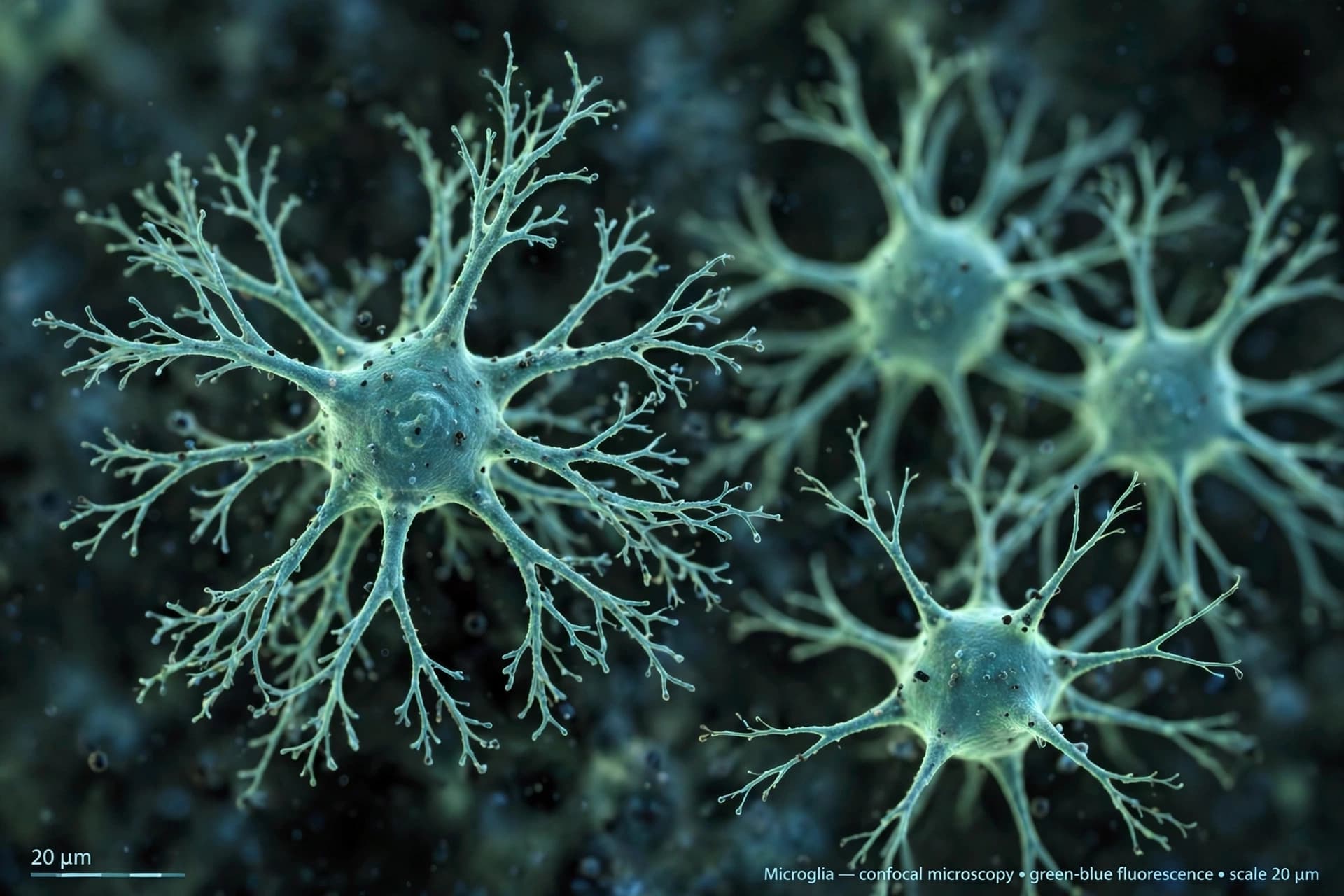
There is a wisdom embedded in traditional medicine that modern science is only beginning to translate into the language of molecules and pathways. For centuries, practitioners of Chinese medicine have used herbs to treat the aftermath of what we now call stroke, seeking to restore movement, speech, and memory to those whose brains have been starved of blood and oxygen. Now, a growing body of research is revealing the specific mechanisms by which compounds from these plants exert their effects, offering a bridge between ancient observation and contemporary pharmacology.
Ischemic stroke occurs when a clot blocks blood flow to part of the brain, depriving neurons of oxygen and triggering a cascade of damage that continues long after the initial event . The aftermath involves not only the death of neurons but also a sustained inflammatory response that can worsen injury and impair recovery. Microglia, the brain's resident immune cells, play a central role in this process. In the acute phase, they adopt a pro-inflammatory M1 phenotype that releases toxic molecules, but they can later shift to an M2 phenotype that promotes tissue repair and resolution of inflammation . Modulating this switch has become a major target for stroke therapies.
A study published in the Journal of Ethnopharmacology examined the effects of total saponins from Trillium tschonoskii Maxim., a herb used in Tujia and Traditional Chinese Medicine for conditions analogous to stroke . In a rat model of permanent middle cerebral artery occlusion, treatment with these saponins significantly attenuated brain atrophy and increased neuronal survival . The mechanism, according to the research, involves driving microglia from the pro-inflammatory M1 state toward the neuroprotective M2 phenotype, a shift mediated through inhibition of the Jagged1/Notch1/Hes5 signaling pathway .
Other plant saponins have shown similar promise through different pathways. Panax notoginseng saponins, derived from a plant long used in Chinese medicine for circulatory disorders, are approved in China as an adjunctive therapy for ischemic stroke . Research indicates that ginsenoside Rg1, a key component, targets a protein called CKLF1 that interferes with the clearance of dying neurons . By inhibiting CKLF1, Rg1 promotes the removal of cellular debris by microglia, reducing the release of inflammatory signals and facilitating resolution .
Clinical data is beginning to support these laboratory findings. A study of patients with acute ischemic stroke found that Panax notoginseng saponins were associated with significantly higher rates of functional independence at three months, particularly among patients with obesity or abdominal obesity . In the abdominal obesity subgroup, 90.3 percent of patients treated with the saponins achieved functional independence compared to 83.2 percent in the placebo group . The benefits persisted at twelve months, with a higher proportion of patients achieving no or minimal disability .
The convergence of these findings suggests a pattern: plant saponins, despite their diversity, share a common capacity to modulate neuroinflammation and promote the brain's own repair mechanisms. They act not as magic bullets but as subtle regulators, nudging the immune response from destruction toward restoration. The specific pathways differ—some target Notch signaling, others CKLF1—but the outcome is similar: a microenvironment more conducive to healing.
Much remains to be understood. The exact relationships between chemical structure, bioavailability, and clinical effect are complex, and not all patients respond equally . Quality control of herbal preparations and standardization of active compounds remain challenges. Yet the research offers something valuable: a mechanistic explanation for therapeutic effects observed for centuries, and a rational basis for developing new treatments from the natural world.
For those recovering from stroke, the promise is meaningful. Recovery is often slow and uncertain, measured in small gains and frustrating plateaus. The possibility that compounds from familiar plants might support that process—gently, persistently—is a reminder that healing can come from unexpected places, and that the wisdom of the past may yet inform the medicine of the future.
AI Image Disclaimer: The imagery in this article is AI-generated and serves an illustrative purpose only.
Published by Banx Network. This article is part of the Banx decentralized media programme, powered by the BXE token on the XRP Ledger.