In the far reaches of Patagonia, the land carries the memory of ancient worlds.
Wind moves across the dry ground and through low grasses, brushing against layers of stone that have rested undisturbed for millions of years. Beneath these quiet surfaces lie the remains of animals that once moved through forests and floodplains, their bones gradually settling into the long archive of Earth’s past.
For paleontologists, such places are not merely landscapes but conversations with time. A single fossil fragment may hold the opening line of a story that takes decades to finish.
For more than twenty years, one such story remained incomplete.
Across museums and research collections, scientists had gathered fragments of unusual dinosaur fossils belonging to a group known as alvarezsaurs—small, bird-like theropods with peculiar bodies. These animals were known for their delicate skeletons, tiny teeth, and remarkably short arms ending in a single large claw.
The fossils themselves, however, told only part of the tale.
Most well-preserved specimens had been discovered in Asia, while scattered remains from South America appeared incomplete or difficult to interpret. The pattern puzzled researchers. How this strange group of dinosaurs evolved, shrank in size, and spread across continents remained an unresolved question for decades.
The mystery began to clear when scientists uncovered a nearly complete skeleton in northern Patagonia, Argentina.
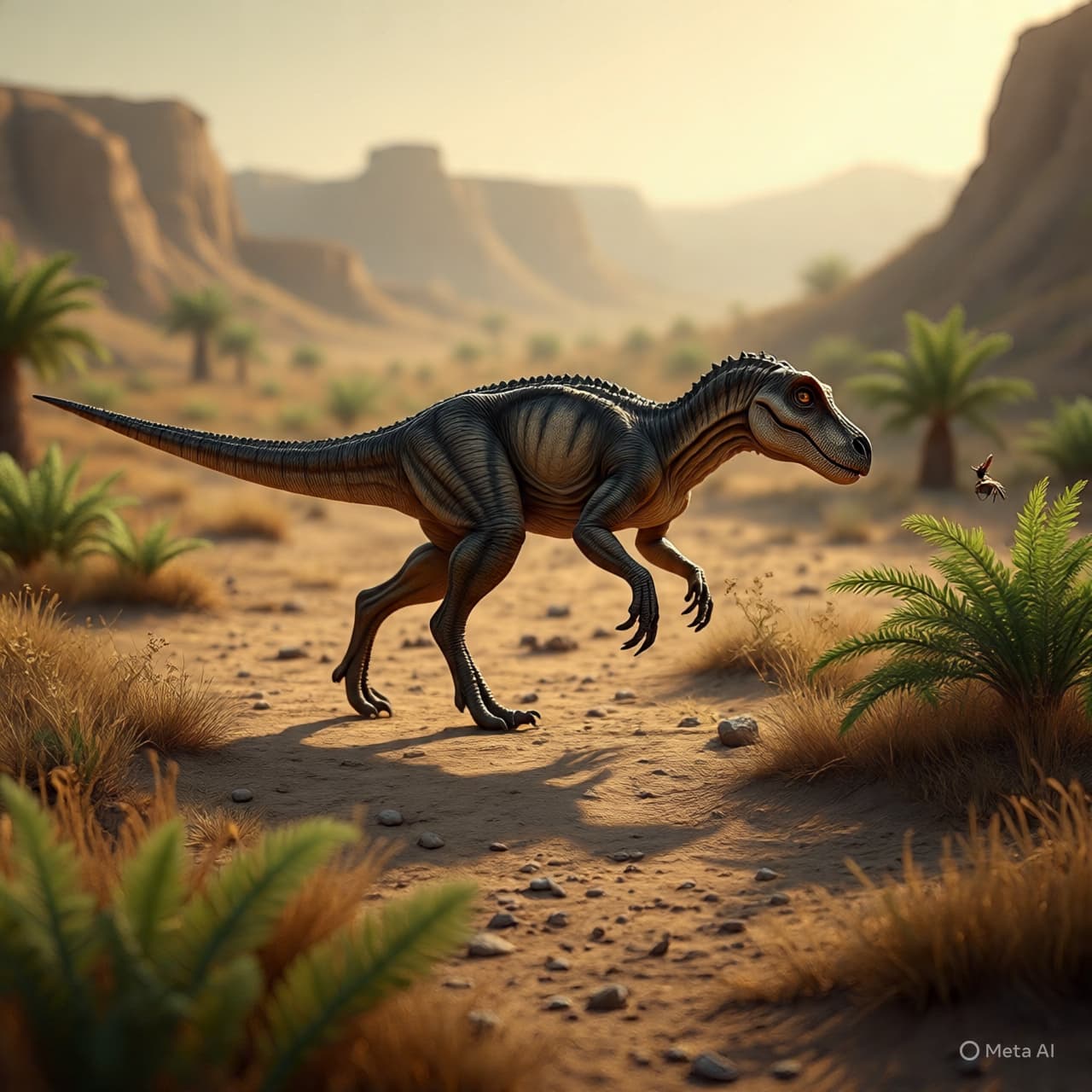
The fossil belonged to Alnashetri cerropoliciensis, a tiny theropod that lived roughly 90 million years ago during the Cretaceous period. Though small—estimated to weigh less than two pounds—the skeleton preserved crucial details of the animal’s anatomy.
Unlike earlier fragments, this specimen offered a rare, intact glimpse of the species.
Researchers studying the bones found evidence that the dinosaur had already reached maturity, even at its diminutive size. Microscopic analysis of the fossilized bone tissue revealed growth patterns indicating the animal was fully grown rather than a juvenile of a larger species.
This discovery answered a long-standing question.
For years, paleontologists debated whether these tiny fossils represented immature dinosaurs that would eventually grow into larger forms. The Patagonian skeleton suggested otherwise. It confirmed that some members of the alvarezsaur lineage truly were small-bodied animals.
The fossil also provided insight into how the group evolved.
Scientists now believe these dinosaurs became small early in their evolutionary history, long before they developed their most specialized features—such as their stubby arms and powerful single claw, thought to have been used for digging into insect nests.
In this sense, the skeleton functioned almost like a paleontological “Rosetta Stone,” linking scattered fossils into a clearer evolutionary narrative.
It suggested that alvarezsaurs did not simply shrink late in their history but followed a different path entirely, becoming miniature predators long before their unusual anatomy reached its final form.
The Patagonian discovery also helped explain the group’s geographical puzzle.
If early members of the lineage already existed in South America, their later presence in Asia becomes easier to understand. The ancient continents were still shifting, and land connections across Gondwana may have allowed these small dinosaurs to disperse across vast regions of the prehistoric world.
Piece by piece, the scattered clues began to align.
The tiny bones, once enigmatic fragments in museum drawers, now belonged to a clearer picture of dinosaur evolution—a reminder that even the smallest fossils can hold immense scientific weight.
In straightforward terms, researchers say the nearly complete skeleton of Alnashetri cerropoliciensis has helped resolve a decades-long mystery about strange tiny dinosaur fossils, revealing how these unusual theropods evolved and spread across ancient continents.
AI Image Disclaimer Images in this article are AI-generated visual interpretations created to illustrate the scientific concepts described.
Source Check
ScienceDaily ScienceAlerl BBC Science Focus Phys.org Nature
Published by Banx Network. This article is part of the Banx decentralized media programme, powered by the BXE token on the XRP Ledger.