In a softly lit laboratory where humming instruments and careful measurement replace rumble and motion, a new chapter in the story of electric vehicles quietly takes shape. Batteries, after all, are the silent heartbeats of modern EVs — unseen by many, yet essential to how far and how freely a vehicle will go. For years they have advanced incrementally, each new generation a testament to engineering patience and incremental progress. But now, researchers have unveiled what they describe as the world’s first commercially promising solid state battery capable of holding nearly twice the charge of some of the batteries used in well-known long-range electric cars.
The achievement feels almost elemental: instead of ions flowing through liquid electrolytes, a solid medium stands between electrodes — offering not just incremental gains, but a more significant leap in energy density. To an observer accustomed to the steady hum of incremental improvement, the news reads like a shift in pace — a reminder that innovation sometimes unfolds not in a straight line, but in moments of reflection and discovery.
This battery’s capacity — nearly double that of certain existing lithium-ion packs — opens the door to longer range EVs that might travel greater distances without recharging. For drivers, such improvements promise the kind of freedom that transforms daily routines: longer trips on a single charge, fewer hours tethered to charging stations, and a reduced urgency in planning routes around power stops.
Yet the promise is shaped by both technical nuance and practical reality. Solid state batteries have been the subject of research for years, prized for their potential energy density and safety advantages. But moving from laboratory demonstration to reliable, scalable manufacturing is a challenge that has eluded many before. Materials must be stable, production must be repeatable, and costs must edge toward competitiveness with existing technologies. In this sense, the announcement — while remarkable — is also a waypoint, not a finish line.
There is also the subtle interplay between promise and expectation. Headlines that speak of doubling range evoke images of vehicles cruising effortlessly across continents. But in practice, real-world conditions — from temperature to terrain — always shape the outcome. The new battery’s performance in controlled tests sheds light on what might be possible, but broader adoption depends on whether those conditions can be met outside the laboratory.
In the broader landscape of electrification, this development arrives at a moment when many automakers are investing in next-generation powertrains and suppliers are retooling factories to produce more capable cells. Consumer demand for EVs continues to grow, and infrastructure — charging networks and grid upgrades — is expanding alongside it. Within this context, a leap in battery capacity could help ease one of the lingering frictions of EV ownership: range anxiety.
But innovation reminds us that progress is rarely instantaneous. Early adopters of every era learn patience by necessity, weathering the imperfections of emerging technologies while the world waits for refinement and scale. If a battery capable of holding nearly twice the charge becomes a market reality, it will not only shift technical expectations but also reshape the contours of how we imagine electric motion.
In straightforward terms, researchers have unveiled a solid state battery design that reportedly holds almost double the energy capacity of some current electric vehicle batteries. While this suggests the potential for longer driving range, challenges remain in scaling production and maintaining performance in real-world conditions.
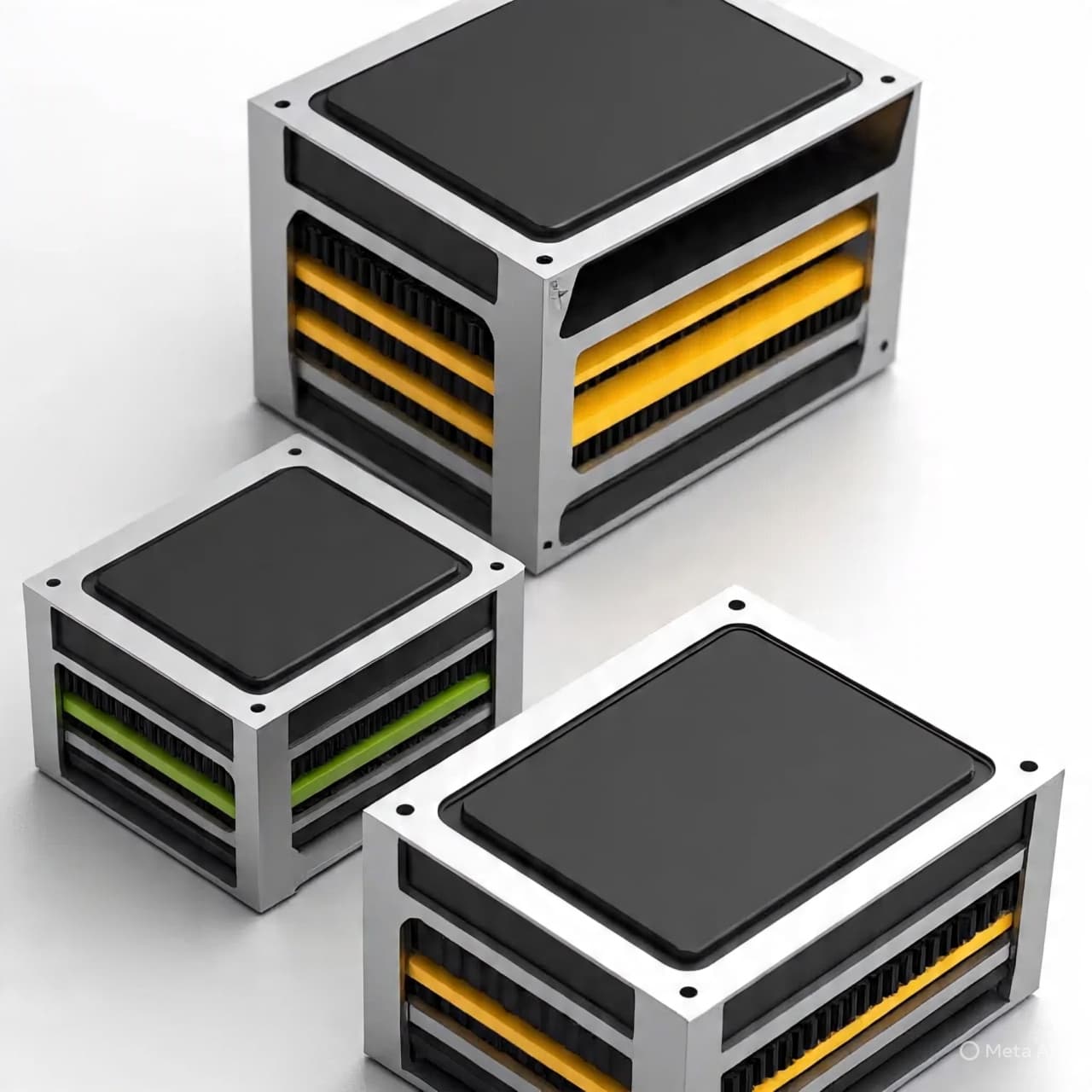
AI Image Disclaimer Illustrations were created using AI tools and serve as conceptual representations.
Sources Bloomberg Reuters Electrek TechCrunch Scientific American
Published by Banx Network. This article is part of the Banx decentralized media programme, powered by the BXE token on the XRP Ledger.