Evening settles gently across the Persian Gulf, where the water often reflects the soft bronze colors of the desert sky. Tankers move slowly through shipping lanes, their paths steady and deliberate, while lights begin to flicker along the coastlines of cities that have long lived beside the tides of trade.
But in recent days the horizon has carried a different texture. The stillness above the water has been interrupted by the distant mathematics of conflict—radar signals, air defenses, and the sudden flare of explosions that briefly turn night into daylight.
Across the Gulf, accusations and counteraccusations have begun to travel as quickly as aircraft.
Authorities in United Arab Emirates and Bahrain have said they were targeted by attacks attributed to Iran, including drones and missile strikes aimed at infrastructure and military facilities. The incidents, reported in the midst of a rapidly widening regional confrontation, have heightened concerns that the conflict is stretching beyond its original front lines.
In both Gulf states, air defenses were activated as incoming projectiles were detected. Officials described efforts to intercept threats over the sea and near coastal installations, while emergency services assessed potential damage. Though details remain limited, the reports mark a significant extension of the conflict’s geography, pulling additional countries into the uneasy orbit of the crisis.
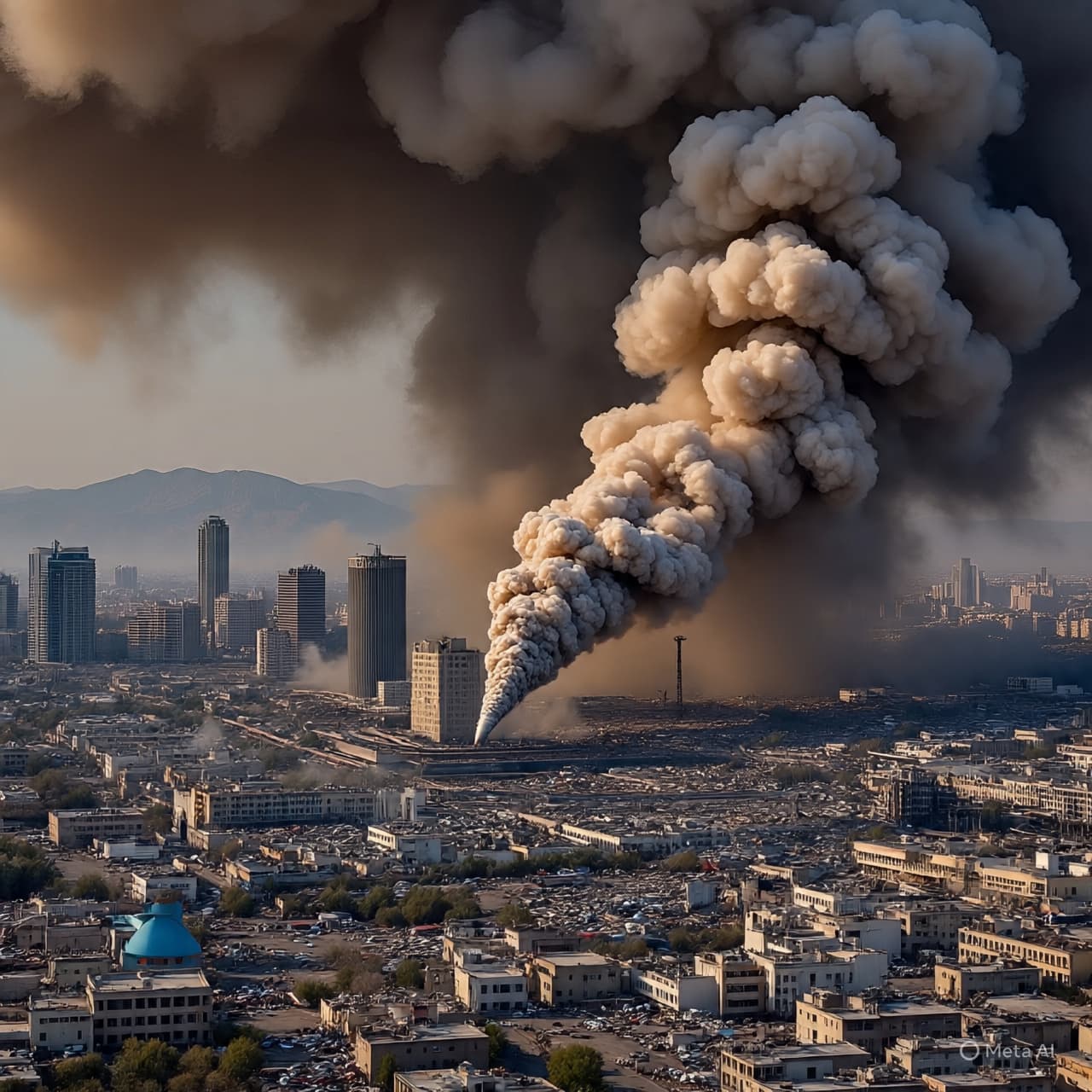
At the same moment, far to the north across the Gulf’s waters, the skyline of Tehran has been shadowed by smoke.
Israeli airstrikes have continued to target infrastructure linked to energy and military operations across Iran, including fuel depots and strategic facilities. In the capital, residents have watched dark plumes rise into the sky—thick columns drifting above highways and residential districts, sometimes visible from miles away. The smoke has become a temporary landmark in the city’s skyline, a reminder that the conflict is no longer distant.
The expanding exchanges between Israel and Iran have already reshaped the region’s daily rhythms. Shipping companies monitor the safety of maritime corridors, airlines adjust flight paths across the Middle East, and governments quietly review contingency plans for energy security and civilian safety.
In a region where geography binds nations closely together, even distant explosions can travel as echoes. The Persian Gulf is narrow, its waters bordered by cities whose lights can sometimes be seen from across the sea. What happens on one shore rarely remains isolated for long.
For the people who live along these coasts—from the high-rise districts of Dubai to the island neighborhoods of Manama—the conflict appears not only in headlines but in atmosphere: heightened security at airports, warning messages on phones, and the distant rumble of defense systems testing their readiness.
Meanwhile, diplomats and military planners across the world continue to watch the situation closely. The Gulf sits at the center of global energy flows and international shipping routes, and any widening of the confrontation carries implications that reach far beyond the region itself.
For now, the landscape of the conflict is marked by contrasts: quiet seas carrying oil tankers, brightly lit cities continuing their routines, and, beyond the horizon, columns of smoke rising into the sky above Tehran.
The accusations from Gulf nations and the ongoing strikes across Iran suggest that the circle of the crisis is expanding. What began as a clash between adversaries is now touching the wider region, drawing new coastlines into its uncertain geography.
And so, across the Gulf’s narrow waters, the night continues—ships moving slowly through dark channels, cities glowing along the shore, and above the northern horizon, the smoke still drifting through the air.
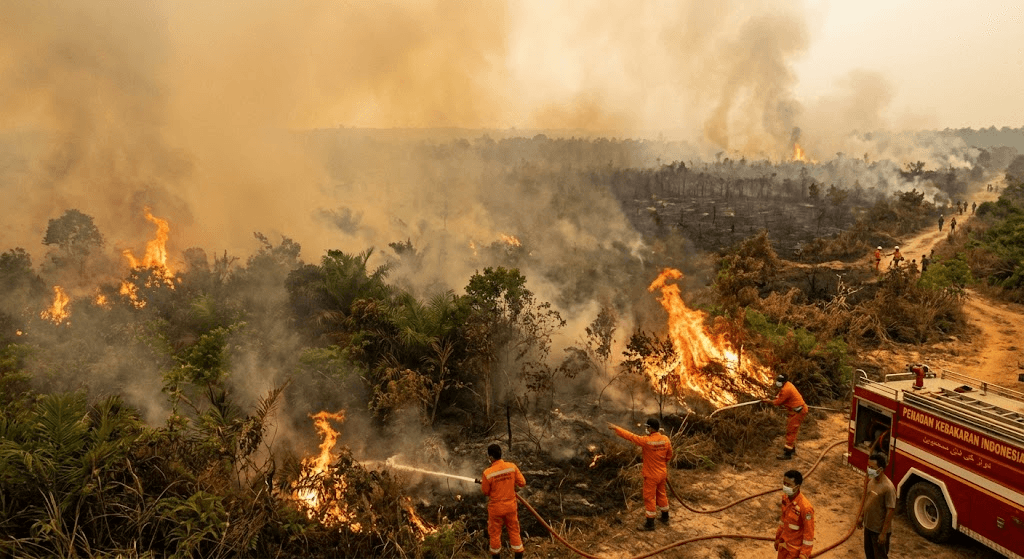
AI Image Disclaimer Illustrations were created using AI tools and are not real photographs.
Sources Reuters Associated Press Al Jazeera Bloomberg BBC News
Published by Banx Network. This article is part of the Banx decentralized media programme, powered by the BXE token on the XRP Ledger.