The sun, our nearest star, is a source of life and energy, but it is also a capricious neighbor capable of unleashing powerful storms that can disrupt technology on Earth. Predicting these solar outbursts has long been a challenge, akin to forecasting weather without satellites. However, NASA’s Polarimetric and Helioseismic Imager (PUNCH) mission is changing the game, offering a new perspective on the sun’s outer atmosphere and improving our ability to anticipate space weather events.
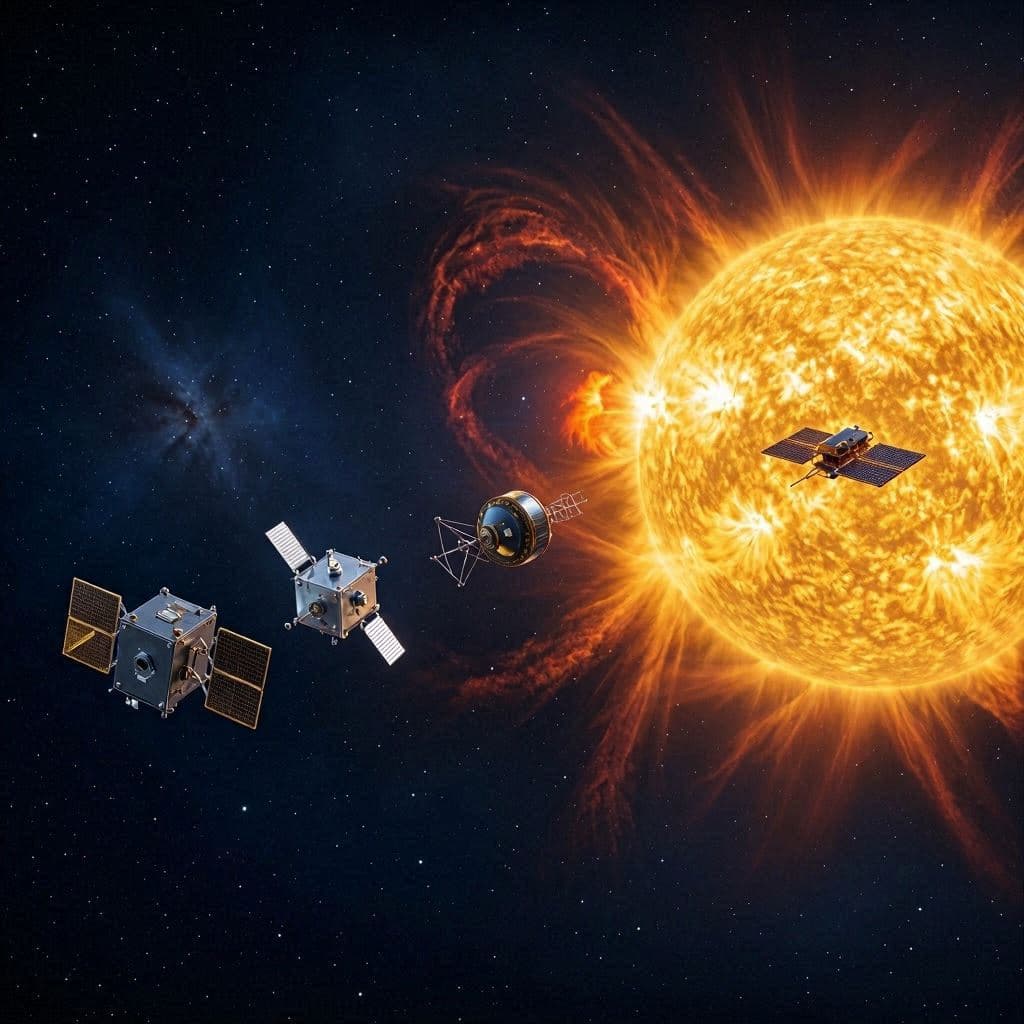
PUNCH consists of four small satellites working in concert to create a global view of the sun’s corona and heliosphere. By observing the continuous flow of solar wind and the sudden eruptions of coronal mass ejections (CMEs), the mission provides real-time data on how these phenomena evolve as they travel through space. This comprehensive monitoring allows scientists to track storms from their origin to their potential impact on Earth.
The technology behind PUNCH relies on polarimetry, a technique that measures the polarization of light to reveal the structure and density of plasma in the solar atmosphere. This method offers greater clarity than traditional imaging, enabling researchers to distinguish between different types of solar emissions. The resulting data is crucial for understanding the mechanics of solar storms and predicting their intensity and direction.
Solar storms can have significant consequences for modern society, affecting power grids, satellite communications, and GPS systems. A severe storm could cause widespread blackouts and disrupt financial transactions, highlighting the need for accurate forecasting. By providing earlier and more precise warnings, PUNCH helps infrastructure operators take protective measures, minimizing potential damage and economic loss.
The mission also contributes to our fundamental understanding of stellar physics. By studying the sun in detail, scientists can apply these insights to other stars, enhancing our knowledge of the universe. The data collected by PUNCH is shared with the global scientific community, fostering collaboration and accelerating progress in space weather research. It is a testament to the power of international cooperation in addressing shared challenges.
As solar activity increases in the current cycle, the role of PUNCH becomes even more critical. Its ability to monitor the sun continuously ensures that no significant event goes unnoticed. This vigilance provides a sense of security in an increasingly technology-dependent world, where the invisible forces of space can have very real effects on daily life.
NASA’s PUNCH mission represents a significant advancement in solar storm forecasting, offering better protection for our technological infrastructure. By illuminating the dynamics of the sun’s outer atmosphere, it enhances our preparedness for space weather events. As we continue to explore the cosmos, such innovations remind us of the importance of understanding our celestial environment.
AI Image Disclaimer: The images provided are AI-generated to visually represent the technological and astronomical aspects of the PUNCH mission.
Sources: NASA Space.com
Published by Banx Network. This article is part of the Banx decentralized media programme, powered by the BXE token on the XRP Ledger.