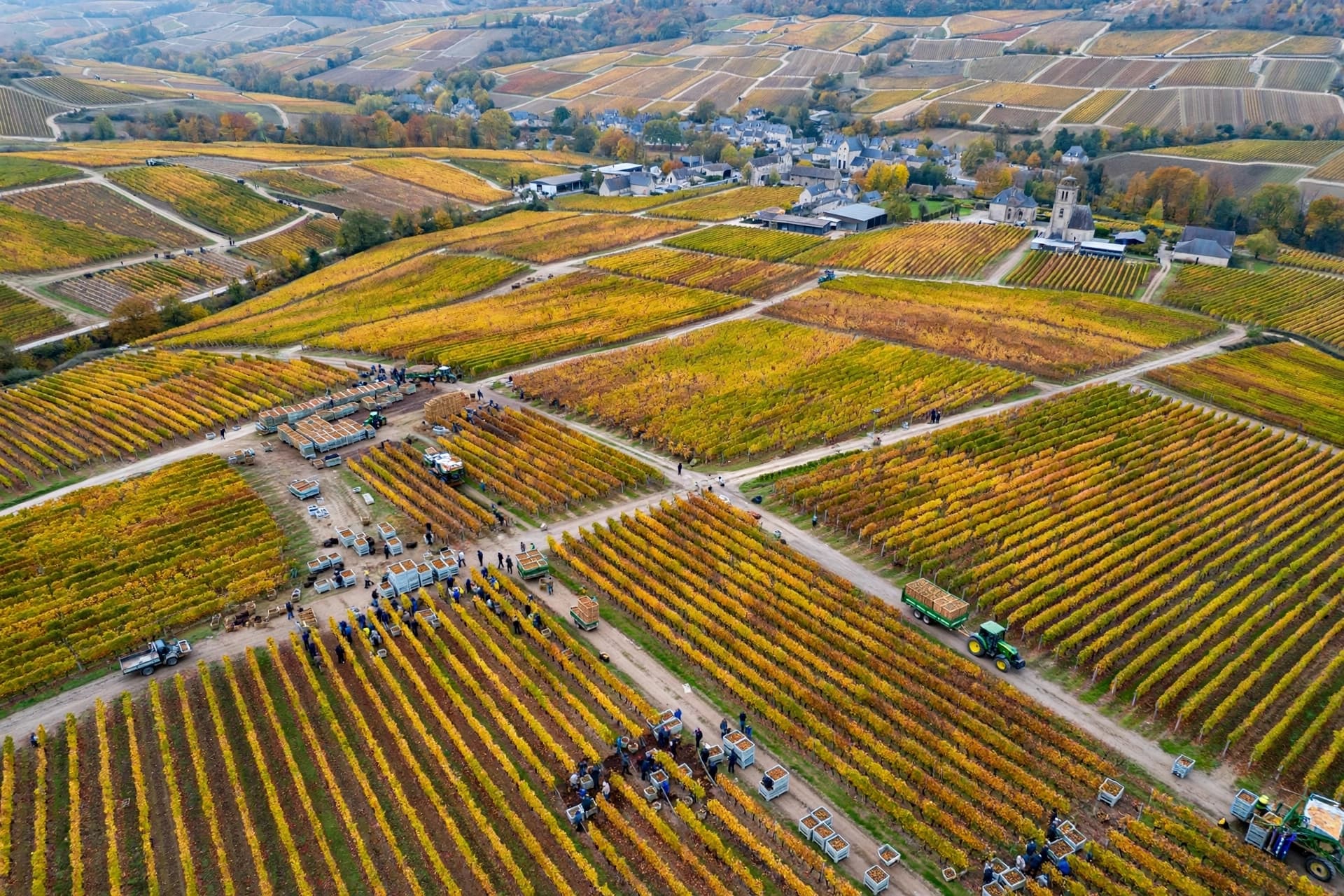
Across the vineyards of Champagne, the 2026 harvest arrived unusually early. Rows of vines entered their most important season after months marked by severe spring frost, drought, and repeated heatwaves, leaving growers with fewer grapes but, according to the region's industry body, promising fruit quality.
France's Champagne region is expected to see wine production from the 2026 harvest fall by about 48%, while production under the Champagne designation is forecast to decline by roughly 49% from the previous year. The figures underline the scale of the reduction following an unusually difficult growing season.
The season began with severe frost, particularly affecting parts of the Aisne, followed by a succession of heatwaves during the summer. Drought conditions further reduced yields. The combination pushed the harvest forward, with picking beginning in some vineyards as early as August 6, according to the Comité Champagne.
Yet the smaller harvest does not tell the entire story. Champagne's industry organization reported that the grapes harvested in 2026 showed strong sanitary quality and promising balance, suggesting that lower quantity could be accompanied by favorable characteristics in the fruit.
Reuters also reported that the grapes reached high levels of ripeness, while the lack of mildew helped preserve their condition. For producers, the quality of the crop offers an important counterpoint to the reduction in volume.
The effects of the harvest will not necessarily appear immediately on store shelves. Champagne producers maintain stocks and reserve wines from previous years, allowing houses to blend and maintain supplies even when a particular harvest is smaller.
This reserve system gives the region a buffer between what happens in a vineyard during one summer and what consumers eventually find in bottles. A sharp fall in grape production therefore does not automatically translate into an equally sharp fall in finished Champagne available for sale.
Still, repeated poor harvests could create a different situation. Euronews reported that the 2026 harvest follows two other small French wine harvests, while producers are also facing higher costs and changing consumption patterns. The concern is less about one difficult year than about what repeated weather shocks could mean over time.
The wider French wine sector is experiencing similar pressure. Reuters reported that national wine production in 2026 is projected to fall to one of its lowest levels in decades, with heatwaves and drought affecting yields across several regions.
For Champagne, the 2026 harvest therefore carries two stories at once: one of reduced production and another of grapes that arrived early and in strong condition. The vineyards now move into the long process of transforming that year's fruit into wine, while reserve stocks help bridge the distance between a difficult harvest and the bottles that eventually reach consumers.
AI Image Disclaimer The images accompanying this article are AI-generated visualizations created to represent the described environments and events.
Published by Banx Network. This article is part of the Banx decentralized media programme, powered by the BXE token on the XRP Ledger.