Out at sea, where horizons dissolve into a quiet line between water and sky, movement often feels slow, almost contemplative. Ships advance with steady purpose, their presence defined less by urgency than by direction. Yet within that calm progression lies intention—decisions made far from the deck, shaping where these vessels go and what they may eventually carry with them.
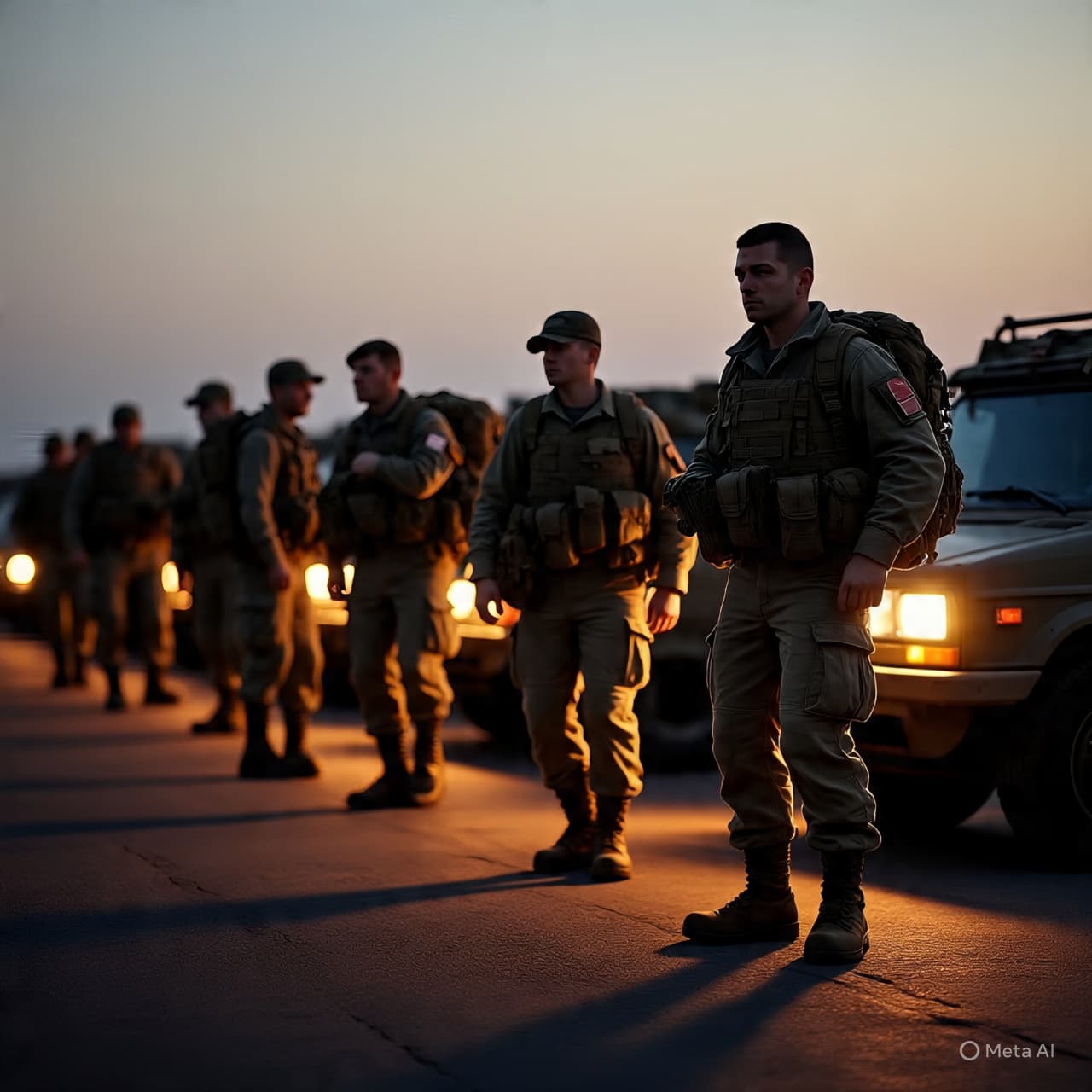
In recent days, as U.S. military assets move toward the Middle East, attention has turned not only to their destination, but to the question that follows them across the water: what comes next. The deployment of forces—naval groups, support units, and personnel—signals preparation, a readiness that exists somewhere between deterrence and possibility.
The question of whether Donald Trump might authorize ground troops, should he return to office or influence decisions in the current moment, remains less a matter of certainty than of interpretation. It draws on past patterns, stated positions, and the evolving realities of a conflict that continues to expand in scope.
Historically, decisions to commit troops on the ground have carried a particular weight within U.S. policy. They mark a shift from presence to participation, from support to direct engagement. In previous conflicts across the region, such choices have followed extended deliberation, shaped by considerations of risk, duration, and consequence.
In the current context, analysts note that while troop movements and positioning provide options, they do not in themselves determine action. Naval deployments can serve multiple purposes—projecting strength, ensuring the security of shipping routes, or preparing for contingencies without necessarily crossing into direct involvement.
Statements associated with Trump’s approach to foreign policy have often emphasized restraint in long-term military entanglements, paired with a willingness to act decisively in specific circumstances. This duality leaves space for interpretation, particularly in a situation where the boundaries of the conflict remain fluid.
Across the region, the presence of additional U.S. forces intersects with a landscape already shaped by multiple actors, alliances, and points of tension. Any decision to introduce ground troops would not occur in isolation; it would become part of a broader network of responses, reactions, and recalibrations.
For allies and observers alike, the uncertainty lies not only in the decision itself, but in its timing and scale. Would it come as a limited deployment, narrowly defined, or as part of a broader commitment? Would it aim to stabilize, to deter, or to reshape the trajectory of the conflict? These questions remain open, their answers contingent on developments still unfolding.
Meanwhile, the ships continue their journey, carrying with them not only equipment and personnel, but the weight of possibility. Their movement is both tangible and symbolic—a reminder that in moments of tension, preparation often precedes clarity.
The facts, as they stand, are measured: U.S. forces are moving toward the Middle East, increasing readiness amid a widening conflict. Whether this leads to the deployment of ground troops depends on political decisions that have yet to be made, shaped by both current realities and future leadership.
In the quiet space between movement and decision, the outcome remains undefined. And like the ships crossing open water, the question moves forward without resolution—guided by direction, but not yet by destination.
AI Image Disclaimer Illustrations were created using AI tools and are not real photographs.
Sources Reuters Associated Press BBC News The New York Times CNN
Published by Banx Network. This article is part of the Banx decentralized media programme, powered by the BXE token on the XRP Ledger.