In the quiet hours before dawn, when the sky still belongs to the stars, humanity often finds itself asking an ancient question: how is the universe arranged? For centuries, the heavens have appeared like scattered lanterns across a dark ocean—beautiful, mysterious, and seemingly uncharted. Yet beneath that glittering surface lies a hidden architecture, a delicate web of matter and gas stretching across unimaginable distances.
Now, a new effort seeks to sketch that unseen structure with unprecedented clarity. Funded by billionaire entrepreneur Alex Gerko, a groundbreaking telescope project is being built with an ambitious goal: to reveal what scientists sometimes call the “cosmic web,” the faint network of material connecting galaxies across the universe. The instrument, known as the MOTHRA telescope, aims to transform our understanding of cosmic structure—turning what once existed only in simulations into something closer to a celestial map.
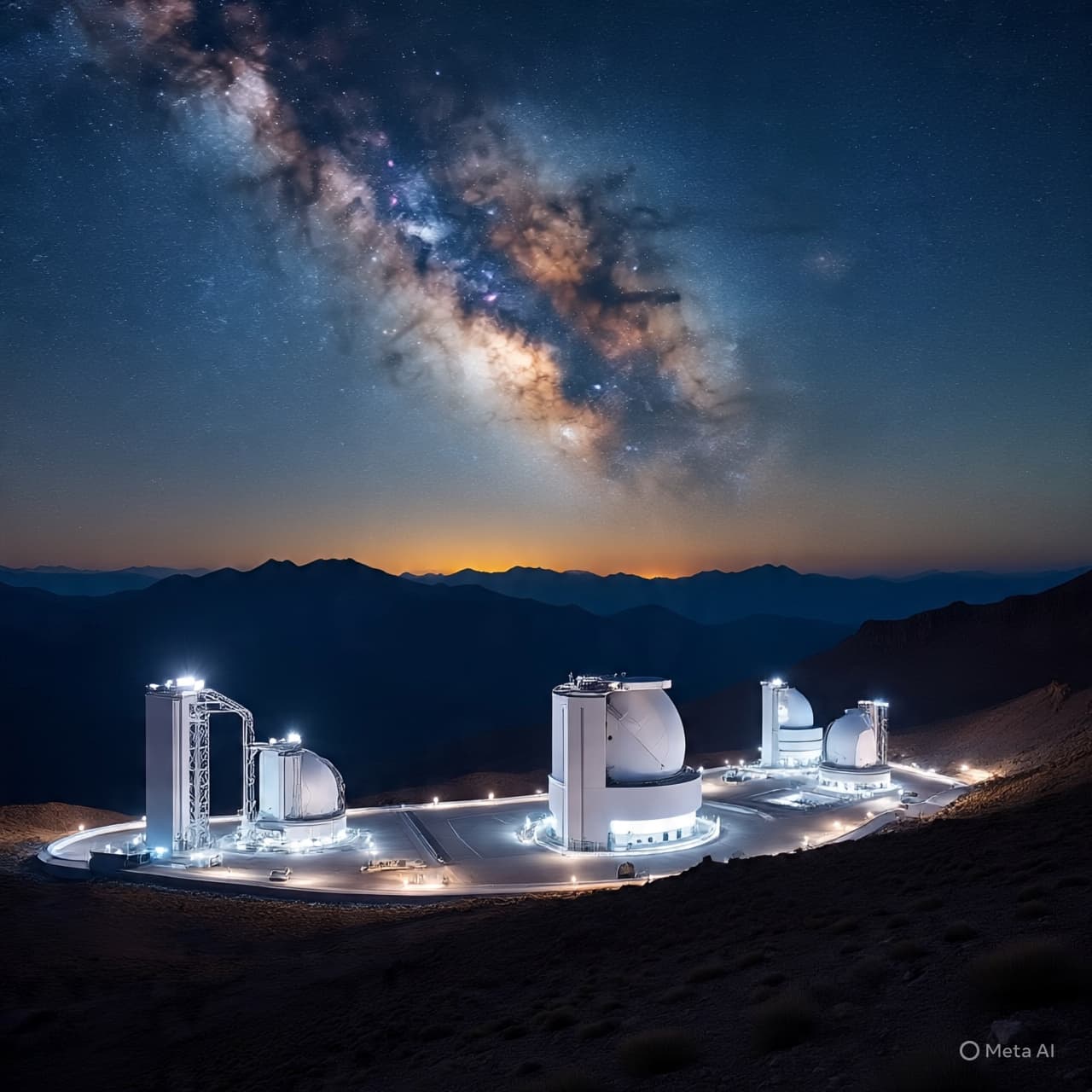
Gerko, founder of algorithmic trading firm XTX Markets, is reportedly investing tens of millions of dollars to support the project. The telescope is being constructed in central Chile, a region renowned among astronomers for its exceptionally dark skies and more than 300 clear observing nights each year. Such conditions allow researchers to peer deeper into space than almost anywhere else on Earth.
Unlike traditional telescopes that rely on a single massive mirror, the MOTHRA system will combine the power of 1,140 telephoto lenses, working together as a unified instrument. Each lens captures faint glimmers of light from the extremely diffuse hydrogen gas that drifts between galaxies—signals so delicate that they are usually lost in the cosmic background. By merging these images digitally, the telescope will effectively function like a much larger optical system designed specifically to detect the universe’s most elusive structures.
Astronomers believe this gas traces the distribution of dark matter, the invisible substance thought to make up much of the universe’s mass. Though dark matter itself cannot be seen, its gravitational influence shapes the cosmic web—an immense lattice where galaxies gather along glowing filaments separated by vast, silent voids.
For scientists, mapping this structure is similar to drawing the first geographical chart of a previously unknown continent. Researchers involved in the project say the telescope could provide the first direct images of these intergalactic filaments, a vision that until now has lived mainly inside computer simulations.
Construction of the telescope is expected to conclude by the end of 2026. Once operational, astronomers plan to conduct at least three years of observations, gradually piecing together images that reveal how galaxies connect across the cosmos. Artificial intelligence and machine learning—technologies familiar to Gerko’s financial firm—will also help process the immense volumes of data collected during the project.
Beyond the telescope itself, the initiative reflects a broader pattern in modern science: the growing role of private philanthropy in supporting ambitious research. Gerko has previously funded several scientific and educational programs, including artificial-intelligence projects focused on mathematics and other astronomy initiatives.
In the end, the effort is less about building a machine than about drawing a picture of the universe itself. Each new observation adds a faint line to a vast cosmic sketch—slowly revealing how galaxies cluster, how matter flows through space, and how the universe built its grand design.
If successful, the telescope may offer humanity something both ancient and new: not just a deeper view of the sky, but a map of the hidden threads that quietly hold the universe together.
AI Image Disclaimer Illustrations were produced with AI and serve as conceptual depictions rather than real photographs.
Source Check Credible sources covering this topic include:
Financial Times PR Newswire Space.com Moneycontrol NASA Space News
Published by Banx Network. This article is part of the Banx decentralized media programme, powered by the BXE token on the XRP Ledger.