Opening: On the northern frontiers of China, where the wind once carried only sand and silence, a green transformation is taking root. For decades, the Great Green Wall project has been a monumental effort to halt the spread of deserts and restore ecological balance. Recent reports from Chinese researchers highlight a significant milestone: the reforestation efforts are not only continuing but accelerating, with forests greening at a pace that has surprised even the most optimistic scientists. This progress is a testament to human persistence and the resilience of nature when given a chance to heal.
Body: The Three-North Shelter Forest Program, initiated in the late 1970s, is arguably the largest ecological engineering project in history. Spanning thousands of kilometers across northern China, it aims to create a barrier of trees against the encroaching Gobi Desert. Recent satellite data and field studies confirm that large areas previously deemed barren are now covered with thriving vegetation. This greening is not just cosmetic; it represents a functional shift in the ecosystem, with improved soil stability and biodiversity.
Researchers attribute this success to a combination of improved planting techniques, better species selection, and sustained government support. Early phases of the project faced challenges with monocultures that were vulnerable to disease and drought. However, recent strategies have focused on diverse, native species that are better adapted to local conditions. This shift towards ecological authenticity has enhanced the resilience of the forests, allowing them to withstand harsh climatic variations.
The environmental benefits extend beyond China’s borders. By reducing dust storms and sequestering carbon, these forests contribute to global climate mitigation efforts. The amount of carbon stored in these newly planted woods is significant, offering a natural solution to rising atmospheric CO2 levels. It is a practical example of how large-scale land management can play a role in addressing global warming.
Yet, the journey is not without its complexities. Some studies point to the high water consumption of certain planted forests, which can strain local water resources. Researchers are actively addressing this by optimizing irrigation methods and selecting drought-resistant species. The goal is to create a sustainable balance where reforestation supports rather than depletes the local environment. This adaptive approach reflects a mature understanding of ecological dynamics.
Community involvement has also been crucial. Local residents have participated in planting and maintenance, creating a sense of ownership and stewardship. This social dimension ensures that the forests are protected and valued, turning an environmental project into a community asset. It demonstrates that successful conservation requires both scientific expertise and public engagement.
As the project moves forward, the focus is shifting from quantity to quality. It is no longer just about planting billions of trees, but about ensuring they thrive and integrate into the natural landscape. This evolution in strategy highlights a learning curve that is valuable for other nations undertaking similar initiatives.
Closing: The major progress reported in China’s reforestation project offers a hopeful narrative for global environmental restoration. By combining technological innovation with ecological wisdom, it shows that large-scale healing of the earth is possible, providing a model for sustainable development in arid regions.
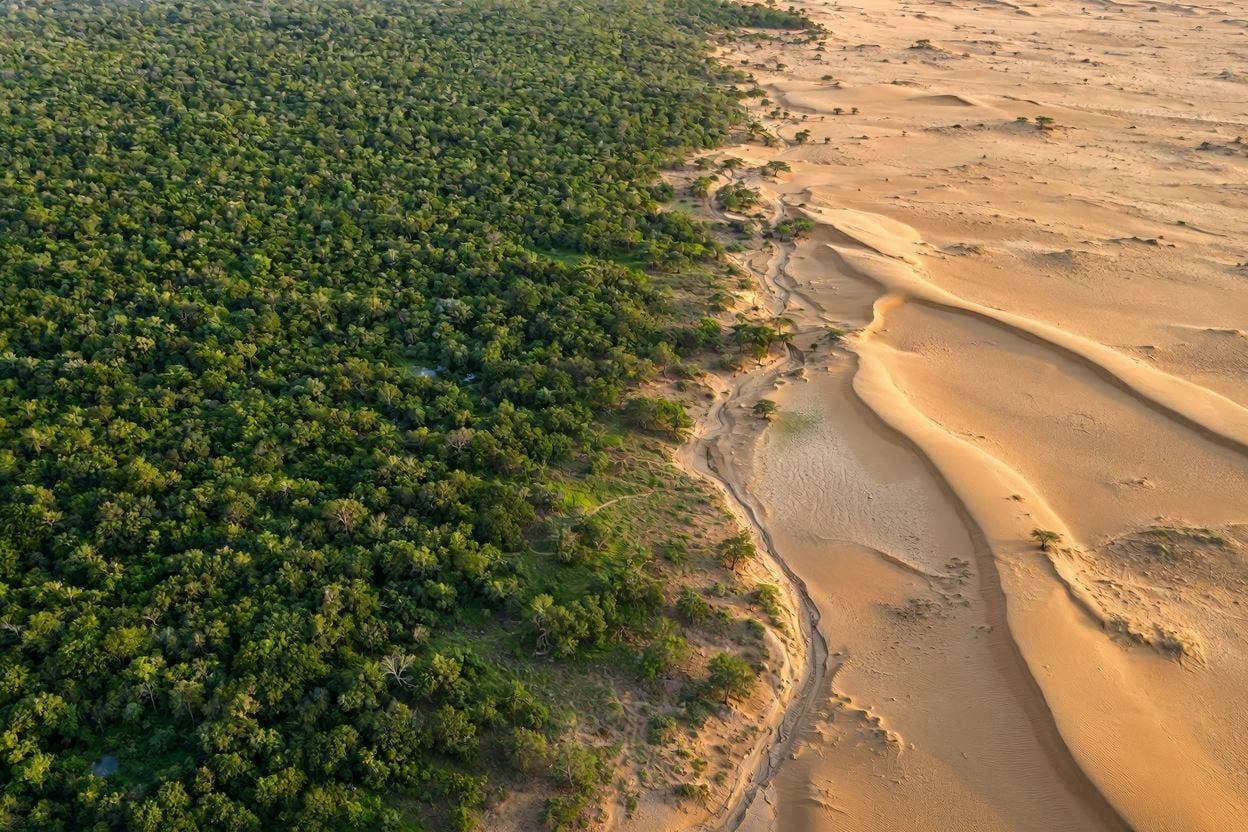
AI Image Disclaimer: The images accompanying this article are AI-generated illustrations of reforestation landscapes and should be viewed as conceptual representations.
Sources: IFLScience, Nature Communications, Wikipedia, Facebook Science Pages, Yale Environment 360
Published by Banx Network. This article is part of the Banx decentralized media programme, powered by the BXE token on the XRP Ledger.