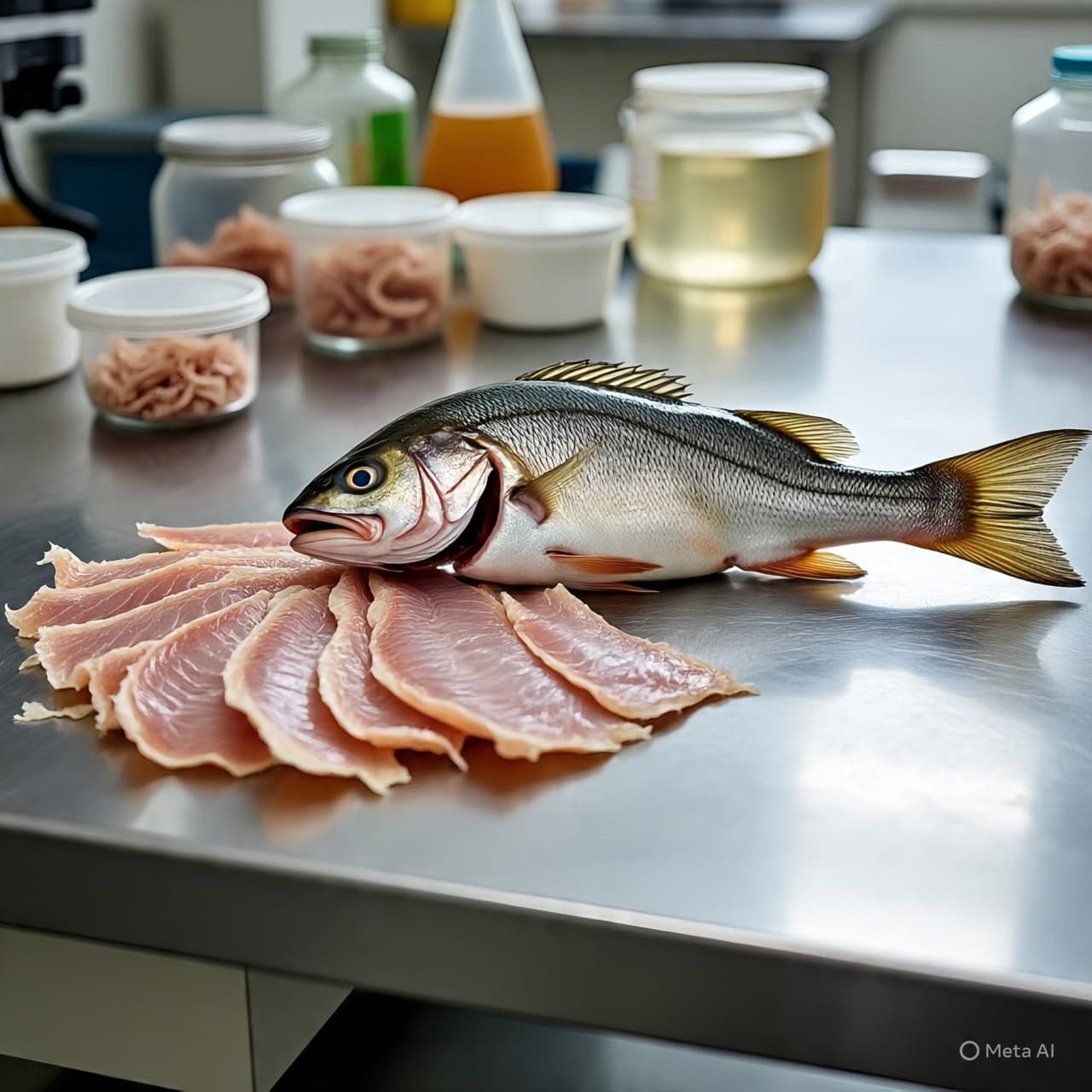
There are moments when innovation does not arrive with spectacle, but with a quiet re-imagining of what we already discard. Along riverbanks and processing lines, where fish once offered only nourishment and waste, science has paused to look again. In Brazil, that pause has turned into something unexpectedly delicate: a transparent film born from fish skin, as if the remnants of one life were gently reshaped to protect another. It is a reminder that sustainability often begins not with invention, but with attention.
At the University of São Paulo and EMBRAPA Pecuária Sudeste, researchers have transformed collagen-rich skin from the Amazonian tambatinga fish into a biodegradable food packaging film. Tambatinga, a hybrid of tambaqui and pirapitinga, is widely farmed for its rapid growth and nutritional value. Until now, its skin has largely been treated as waste. Through careful extraction of gelatin using hot water and mild acid, scientists produced a flexible, transparent biofilm that could serve as an alternative to petroleum-based plastics.
The film’s performance suggests more than symbolic promise. Tests showed strong mechanical resistance, improved protection against ultraviolet light, and lower water vapor permeability than many previously reported gelatin films. These qualities position the material as a viable option for certain food applications, particularly dry products such as nuts and seeds. In this way, the film does more than reduce plastic use; it extends the value chain of aquaculture, turning by-products into functional materials rather than environmental burdens.
Still, the research carries the humility of work in progress. Moisture sensitivity limits broader use for now, and researchers openly acknowledge the need for further refinement. Yet even these constraints speak to an iterative path forward, where scientific patience mirrors ecological care. Beyond food packaging, the team sees future possibilities in pharmaceutical and biomedical applications, suggesting that the skin of a fish may one day protect far more than snacks on a shelf.
In gentle balance, this development reflects a broader shift in thinking: that sustainability is not solely about replacing one material with another, but about re-threading systems so that waste finds purpose. The tambatinga biofilm does not claim to solve the plastic crisis, but it offers a small, thoughtful example of how science can listen to nature’s leftovers and respond with restraint.
Researchers reported that the biodegradable film, developed from tambatinga fish skin and described in the journal Foods, shows promise as packaging for dehydrated foods while further work continues to improve moisture resistance. The project remains focused on reducing environmental impacts and expanding sustainable uses for aquaculture by-products.
AI Image Disclaimer (Rotated) Images in this article are AI-generated illustrations, meant for concept only.
Source Check — Credible Coverage Confirmed New Food Magazine Journal Foods University of São Paulo (USP) EMBRAPA Pecuária Sudeste FAPESP Food Research Center (FoRC)
Published by Banx Network. This article is part of the Banx decentralized media programme, powered by the BXE token on the XRP Ledger.