The distance between Qatar’s gas facilities and Italy’s energy terminals is measured in thousands of miles of sea, but the latest disruption makes that connection feel unusually close. A cargo delayed at the source can eventually become a logistical calculation at the destination, where utilities must search for alternative supplies and adjust their schedules. For Edison in Italy, that process has now been extended again, as QatarEnergy suspended five additional LNG cargoes through early November.
The latest notice brings the total number of LNG cargoes affected by the force majeure period to 29, representing approximately 3.8 billion cubic meters of natural gas. QatarEnergy’s inability to fulfill the deliveries reflects continuing disruption to its supply infrastructure and shipping environment. The suspension began in April and has now been extended into the autumn.
For Edison, the immediate task is finding replacement gas. The Italian utility said it had already replaced 21 LNG cargoes at the Adriatic LNG terminal as of August 28, representing around 2 billion cubic meters of natural gas. The company also said it remains capable of sourcing alternative supplies and meeting its commercial commitments.
The figures reveal the scale of adjustment taking place behind the scenes. LNG markets often rely on carefully timed cargo movements, with vessels, terminals, storage facilities and buyers connected through contracts and delivery schedules. When a major supplier cannot deliver, another cargo must be found, another route arranged or another source brought into the system.
Edison’s relationship with QatarEnergy is also long-standing. The Italian company holds a 25-year contract that has been in force since 2009 and provides for 6.4 billion cubic meters of natural gas annually. That volume represents roughly 10% of Italy’s total gas consumption, making the relationship an important part of the country’s long-term energy supply structure.
The disruption has broader implications because Qatar is one of the world's largest LNG suppliers. Before the current crisis, Qatar accounted for around 20% of global LNG supply, according to The National. Restrictions affecting its production and shipping therefore extend beyond a single buyer, influencing the wider balance between available cargoes and demand in international markets.
Shipping through the Strait of Hormuz has added another layer of difficulty. The waterway is a critical route for Gulf energy exports, and LNG tanker movements have remained sharply below earlier levels. The National reported that only nine LNG voyages had crossed the strait in August as of the article’s publication, compared with 40 in June and 17 in July.
For Italy, alternative LNG supplies provide a degree of flexibility, particularly through terminals capable of receiving cargoes from different origins. Edison’s replacement purchases demonstrate that flexibility in practice. But replacing individual shipments does not necessarily erase the wider effects of a prolonged disruption, especially when multiple buyers are competing for alternative cargoes at the same time.
The latest extension therefore leaves the energy route between Qatar and Italy in a state of temporary suspension rather than permanent change. Five more cargoes have been removed from the schedule, while alternative supplies continue to fill part of the gap. As autumn approaches, the next stage will depend on the recovery of Qatar’s facilities, the condition of regional shipping routes and the ability of European buyers to maintain diversified sources of LNG.
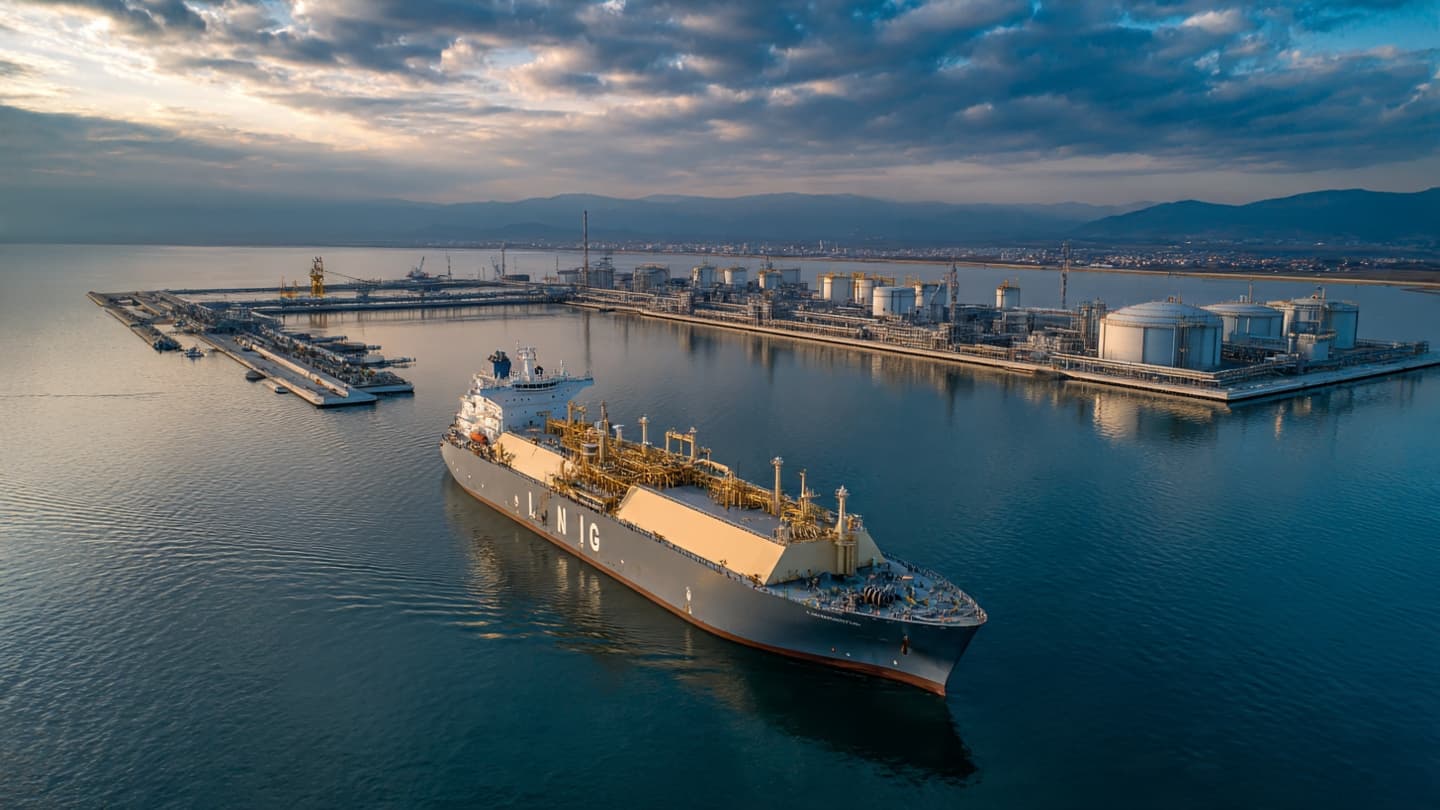
AI Image Disclaimer The accompanying illustrations were generated with AI to visualize the LNG supply chain described in this report. They are conceptual representations and should not be interpreted as documentary photographs.
Published by Banx Network. This article is part of the Banx decentralized media programme, powered by the BXE token on the XRP Ledger.