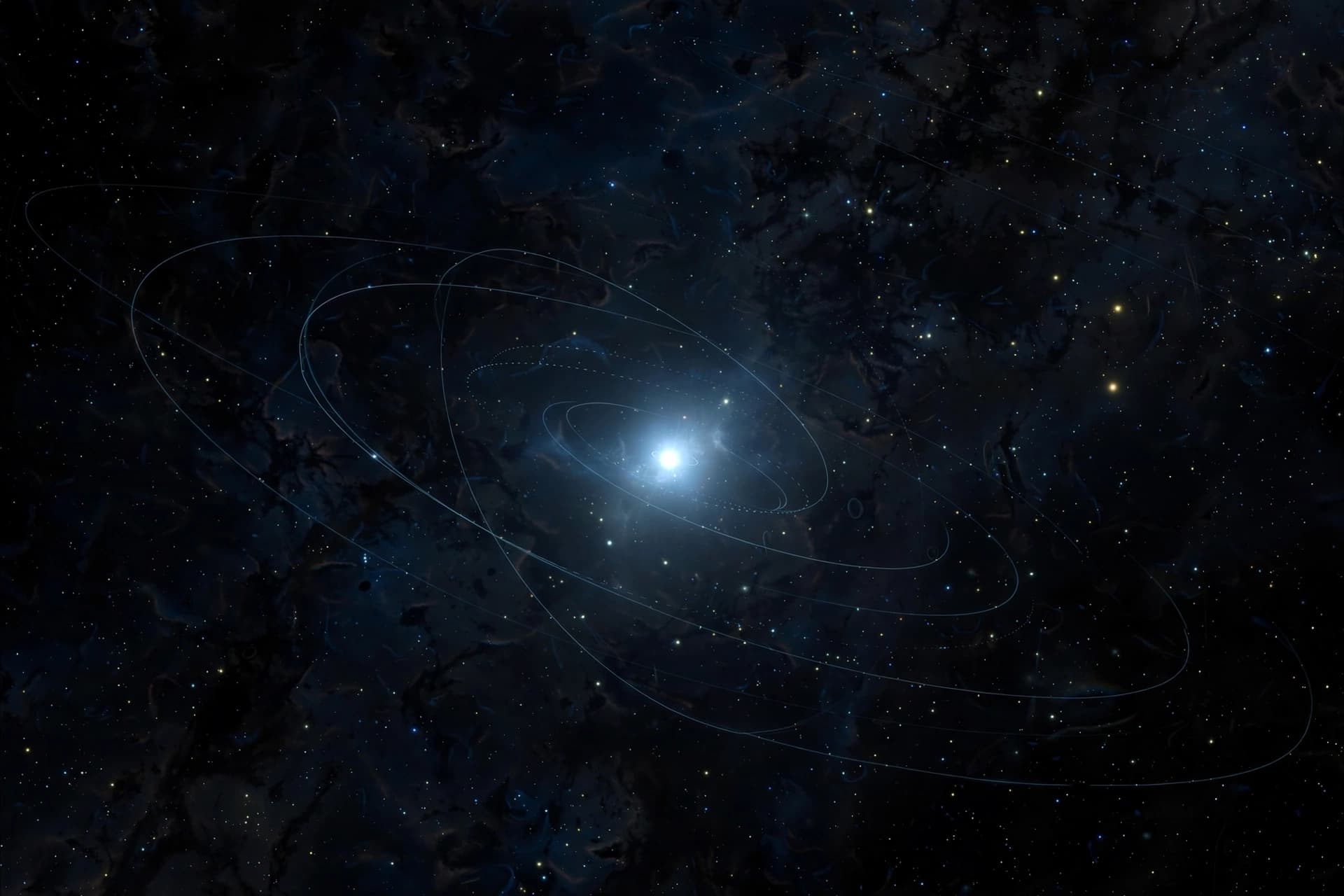
Sometimes in astronomy, a whisper becomes a call — a soft yearning to explore the faintest glimmers of the universe’s hidden architecture. Imagine standing on a dark plain under a sky where galaxies are not storms of light but distant fireflies, each one breathing in cosmic silence. In that quiet, the urge to see deeper, to map threads invisible to conventional eyes, can become as compelling as the human instinct to follow stars across the night. That is the spirit behind the new effort known by the evocative name MOTHRA, not a creature of myth but a telescope conceived to wrest secrets from the cosmic web itself.
In legends and stories, a moth drawn to a distant flame moves with quiet purpose. So too does this ambitious instrument, born of collaboration between the Dragonfly Focused Research Organization and partners in scientific exploration. Where traditional telescopes chase bright galaxies and blazing quasars, MOTHRA — short for Multi‑Object Telescope for High Resolution Astronomy — is crafted for the subtle: the faint, diffuse filaments of gas that whisper through the vast reaches of space and bind galaxies in a tapestry of matter. It’s a design built not for spectacle but for delicacy, turning what might seem like void into a realm rich with structure and history.
Astronomers have long known that most of the universe’s ordinary matter — the atoms that form stars, planets, and us — does not glow brightly in galactic hearts or swirling nebulae. Instead, much of it drifts in tenuous strands between galaxies, part of the so‑called cosmic web, a vast network shaped by the pull of gravity and the elusive presence of dark matter. These filaments are the scaffolding upon which the universe grew after the Big Bang, and yet they have remained faint shadows, barely detected by even the most powerful instruments. Like tracing a spider’s silk in moonlight, seeing the cosmic web has been one of the most delicate challenges in modern astronomy.
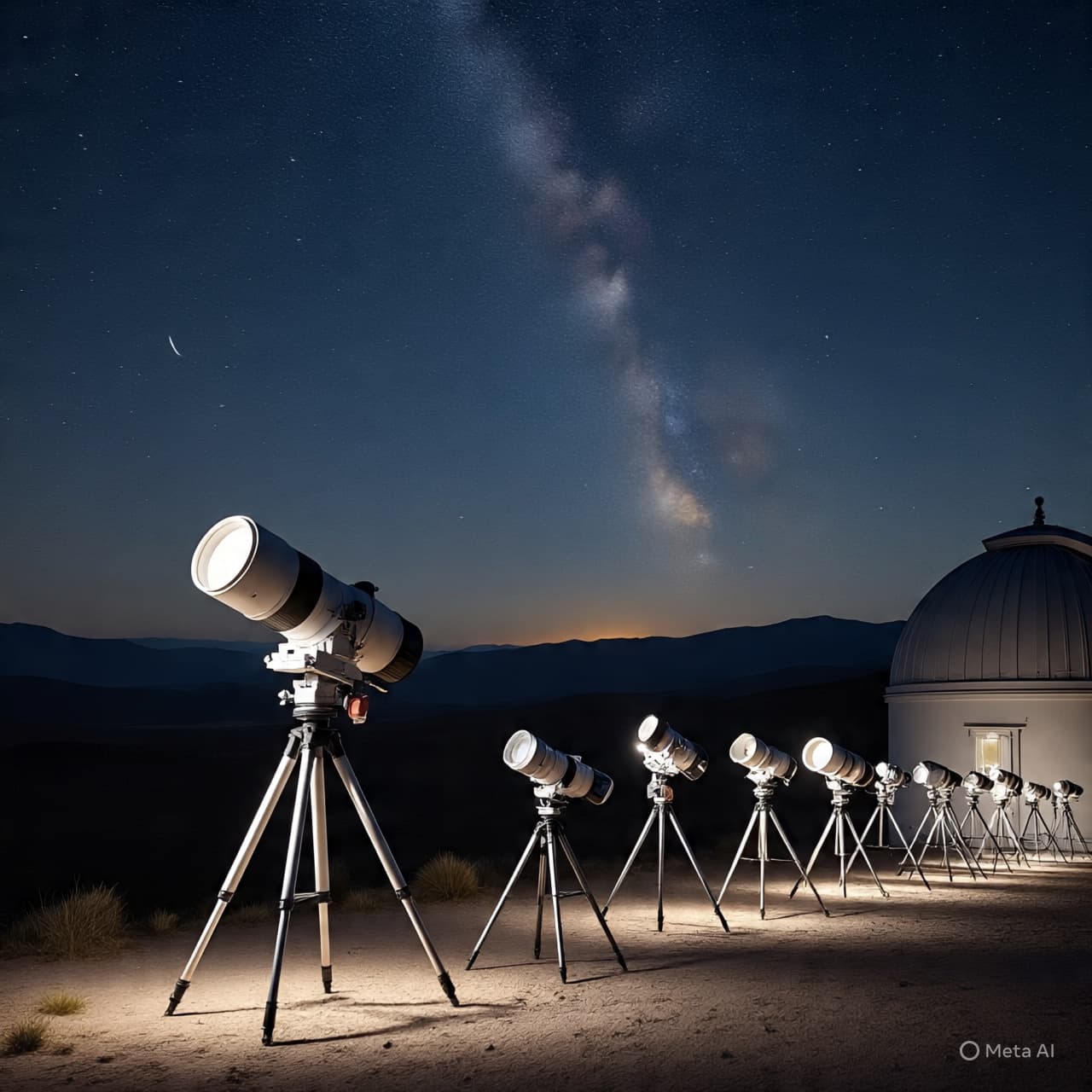
Enter MOTHRA’s novel approach. Rather than relying on a single massive mirror, it brings together over a thousand telephoto lenses, each tuned with ultra‑narrowband filters to the faint glow of hydrogen gas — the universe’s most abundant element. These lenses act in concert, weaving together millions of photons into images that reveal wisps of light previously lost in the cosmic background. The result is a telescope that behaves like a giant lens spanning nearly five meters in diameter, yet focused on some of the universe’s most ephemeral features.
The gentle ambition of this project lies not in conquering the bright and the bold, but in illuminating the understated and the elusive. It is a reminder that even in the vast darkness, the universe has subtle stories to tell — of gas streams connecting galaxies, and of cosmic history written in whispers of light. For scientists eager to understand how galaxies formed and how matter flows across billions of light‑years, MOTHRA is more than a machine; it is a listening post at the edge of dreams.
The telescope is under construction at the Obstech/El Sauce Observatory in Chile and is expected to become fully operational by late 2026, offering astronomers a new means to observe the cosmic web and dark matter’s influence on large‑scale structure. This initiative highlights a shift in astronomical instrumentation toward collaborative, distributed designs that tackle some of the hardest challenges in observing the universe’s faintest features.
AI Image Disclaimer (Rotated Wording) Graphics are AI‑generated and intended for representation, not reality.
Sources (media names only):
PR Newswire (news release) Official MOTHRA Telescope site (institutional info) Academic publication on “Mothra” star nickname (contextual background)
Published by Banx Network. This article is part of the Banx decentralized media programme, powered by the BXE token on the XRP Ledger.