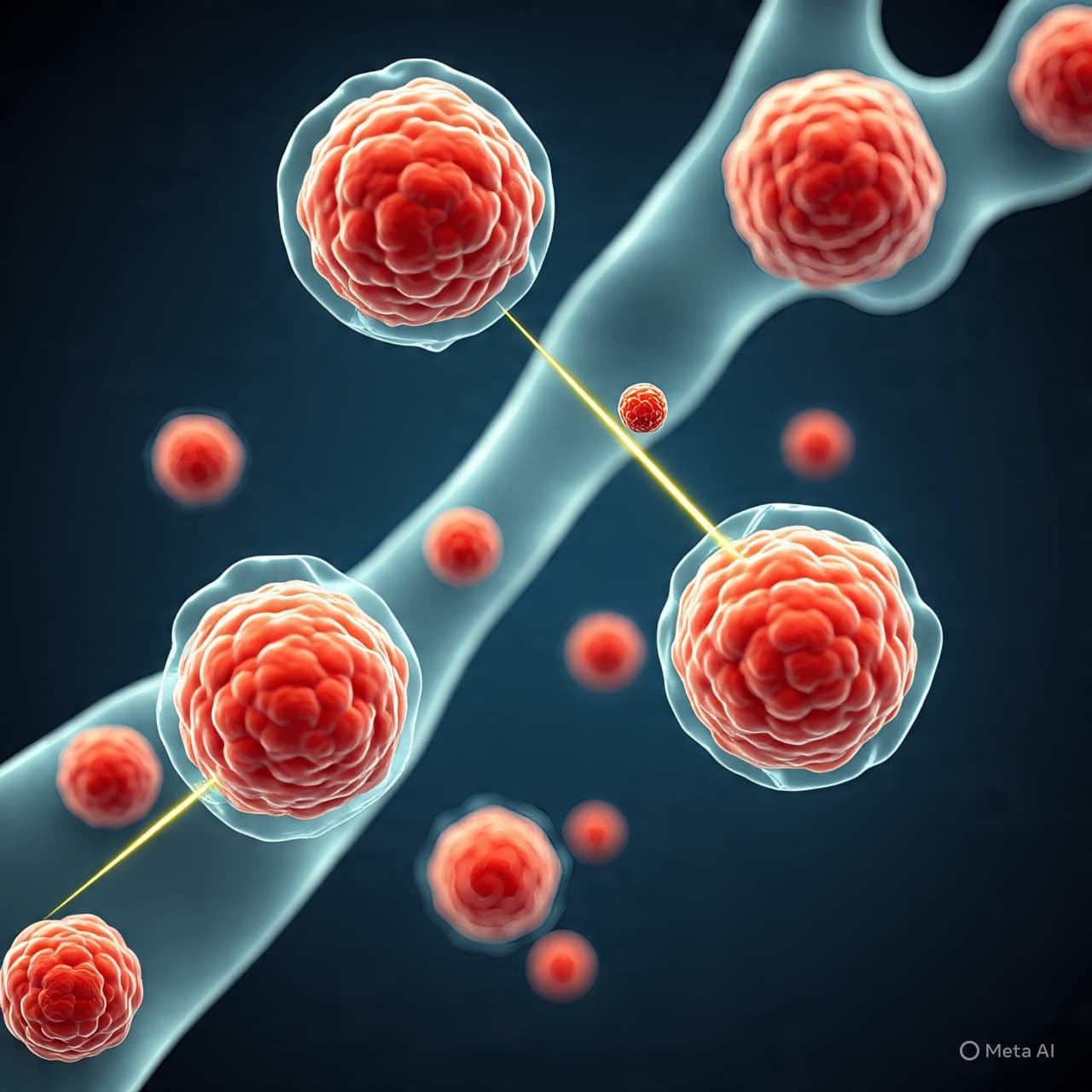
In the quiet corridors of our own biology, there are dramas unfolding over decades that most of us never see. Every day, billions of blood cells are born, live, and die — a cycle so constant it feels invisible. Yet, within this ceaseless flow, subtle competitions occur. Certain cells, carrying tiny genetic mutations, gain slight advantages over their neighbors. Over years and decades, these advantaged clones can rise to dominate parts of our blood system — a phenomenon scientists call clonal hematopoiesis.
For researchers, clonal hematopoiesis offers a living laboratory of evolution in miniature. The same principles that govern species — mutation, selection, drift — play out inside our bodies. Some clones flourish; others vanish. The patterns, when traced carefully, reveal insights not only about the aging blood system but also about risks for diseases such as leukemia and cardiovascular conditions.
Understanding these dynamics requires more than observation. Scientists employ mathematical and computational models to simulate how stem cells divide, mutate, and compete. By integrating data from longitudinal sequencing studies, these models reconstruct clonal histories, showing how certain mutations confer slight fitness advantages that manifest over decades. Even seemingly tiny differences in replication or survival can, over time, translate into a clone dominating a substantial fraction of circulating blood cells.
Evolutionary modeling also illuminates the role of external pressures. Inflammation, immune surveillance, and the bone marrow microenvironment shape which clones thrive and which falter. It is a delicate interplay: a mutation alone does not guarantee dominance; it is the combination of genetic advantage and environmental context that dictates the outcome.
The value of these models extends beyond understanding blood cell dynamics. By predicting which clones may expand rapidly, researchers can anticipate potential risks for malignancy. They can identify the molecular signatures associated with more aggressive clones, offering the possibility of early intervention or monitoring strategies tailored to individual risk.
Yet, the story of clonal hematopoiesis is not solely one of caution. It is also a story of resilience and adaptation. Our hematopoietic system navigates decades of environmental stresses, infections, and metabolic shifts, maintaining a balance that allows life to continue. Studying these evolutionary processes offers a profound reminder: even in the microscopic corridors of our body, life is an ongoing negotiation between chance, advantage, and survival.
As research progresses, models will grow more sophisticated, incorporating multi-scale biology and patient-specific data. The ultimate aim is a predictive framework: one where the evolutionary paths of blood cell clones can be anticipated, risks mitigated, and health outcomes improved. For now, the unfolding narrative of clonal hematopoiesis teaches us that evolution is not just a story of species, but a story written within each of us.
AI Image Disclaimer Illustrations were produced with AI and serve as conceptual depictions, not real photographs.
Sources Nature Reviews: Clonal hematopoiesis and the risk of blood cancers Nature Communications: Modeling the evolutionary dynamics of hematopoietic stem cells Haematologica: Mathematical frameworks for predicting clonal expansion SpringerLink: Somatic evolution in blood stem cells and disease implications Wikipedia: Clonal hematopoiesis
Published by Banx Network. This article is part of the Banx decentralized media programme, powered by the BXE token on the XRP Ledger.