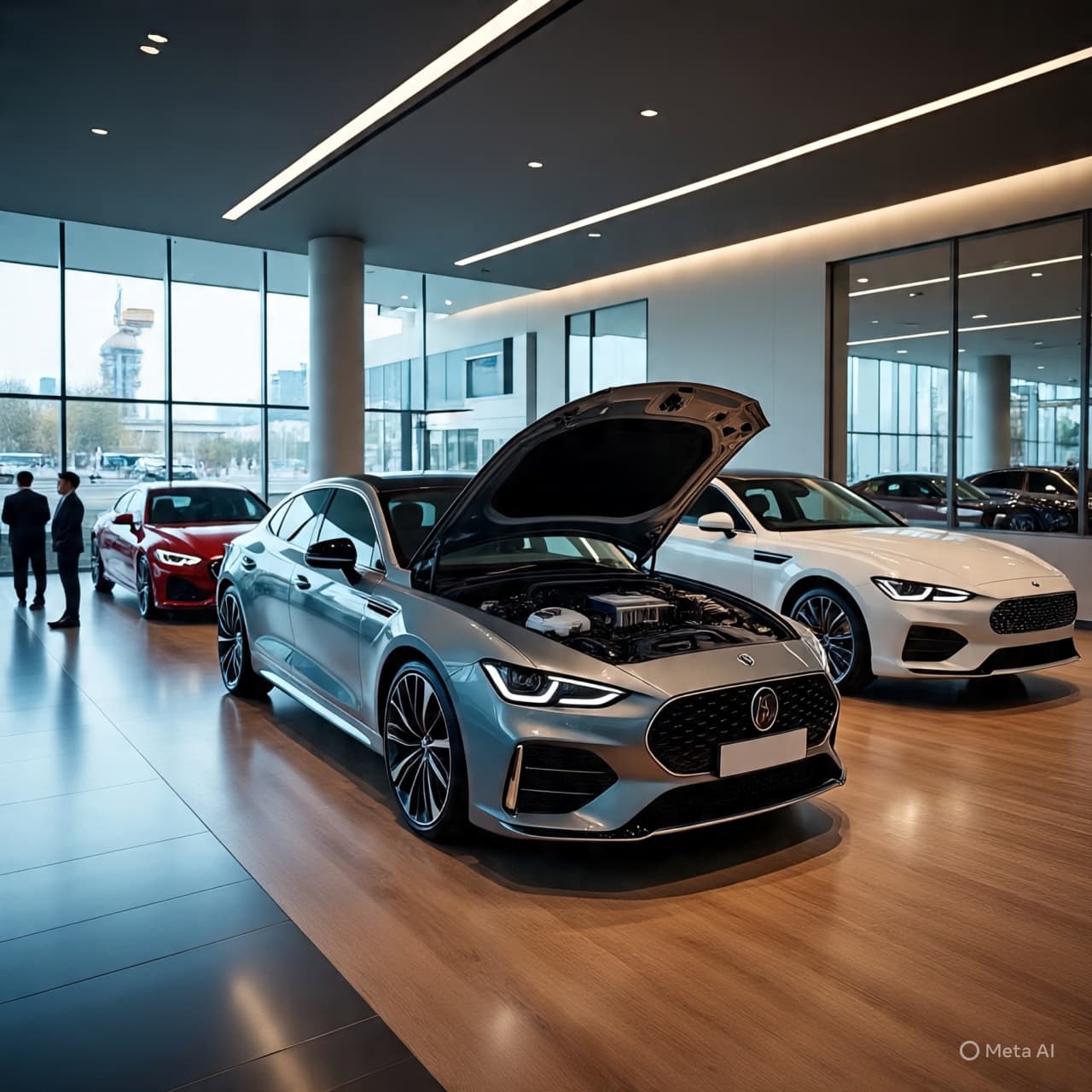
In the world’s largest auto market, where sleek showrooms once hummed with the promise of premium badges and polished metal, the sound of luxury sales slowing has begun to echo loudly — and not just in China.
For years, European automakers such as Mercedes-Benz, BMW, Porsche, Aston Martin and Ferrari relied on Chinese buyers to sustain robust demand for high-end vehicles, from German sedans to Italian exotics. But now that demand is sinking, a development that carries implications far beyond the dusty lots of Beijing.
At the heart of this shift are economic headwinds and evolving consumer tastes. China’s broader economy has slowed, dampening appetites for big-ticket purchases like luxury cars — especially as many affluent buyers become more cautious about conspicuous consumption amid prolonged property market weakness. Analysts point to slowing growth as a key driver behind weaker demand in the premium segment, which is typically defined by vehicles priced above roughly 300,000 yuan (~$42,400). After climbing in recent years, the premium share of total car sales has now reversed course, falling from around 15 % in 2023 to about 13 % over the first nine months of 2025.
That downturn hits European brands particularly hard. Multiple luxury automakers reported double-digit drops in sales in China, with Mercedes-Benz’s deliveries falling about 27 % in recent quarterly results, and BMW and its Minis down over 11 %, according to industry data. Porsche, Aston Martin and even ultra-luxury Ferrari have also cited weaker demand in the region, with Ferrari noting China — including Hong Kong and Taiwan — as the only market where sales declined in the first three quarters of the year.
Part of the change reflects shifting consumer preferences toward domestically made vehicles — especially electric and plug-in hybrid models offered by Chinese manufacturers. BYD, for instance, has aggressively expanded its lineup with advanced EVs and hybrids across multiple price points, even including models that compete in the premium space. Competitive pricing — in some cases including large discounts of up to 34 % on certain models — has made these alternatives more attractive to a broad swath of buyers.
Government policy has also nudged the market in this direction. Trade-in subsidies offered for electric and plug-in hybrid vehicles have encouraged consumers to choose more affordable, domestically produced cars rather than imported luxury brands, further eroding the premium segment’s momentum.
The ripple effects extend down the value chain. Dealerships report a slide in prices for used luxury cars, with models such as a lightly used Porsche Panamera now selling substantially below previous values — a sign of weakening demand that has persisted over the past year.
European automakers are not standing still. Many are accelerating investments in electrification, connected vehicle technology and locally tailored products to better align with Chinese tastes and regulatory trends. But the near-term picture remains challenging. As competition intensifies — not only from Chinese brands but also from global rivals adapting their strategies — Europe’s storied makers may find themselves navigating a market where prestige alone no longer guarantees traction.
In China’s auto market today, the roads once paved for luxury are getting crowded with new routes — and European brands will need agility, innovation and strategic foresight if they hope to reclaim the fast lane.
AI Image Disclaimer “Visuals are created with AI tools and are not real photographs.”
Sources High-end car sales sink in China as its economy slows, taking a toll on European automakers — Associated Press (multiple syndicated news outlets) Additional market context from Chinese auto sales trends and pricing pressures.
Published by Banx Network. This article is part of the Banx decentralized media programme, powered by the BXE token on the XRP Ledger.