There is a particular desperation that settles over a nation when its currency falls faster than its leaders can speak—when the numbers on the exchange board become a daily measure of a crisis that no negotiation has yet resolved. In Iran this week, the rial plunged to a new record low against the U.S. dollar, trading at more than 2.7 million rials to the greenback on the open market . It was the latest in a series of record lows that have erased more than half the currency’s value in a year, and it came as Iran’s top diplomat told the world that the war with the United States cannot be won by military means .
Foreign Minister Abbas Araghchi delivered that message to a gathering of foreign ambassadors in Tehran, saying that “there is no military solution, nor any solution based on new sanctions.” Only “negotiations based on justice and fairness” could end the conflict, he said . The statement was a diplomatic appeal, but it was also an acknowledgment of the pressure Iran is under. A U.S. naval blockade has sent Iranian oil exports to virtually zero. According to Kpler, Iran did not load any oil at its export terminals last month—the first time that has happened since the 1979 Islamic revolution . Oil sales typically make up about a third of the state budget, and the loss of that revenue has been devastating.
The economic numbers paint a picture of a country in free fall. Inflation is near 90 percent. GDP is expected to shrink 5.4 percent this year. Unemployment has jumped, energy is being rationed, and Supreme Leader Ayatollah Mojtaba Khamenei has expressed concern about “social cohesion” amid the hardship . Iranian authorities have tried to intervene, with the central bank announcing plans to inject up to $2 billion into the market through state-owned banks, and Tasnim news agency reporting that five banks were selling dollars to individuals at a subsidized rate . But the measures have been criticized as inadequate. Lawmaker Mehdi Kouchakzadeh called the program a “crime,” asking, “Other than their friends, dealers and thieves, who can afford to buy this $10,000?”
The war began in late February when the U.S. and Israel launched strikes against Iran. Iran responded by effectively closing the Strait of Hormuz, a vital conduit for global oil and gas, and attacking vessels that attempted to transit without its authorization. The U.S. imposed its own counterblockade on Iranian ports . A memorandum of understanding agreed in June outlined a framework for a permanent resolution, but Iranian attacks on vessels in the Strait prompted a return to U.S. military operations. Efforts to restart negotiations have stalled. Trump rejected an Iranian proposal for reopening the Strait in exchange for sanctions relief, though he left the door open to further indirect talks .
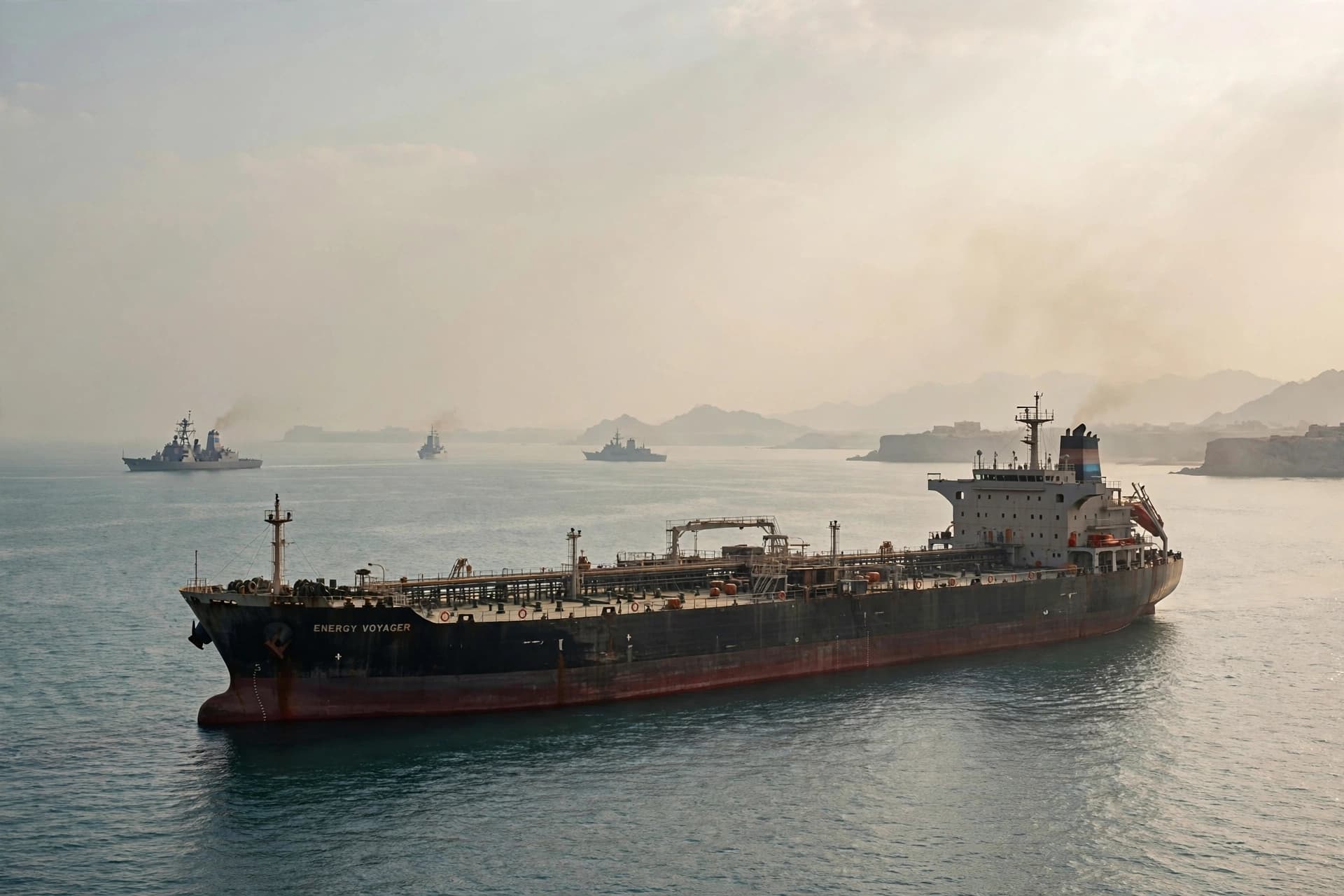
On Sunday, a tanker in the Strait reported being struck by an unknown projectile, causing damage to its engine room, according to the British maritime security agency UKMTO . The incident was a reminder that the conflict continues even as diplomacy sputters. The U.S. has not struck Iran since September 1, but it has deployed additional Patriot missile batteries and an aircraft carrier strike group to the region . Secretary of State Marco Rubio said Iran was heading toward an economic “cataclysm” . For ordinary Iranians, the cataclysm is already here: a currency that buys less each day, shelves that hold less each week, and a government that insists there is no military solution while the economic one unfolds with a quiet, relentless force.
AI Image Disclaimer: All images in this article are AI-generated and are intended for illustrative purposes only.
Sources: BSS/AFP, Fortune, Iran International, 24 News HD, Anadolu Agency, Agerpres
Published by Banx Network. This article is part of the Banx decentralized media programme, powered by the BXE token on the XRP Ledger.