It was as if a quiet ripple suddenly turned into a wave — not of water, but of possibility. In the sterile halls of biotech labs, a single clinical result sent shockwaves through markets and imaginations alike. For many who have viewed weight loss as a long, uphill journey of discipline and sacrifice, the news from Wave Life Sciences offered something different: what if the body could be nudged — gently, precisely — to let go of fat and hold onto strength, almost as if rewriting its own script?
Last Monday, Wave announced early human trial results for its experimental drug WVE-007, designed to silence a gene called INHBE and reduce the protein Activin E — a regulator of fat metabolism. After just a single 240 mg dose, participants in the trial recorded about a 9.4% drop in visceral fat and a 4.5% decrease in total body fat over three months — while gaining roughly 3.2% lean mass. Importantly, the trial did not require participants to change their diet or exercise routines.
This result stood in contrast to many existing weight-loss drugs — which often cut both fat and muscle, sometimes leaving patients weaker or dissatisfied with body composition. Wave’s approach, instead, appears to tilt the balance toward fat loss with muscle preservation; a subtle recalibration rather than a blunt reset.
Unsurprisingly, the stock reacted with fervor. Shares of Wave more than doubled — some reports citing jumps of 120-130% in a single day — reaching a five-year high. Analysts from firms such as Leerink Partners and Wedbush Securities spoke of a “paradigm-shifting therapy,” one that could rival existing treatments with far fewer downsides and much less frequent dosing — maybe once or twice a year.
More than market euphoria, the result rekindles deeper questions about how we treat obesity and metabolic disease. Could a simple genetic nudge — rather than constant medication or lifestyle overhaul — become part of a new medicine paradigm? If future trials confirm safety and long-term effectiveness, WVE-007 might not just reduce numbers on a scale — but reshape how millions view body, health, and balance.
Yet, the story remains early. So far, these are interim results from a Phase 1 trial in relatively healthy, overweight individuals. Larger, longer studies will be needed to confirm whether fat loss persists, whether total weight — not just fat — drops significantly, and whether there are any long-term safety issues. The company has already planned further trials for 2026.
Still — in a world where obesity is framed as a life-long struggle of diets, hunger, and discipline — the promise of WVE-007 lands softly, like a new leaf on a tired tree. It doesn’t demand constant pruning; rather, it offers a gentle reset. And for many, that whisper of possibility may feel like a kind breeze after a long drought.
As of now, WAVE’s results give hope — a cautious optimism that science might be catching up with human longing for balance, health, and dignity. The next chapters may yet be written in labs, clinics, and debates — but for a moment, the calm after the wave feels promising.
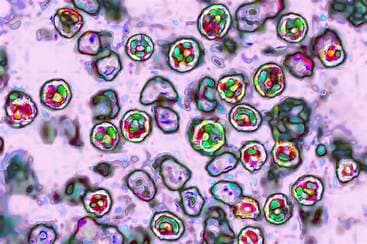
AI Image Disclaimer: Visuals are created with AI tools and used purely for conceptual representation, not as real photographs.
Sources: Investors.com, Nasdaq, Investing.com, BioSpace, ProactiveInvestors
Published by Banx Network. This article is part of the Banx decentralized media programme, powered by the BXE token on the XRP Ledger.