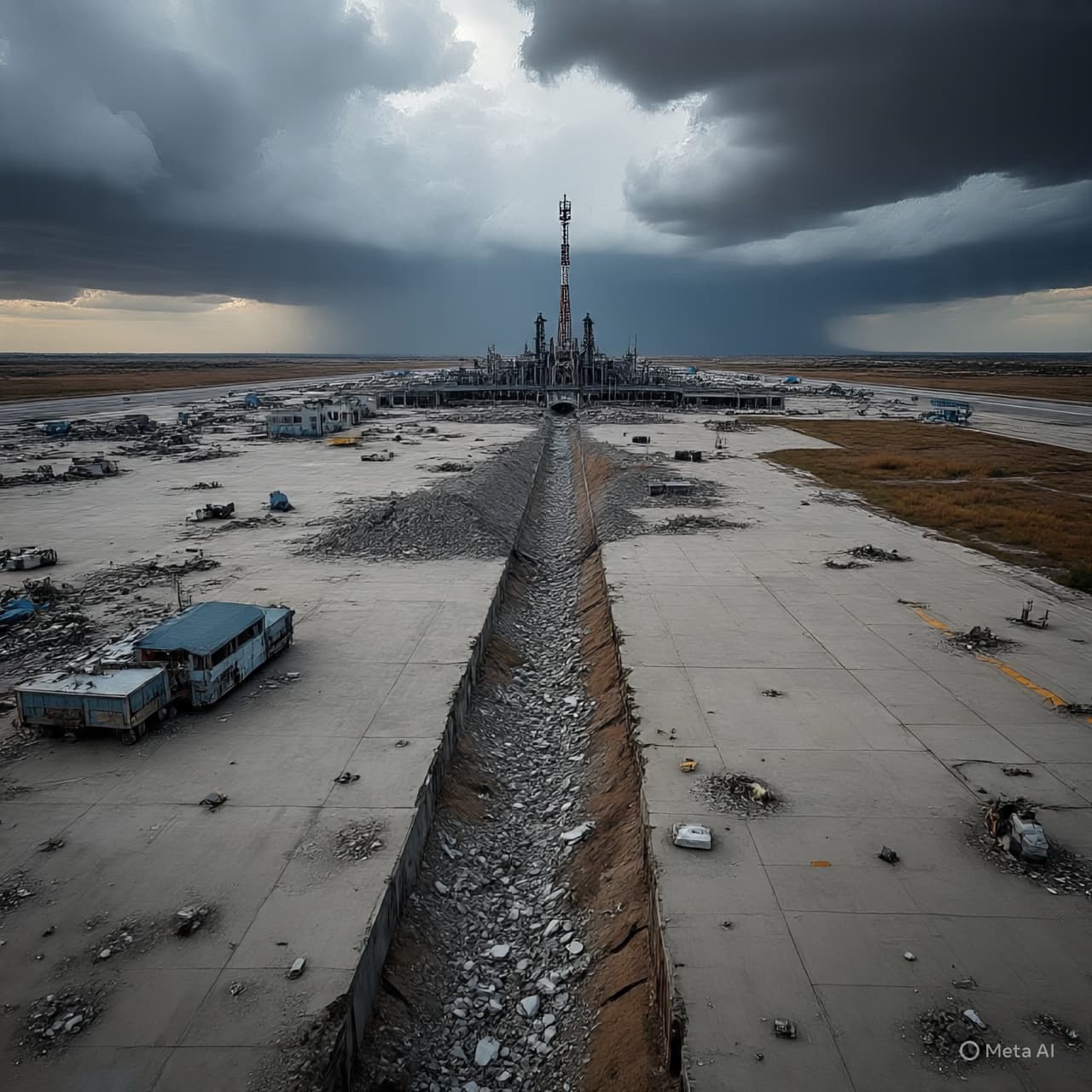
In the hush before liftoff, rockets often appear timeless — sleek, confident, reaching skyward as if to defy age and gravity. But sometimes, that moment’s roar strips away illusions. For Russia, a November 2025 launch did more than send a crew to orbit. It exposed the deep fissures beneath decades of heritage: a launch pad cracked, a storied capability threatened, and a question — how much has time and neglect eroded even the mightiest of space traditions?
On November 27, the Soyuz MS-28 spacecraft launched successfully toward the International Space Station (ISS), carrying two Russian cosmonauts and one NASA astronaut. At first glance, the mission seemed routine. But hours later, inspections revealed something far from ordinary: major structural damage at Site 31/6 — the only operational pad for crewed launches from Baikonur. The “mobile service platform” beneath the rocket, essential for pre-launch preparations, reportedly collapsed into the flame trench.
This pad, once part of an era that sent the first humans into space, has sustained hundreds of launches over decades. Since 2018, after the retirement of the more famous Pad 1 (once used for the first human spaceflights), Site 31 became the backbone of Russia’s human space missions. Now, with it damaged, that backbone is wounded — perhaps more than repairable in the short term.
Space experts warn that without the pad, Russia may be unable to launch crewed or cargo missions to the ISS for months — possibly years. Some estimate rebuilding or properly restoring the service platform could take up to two years. For a program once defined by ambition and global firsts, that would mark perhaps the first time in over six decades that Russia finds itself unable to send humans to space.
This isn’t just about metal and mechanics. It is a mirror held up to years — maybe decades — of underinvestment, institutional decay, and shifting priorities. What was once a symbol of Soviet-era engineering might now be a warning about what happens when legacy isn’t supported by upkeep. As one space-policy analyst put it: this incident “threatens all future launches,” not just a single pad.
And that threat ripples outward. The ISS depends on regular supplies, crew rotations, maintenance visits — a cadence that depends on reliable launch infrastructure. A prolonged pause in Russian launches could disrupt plans, delay cargo missions, and strain international cooperation.
For Russia, the symbolic weight is heavy. This is a country that once sent the first person into space, pioneered orbital docking, and built decades of spaceflight legacy. But that legacy, as this mishap shows, may not be enough to guarantee tomorrow’s missions. Without urgent repairs, resources, and perhaps a reconsideration of priorities, even the most storied programs may find themselves grounded.
In an age where private companies and rising space powers race upward, this accident isn’t just a technical hiccup — it’s a wake-up call. It asks whether heritage alone can keep a space program alive, or whether, as time marches on, only resilience, investment, and renewal will determine who stays aloft.
AI Image Disclaimer Illustrations are produced via AI tools and meant as conceptual visualizations, not real photographs.
Sources Reuters (via coverage of Baikonur damage) Al Jazeera Space.com The Moscow Times India Today
Published by Banx Network. This article is part of the Banx decentralized media programme, powered by the BXE token on the XRP Ledger.