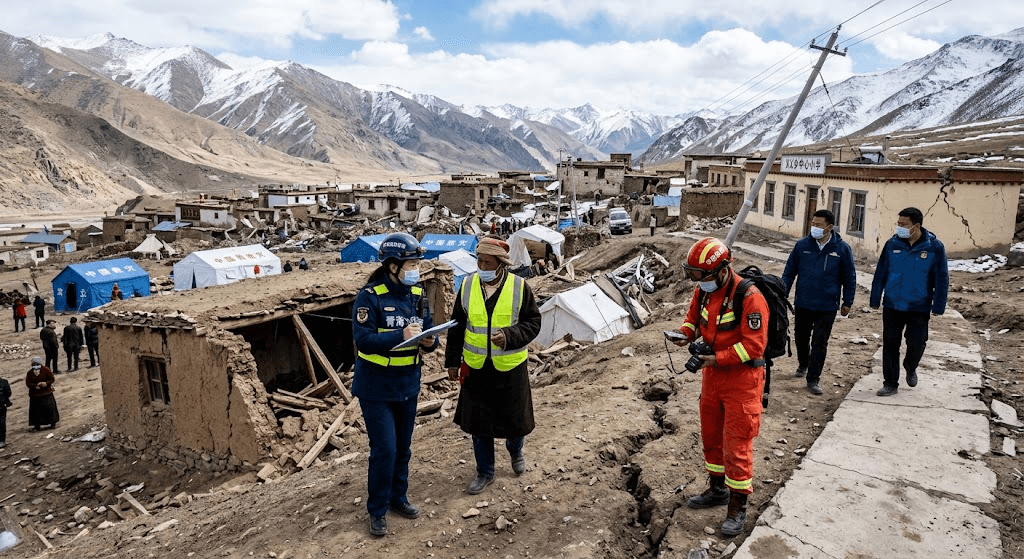
The early hours across many African capitals often move with a layered rhythm — traffic beginning to gather on broad avenues, radio stations switching from night broadcasts to morning briefings, and the steady hum of institutions preparing for another day shaped by both routine and uncertainty. Beneath this familiar cadence, however, lies a more complex reality: crises that arrive without warning, spread across borders, and demand responses that are often stretched across fragmented systems.
It is within this landscape that a new continental humanitarian coordination platform has been unveiled, presented as an effort to strengthen and align responses to crises affecting millions across the region. The initiative signals an attempt to bring greater cohesion to humanitarian operations that have historically depended on overlapping national agencies, international organizations, and local actors working in parallel — sometimes in harmony, sometimes under strain.
Officials describe the platform as a step toward improving communication, resource allocation, and rapid deployment during emergencies such as floods, droughts, displacement events, and conflict-driven humanitarian needs. In practice, such coordination efforts often function as both infrastructure and intent: systems designed not only to respond faster, but to reduce the gaps where vulnerability deepens between institutional boundaries.
Across the continent, humanitarian need has rarely followed neat administrative lines. Weather patterns shift across regions with increasing unpredictability, from prolonged droughts in the Horn of Africa to flooding in parts of West and Central Africa. Conflict zones add another layer of urgency, displacing populations and creating logistical challenges that often exceed the capacity of individual national systems. In such environments, delays in coordination can translate directly into delayed aid.
The new platform seeks to address these challenges by creating a more unified structure for information-sharing and response planning. By consolidating data streams and operational frameworks, it aims to allow governments and partner organizations to respond with greater speed and alignment when emergencies emerge. While the details of implementation will vary across countries, the underlying objective reflects a growing recognition that humanitarian crises in Africa are increasingly interconnected.
In field operations, coordination is often as critical as resources themselves. Aid convoys, medical teams, and logistics networks depend on shared situational awareness — knowing where access routes remain open, where populations have shifted, and where conditions may deteriorate next. Without that clarity, even well-funded responses can lose momentum in the face of terrain, weather, or administrative delay.
The announcement also reflects a broader shift in how humanitarian leadership is being framed on the continent. Rather than relying exclusively on external coordination structures, there is a gradual movement toward regional systems that prioritize local expertise and proximity to affected communities. This approach is often described by practitioners as both practical and necessary, particularly as global humanitarian funding becomes more constrained and competition for resources intensifies.
Yet the success of such platforms often depends less on their announcement and more on their quiet integration into existing systems. Coordination frameworks must navigate differences in capacity between states, variations in infrastructure, and the uneven availability of digital tools. In some regions, real-time data flows are still limited by connectivity challenges, while in others, advanced systems are already in place.
Still, the symbolic weight of the initiative is significant. It suggests an acknowledgment that humanitarian response is no longer a series of isolated interventions, but a continuous process shaped by shared vulnerabilities and overlapping risks. In this sense, coordination becomes not just an administrative goal, but a form of regional resilience.
As the platform begins to take shape, its impact will likely be measured in moments that rarely make headlines — the faster arrival of supplies after a flood, the earlier detection of displacement patterns, the smoother movement of relief teams across borders that once slowed response times. These are the quieter outcomes of institutional change, often visible only in hindsight.
For now, the announcement stands as a marker of intent: a recognition that in a continent frequently shaped by environmental and humanitarian pressures, the ability to respond together may prove as important as the ability to respond at all.
AI Image Disclaimer Images were generated using AI tools and are intended as illustrative interpretations of humanitarian coordination efforts.
Sources African Union United Nations Office for the Coordination of Humanitarian Affairs (OCHA) World Food Programme Reuters ReliefWeb
Published by Banx Network. This article is part of the Banx decentralized media programme, powered by the BXE token on the XRP Ledger.