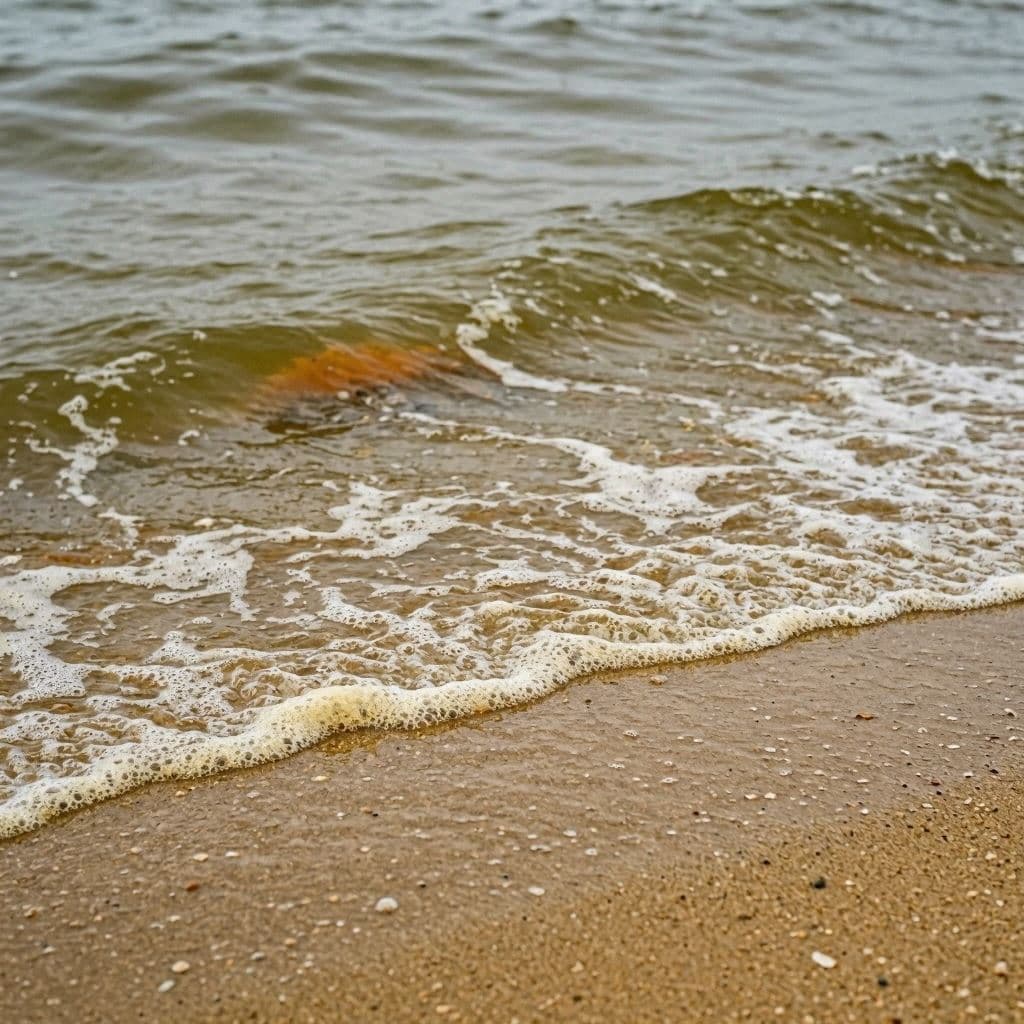
The coastline of South Australia, typically a place of rejuvenation and natural beauty, has recently been marred by an unusual and unsettling phenomenon. A toxic algal bloom, stretching across miles of shore, has turned clear waters into murky expanses of foam and discoloration, raising questions about the health of our marine ecosystems.
This environmental crisis is not just a visual disturbance but a complex ecological event with far-reaching implications for wildlife, local industries, and public health. As scientists delve deeper into the causes, a clearer picture emerges of how natural cycles and human influences can converge to create such disruptive outcomes.
Body: A new report has shed light on the triggers behind South Australia’s catastrophic algal bloom, identifying a combination of factors that created the perfect storm for the proliferation of Karenia, a naturally occurring marine algae. The bloom, which has impacted large sections of the coast, was fueled by a marine heatwave and nutrient-rich runoff from the disastrous 2023 Murray-Darling floods.
The excess freshwater entering the ocean carried high levels of nutrients, which, when combined with warmer sea temperatures, provided ideal conditions for the algae to thrive. This synergy of climatic and hydrological events highlights the interconnectedness of inland water management and coastal health. The report emphasizes that such blooms are becoming more frequent due to changing environmental patterns.
Local fisheries and tourism operators have faced significant disruptions, with beach closures and warnings against swimming or consuming certain seafood. The economic impact on coastal communities is substantial, as visitors stay away and fishing activities are halted to ensure safety. The livelihoods of many depend on the health of these waters, making the bloom a personal crisis for residents.
Health authorities have issued advisories regarding potential respiratory irritation and other health risks associated with exposure to the toxins released by the breaking algae cells. While the risk to humans is generally low if precautions are taken, the presence of dead fish and marine life along the shores is a distressing sight for locals and visitors alike.
The report also critiques the preparedness of government agencies, suggesting that earlier detection and response mechanisms could have mitigated some of the impacts. Recommendations include improved monitoring systems and better coordination between state and federal bodies to address future occurrences. Learning from this event is crucial for building resilience.
Scientists continue to study the long-term effects of the bloom on marine biodiversity, noting that some species are more vulnerable than others. The recovery of the ecosystem will take time, and ongoing research is essential to understand the full scope of the damage. Community engagement in monitoring and reporting changes is encouraged to aid scientific efforts.
Closing: As the waters begin to clear and the bloom subsides, the lessons learned from this crisis must inform future environmental policies. The health of South Australia’s coast is a shared responsibility, requiring vigilance, adaptation, and a commitment to sustainable practices. The return of clear blue waters will be a welcome sign of nature’s resilience.
AI Image Disclaimer: Images used in conjunction with this article are AI-generated interpretations designed to visualize the environmental context and should not be viewed as documentary photography of the actual algal bloom.
Sources: The Guardian ABC News South Australia Department for Environment and Water Great Southern Reef
Published by Banx Network. This article is part of the Banx decentralized media programme, powered by the BXE token on the XRP Ledger.