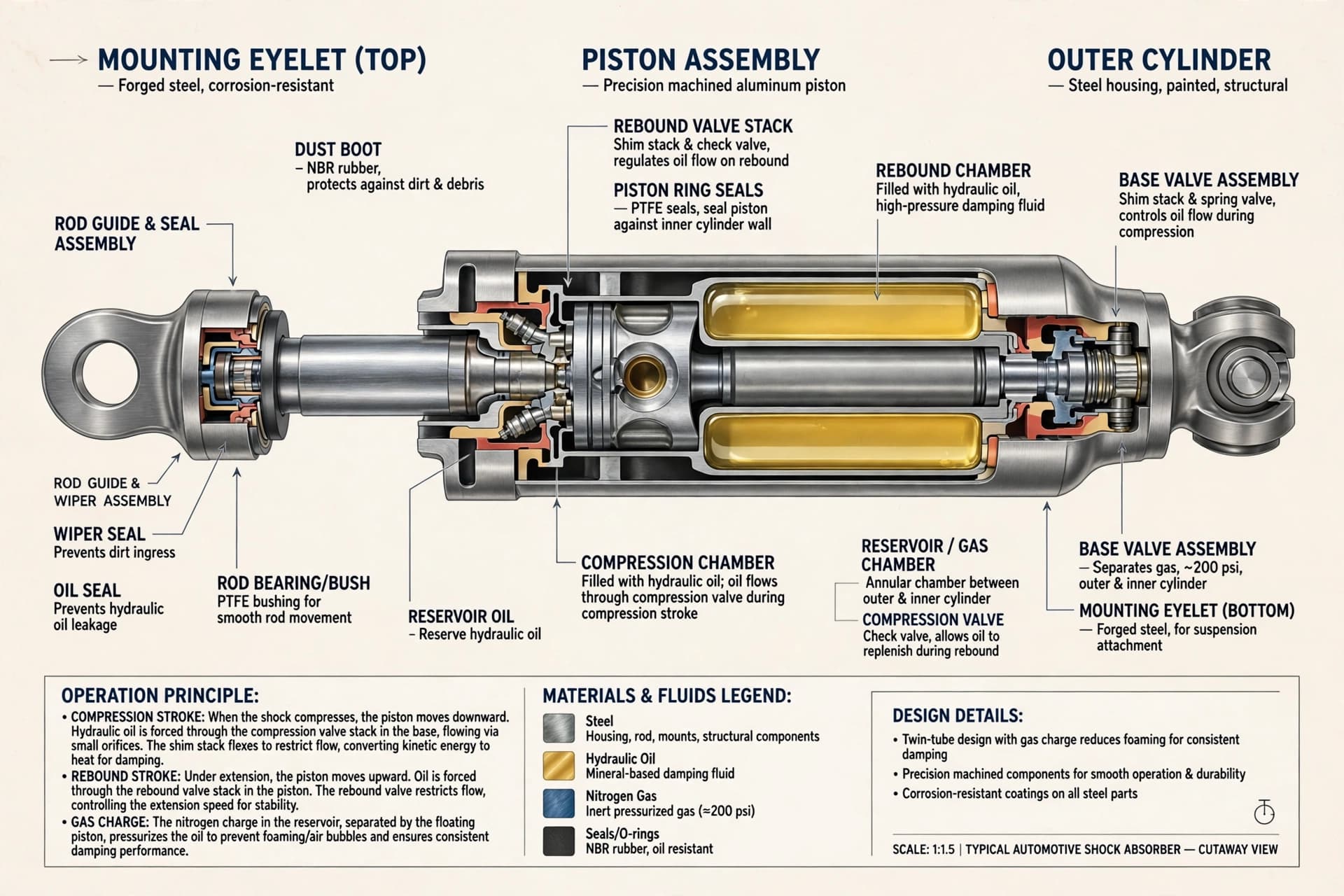
The journey of a spacecraft is a tale of two extremes: the violent chaos of launch and the silent vacuum of space. Between these phases lies the critical moment of landing or docking, where precision meets impact. Swiss engineers have recently unveiled a new design for a spacecraft "shock absorber," a device intended to cushion these delicate maneuvers. This innovation reflects the meticulous engineering tradition of Switzerland, applying precision mechanics to the rugged demands of space exploration.
Traditional shock absorption systems often rely on hydraulic fluids or crushable materials, which can be heavy, single-use, or prone to leakage in extreme temperatures. The new design, developed by researchers at a Swiss technical institute, utilizes a novel mechanical structure that dissipates energy more efficiently. By using advanced materials and geometric configurations, the system can absorb significant kinetic energy while remaining lightweight and reusable.
This advancement is particularly relevant for missions involving sample returns or crewed landings. When a capsule touches down on Earth or another planet, the forces involved can damage sensitive instruments or endanger occupants. A more effective shock absorber ensures that the payload remains intact, preserving the scientific value of the mission. It acts as a guardian for the precious cargo carried across the cosmos.
The engineering principles behind the design draw from both aerospace and terrestrial applications. Similar mechanisms are used in high-performance automotive racing and seismic protection for buildings. By adapting these concepts for space, the engineers have created a versatile solution that addresses the unique challenges of microgravity and thermal variance. It is a testament to the power of cross-disciplinary innovation.
For space agencies, weight is always a premium. Every kilogram saved on structural components allows for more scientific instruments or fuel. The lightweight nature of the new shock absorber makes it an attractive option for future missions. It offers a way to enhance safety and reliability without compromising the mass budget, a constant constraint in rocket design.
Testing of the prototype has shown promising results, with the device performing consistently under simulated landing conditions. The next steps involve integrating the system into actual spacecraft models and conducting further rigorous trials. If successful, this technology could become a standard component in upcoming lunar and Martian missions, improving the success rate of landings.
The development also highlights the growing role of European engineering in the global space sector. Switzerland, though small, has a strong reputation for precision and quality. This contribution adds to its legacy of innovation, demonstrating that significant advancements can come from specialized teams focused on solving specific problems. It reinforces the collaborative nature of modern space exploration.
The new shock absorber design by Swiss engineers offers a promising solution for safer spacecraft landings. By combining lightweight materials with efficient energy dissipation, it enhances mission reliability. This innovation marks a step forward in the technical capabilities needed for the next era of space exploration.
AI Image Disclaimer: The images accompanying this article are AI-generated artistic representations of mechanical structures and spacecraft components, not actual photographs of the specific prototype.
Sources: Swissinfo ETH Zurich News SpaceNews
Published by Banx Network. This article is part of the Banx decentralized media programme, powered by the BXE token on the XRP Ledger.