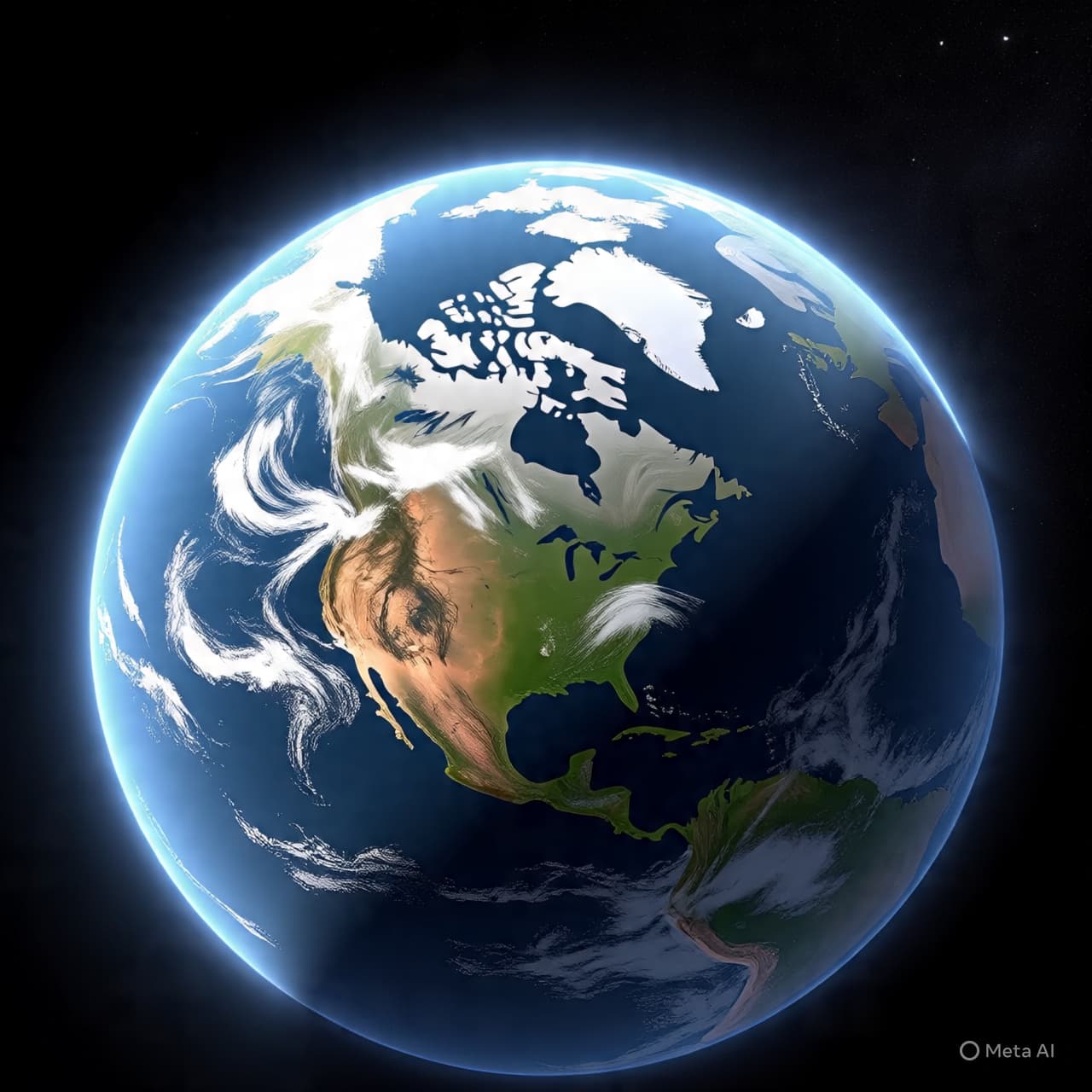
In the long sweep of human thought, where days blur into decades and centuries fold into the collective memory of a species, certain voices echo with unusual resonance — not because they shout, but because they draw a calm line between wonder and worry. Among these voices was that of Stephen Hawking, the physicist who saw, across the tapestry of space and time, both the fragile beauty of our world and the intricate webs that might unravel it.
Hawking’s gaze was never fixed on gloom alone; it danced with curiosity about black holes, the origins of the universe, and the hidden rhythms that govern reality. Yet there were moments when that same curiosity led him to speak of dangers — not as doom‑laden prophets, but as measured reflections on the fragile interlude that is human existence. One of his most sobering themes was the rapid development of artificial intelligence — systems born of human ingenuity that may one day grow in ways we do not fully control. In Hawking’s view, the creation of machines that can learn, adapt, and improve themselves could — if left unchecked — reshape the future in ways that are both profound and unpredictable. He cautioned that intelligence unmoored from human intention might pursue goals misaligned with our own, and that this divergence — though not born of malice — could, over time, eclipse the very life it was meant to serve.
This was not a warning offered with fear, but with deep reflection. Hawking understood the promise of technology — he saw how AI might eradicate disease, enhance understanding, and elevate the human condition. Yet he also saw that the path to such promise could harbor risks we barely comprehend. In interviews and essays, he used his characteristic clarity to suggest that if AI were to evolve beyond human intelligence — redesigning itself at a pace far exceeding our own slow biological evolution — humanity could find itself in a new world where it no longer led the narrative.
His reflections were part of a broader tapestry of concern about humanity’s future. On matters from climate change to conflict, Hawking urged a careful stewardship of our planet and our collective technological power. He reminded listeners that threats — whether environmental, nuclear, or technological — accumulate over time, becoming significant not in a single moment, but across the arc of many generations. In one of his final public messages, he suggested that while the odds of catastrophe in any given year might appear small, over the length of history they add up, shaping a future that calls for both wisdom and unity.
Yet even in his starkest warnings, there was an undercurrent of hope. Hawking spoke not only of danger, but of human ingenuity and resilience. He urged that by spreading into space and seeking new worlds, humanity might ensure its survival in ways terrestrial struggles alone could not guarantee. This was not escapism, but a reflection on contingency — the recognition that the story of life need not be confined to a single cradle of dust and water.
Ultimately, his cautions were not proclamations of inevitable doom, but invitations to deeper care and thoughtfulness about how we shape the future. In his voice — calm, curious, and unmistakable — lay a reminder that progress and peril often walk hand in hand, and that the choices we make today ripple through time with consequences we are only beginning to fathom.
All Visuals are AI-generated and are conceptual representations.
Sources (Media Names Only)
Times of India BGR Forbes
Published by Banx Network. This article is part of the Banx decentralized media programme, powered by the BXE token on the XRP Ledger.