In the cosmic imagination, black holes are often cast as the ultimate destroyers, voracious entities that consume light and matter with insatiable hunger. They are the graveyards of stars, places where physics as we know it breaks down. Yet, a new study suggests that these celestial giants may play a more creative role in the universe than previously thought. Far from being solely agents of chaos, active supermassive black holes might actually serve as engines of star formation, nurturing the birth of new suns amidst the turbulence of their gravitational pull. This revelation invites us to reconsider the duality of creation and destruction in the vast theater of space.
For decades, astronomers believed that the intense radiation and powerful jets emitted by active galactic nuclei would strip gas clouds of the material needed to form stars. The prevailing view was that these forces heated and dispersed the interstellar medium, effectively shutting down stellar nurseries. However, recent observations challenge this narrative, suggesting that under certain conditions, the compression caused by black hole activity can trigger the collapse of gas clouds, leading to a burst of star birth. It is a paradoxical dance, where the force that threatens to tear galaxies apart also helps build them up.
The study focuses on galaxies hosting active supermassive black holes, known as quasars or active galactic nuclei. By analyzing data from advanced telescopes, researchers observed regions of intense star formation located surprisingly close to these energetic centers. The findings indicate that the shockwaves generated by black hole jets can compress surrounding gas clouds, increasing their density to the point where gravity takes over and stars begin to coalesce. This process, akin to squeezing a sponge to release water, turns potential energy into stellar matter.
This discovery reshapes our understanding of galaxy evolution. If black holes contribute to star formation, they are not just passive anchors at the center of galaxies but active participants in their growth. The relationship between the black hole and its host galaxy is more symbiotic than antagonistic. The energy output of the black hole regulates the supply of gas, preventing it from forming stars too quickly while simultaneously triggering bursts of formation when conditions are right. This balance ensures that galaxies evolve at a steady pace, rather than burning out in a brief, fiery flash.
The implications for cosmology are profound. Star formation rates are a key metric in understanding the history of the universe. By accounting for the positive influence of black holes, models of cosmic evolution become more accurate. It suggests that the early universe, which was rich in active black holes, may have experienced waves of star formation driven by these very entities. This perspective adds a layer of complexity to the story of how galaxies like our own Milky Way came to be.
Furthermore, the study highlights the importance of multi-wavelength astronomy. Observing these phenomena requires looking beyond visible light, using infrared and radio waves to peer through the dust and gas that obscure the centers of galaxies. Telescopes like the James Webb Space Telescope and the Atacama Large Millimeter Array have been instrumental in capturing these details. Their combined power allows scientists to see the intricate interplay between black holes and their environments, revealing processes that were once hidden from view.
While the idea of black holes as creators is still being refined, it offers a more nuanced view of these mysterious objects. It reminds us that nature rarely fits into simple categories of good or bad, creation or destruction. Instead, it operates in cycles of transformation, where energy and matter are constantly reshaped. The black hole, in this light, is not an end but a beginning, a catalyst for the next generation of stars.
As research continues, astronomers will seek to determine how common this phenomenon is across different types of galaxies. Understanding the specific conditions that allow black holes to foster star formation will help refine theoretical models. Each new observation adds a piece to the puzzle, bringing us closer to a comprehensive understanding of cosmic dynamics. It is a journey of discovery that promises to reveal even more surprises in the dark heart of the galaxy.
The suggestion that active supermassive black holes may drive star formation challenges long-held assumptions about their role in the universe. As we continue to explore the cosmos, let us remain open to the possibility that destruction and creation are two sides of the same coin. In the depths of space, even the darkest forces may hold the spark of new life.
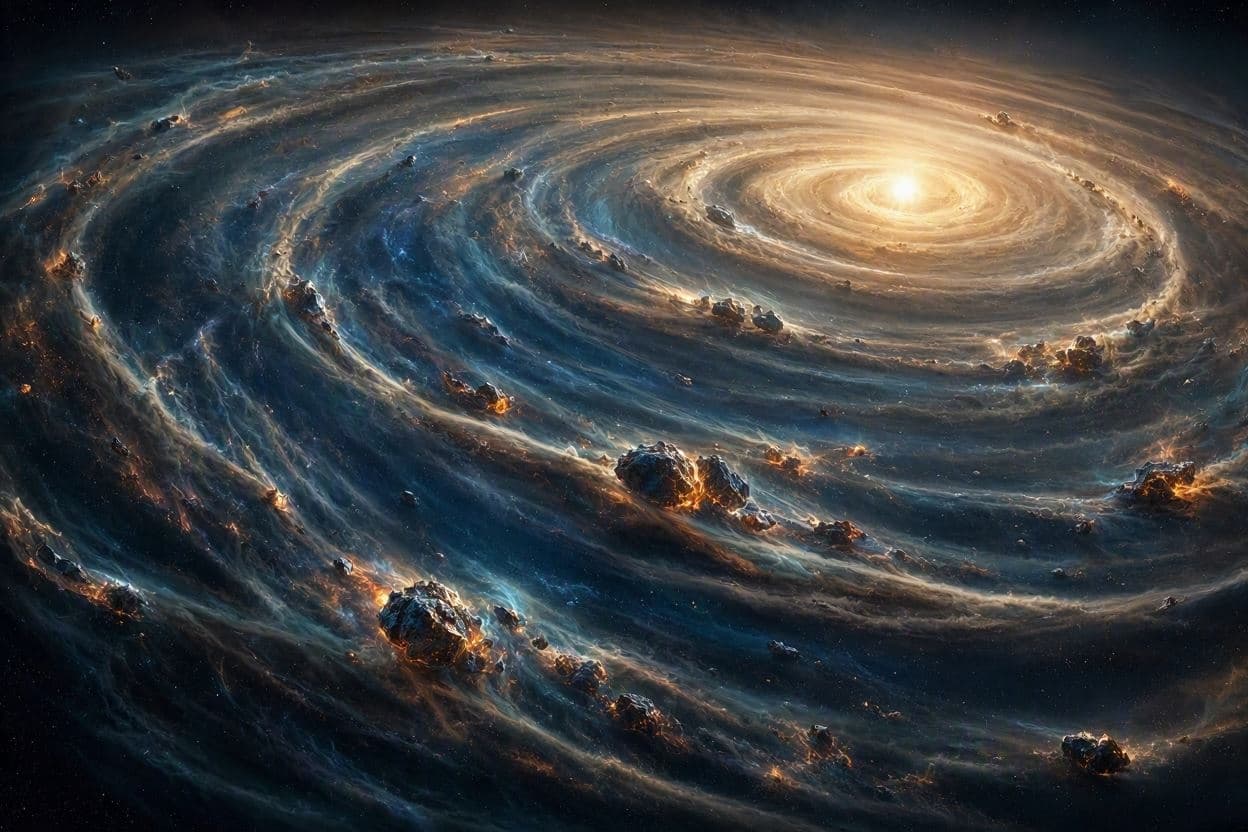
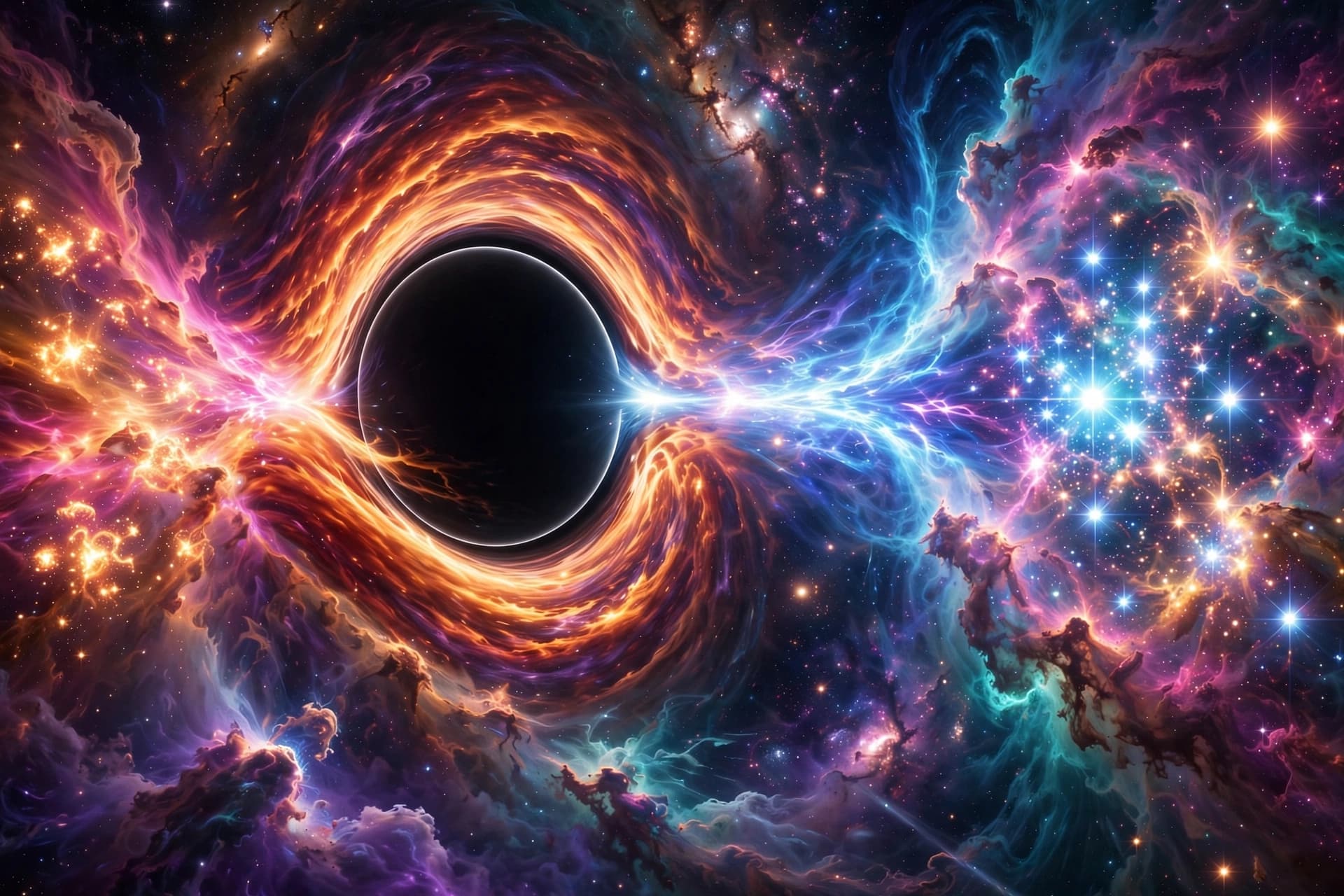
AI Image Disclaimer: The visuals accompanying this article are AI-generated illustrations designed to represent the concept of black holes and star formation without depicting specific astronomical data.
Sources: Nature Astronomy ESA Space.com Phys.org
Published by Banx Network. This article is part of the Banx decentralized media programme, powered by the BXE token on the XRP Ledger.