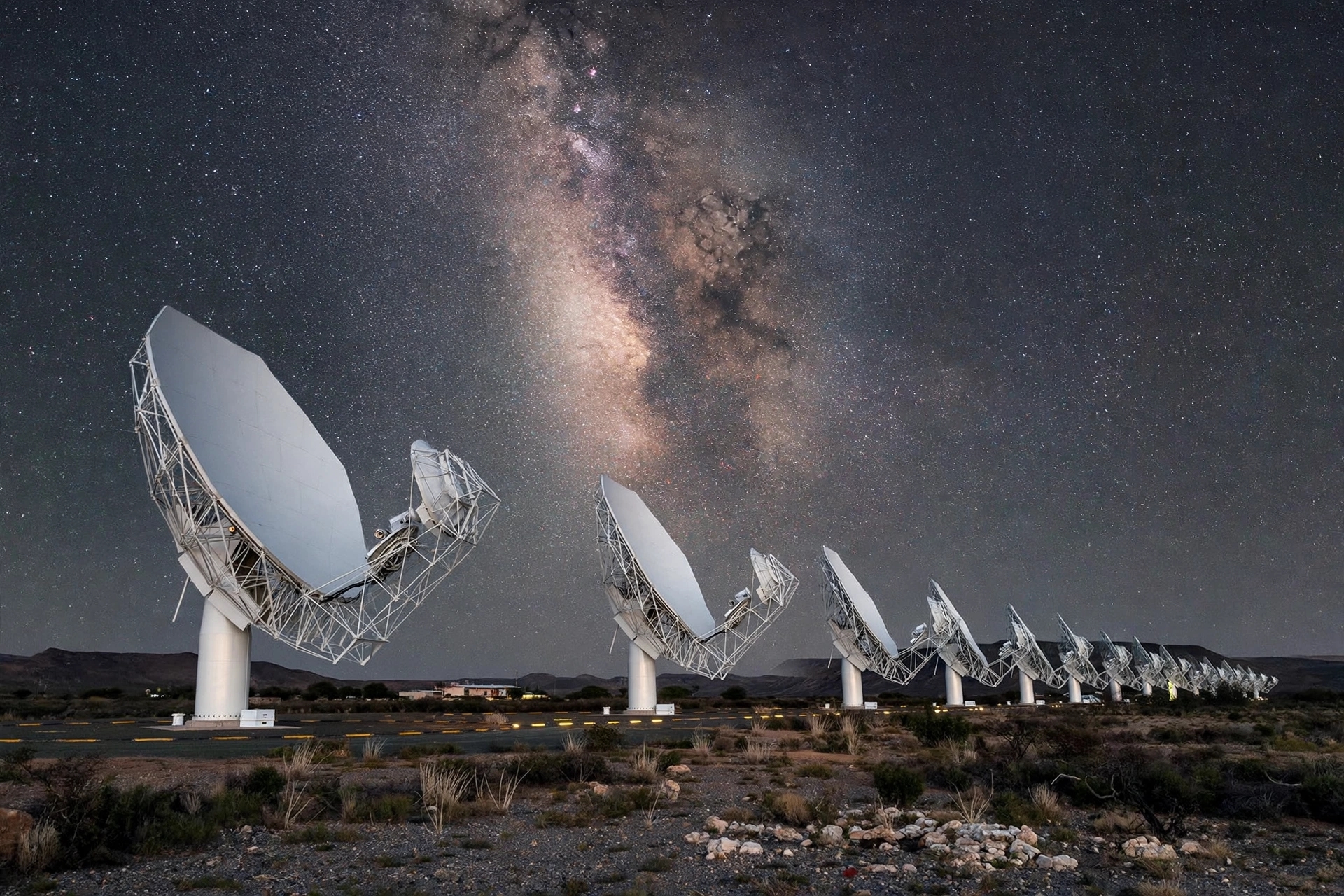
Long before human eyes turned upward in wonder and curiosity, the universe was whispering its secrets in a language barely begun to be understood. Among those whispers are neutrinos — ghostly particles that sail through the cosmos virtually unnoticed, barely interacting with the matter that makes up stars, planets, and life itself. Yet sometimes, these tiny messengers carry a story as vast as the cosmos they traverse. Recently, one such messenger — an unusually energetic neutrino detected deep beneath the Mediterranean Sea — has drawn scientists toward a possibility both thrilling and profound: that this particle could be a relic signal from primordial black holes, some of the universe’s earliest and most mysterious inhabitants.
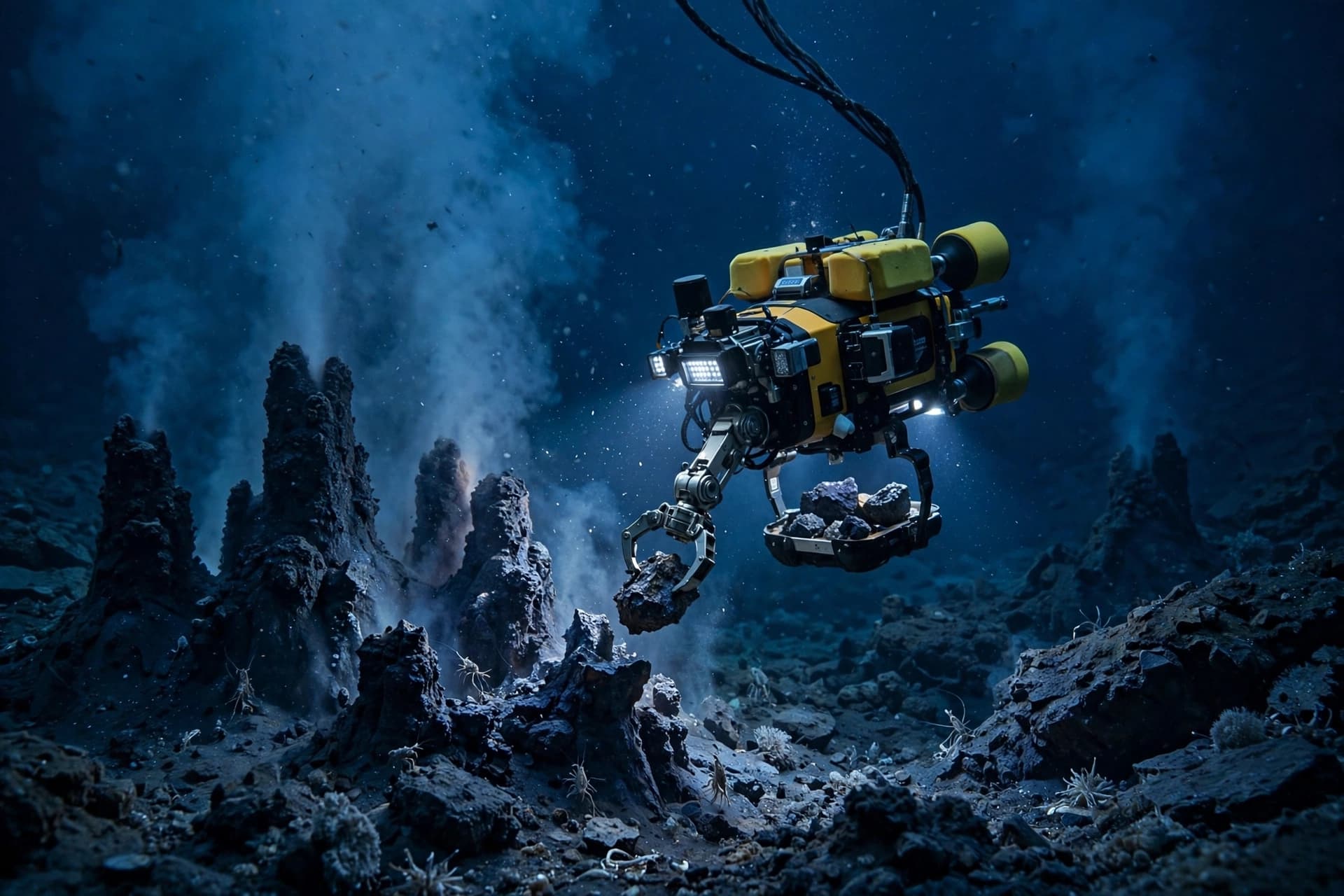
In September 2022, researchers working with the partially completed KM3NET detector off Sicily recorded a neutrino with energy far beyond expectations, a “monster” among its kind. Ordinary neutrinos stream from familiar sources like the sun or exploding stars, yet this one seemed to defy conventional explanations. Astrophysicists have now proposed that the particle might have originated from an event as exotic as the final evaporation of a primordial black hole — a tiny black hole formed in the first moments after the Big Bang.
Primordial black holes are theoretical objects far smaller and older than the black holes we more commonly imagine, those born from collapsing stars. Unlike their massive counterparts, some primordial black holes, especially those with masses comparable to a small asteroid, could be reaching the end of their lives today. According to quantum theories of black holes, as they evaporate via a process known as Hawking radiation, they would release all kinds of particles in a sudden burst — including neutrinos. If such a black hole came close enough — perhaps only a few thousand astronomical units away — its final explosion could have sent a torrent of ultra-high-energy particles our way.
The beauty of this idea lies in its simplicity and its courage: by linking an extreme cosmic particle to an event in the universe’s infancy, scientists are bridging the gap between the smallest bits of matter and the grandest scales of cosmic history. In the proposed scenario, the monster neutrino is not just a stray particle, but a messenger of ancient physics — a hint that primordial black holes might exist today, quietly scattered through space, and perhaps even tied to one of the universe’s deepest puzzles: the nature of dark matter. Some theories suggest that these relic black holes could make up some fraction of the unseen mass that binds galaxies together, influencing their rotation and structure without ever showing themselves directly.
Yet here, as often in science, certainty is just beyond reach. The proposal that a primordial black hole produced this record-breaking neutrino is intriguing, but not yet definitive. The statistical likelihood of such an event, calculated by physicists, may be low — perhaps only around eight percent — but it is suggestive enough to keep researchers watching the skies and the sea depths for further clues.
Meanwhile, scientists are exploring ways to test these ideas more directly. If primordial black holes wander through our solar neighborhood at hundreds of kilometers per second, they might leave faint but measurable gravitational effects on the orbits of planets like Mars. Detecting such subtle “wobbles” could provide independent evidence for these ancient objects, offering another way to confirm whether the monster neutrino was truly a cosmic herald.
In the quiet depths where science traces the faintest echoes of creation, one particle may be teaching us to listen more deeply. Whether primordial black holes are real or remain theoretical constructs, the quest to understand the universe through its most elusive messengers continues — a testament to human curiosity and the enduring mystery of the cosmos.
AI Image Disclaimer (Rotated Wording) Visuals are created with AI tools and are not real photographs, meant for conceptual depiction.
Sources Quanta Magazine Science News (primordial black hole neutrino context) NASA Fermi neutrino tracing history KM3NET neutrino research discussions Wikipedia neutrino detection background
Published by Banx Network. This article is part of the Banx decentralized media programme, powered by the BXE token on the XRP Ledger.